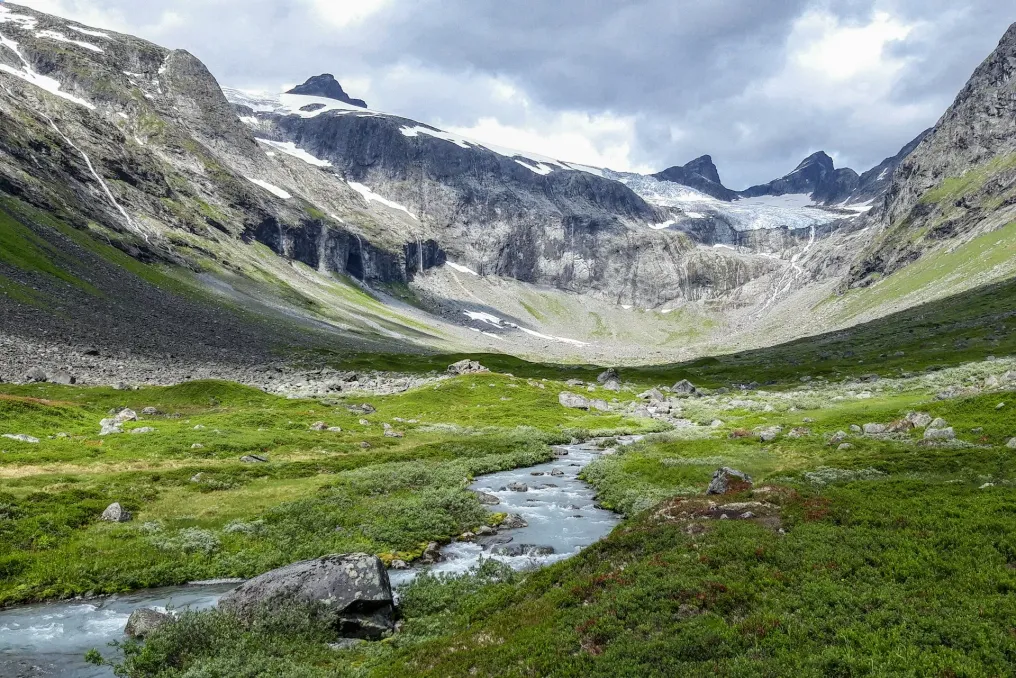
People from South Africa often consider themselves mountain experts because their country features places like Drakensberg, Cederberg, and the Cape Fold Mountains, along with numerous dirt roads that make a road trip incomplete without dust on the car. They are well aware of how quickly the weather changes, how much water to carry, and that even a hike that seems easy on a map can make you doubt your choice mid-ascent.
However, when you venture into hiking in Norway, the situation changes drastically: fjords open up below, peaks are covered in snow, waterfalls crash off cliffs, and mountain roads are designed to make you stop every five minutes.
For South Africans who enjoy hiking, driving, and outdoor activities, Western Norway presents an ideal option. You can spend the morning conquering a mountain road, go hiking in the hills during the day, and stay in a fjord cabin in the evening. Essentially, it is the highest level of nature road tripping, only with significantly more waterfalls.
A good starting point is Ålesund, as it is very quick to reach the mountains from the city. The Sunnmøre Alps rise majestically around the fjords, and Hjørundfjord offers scenery that seems underrepresented. It possesses the classic Norwegian combination of deep blue water, steep green mountains, and small settlements nestled in the landscape. This is where the real adventure of the road trip begins.
For South Africans, driving in Norway might feel strangely familiar: there are winding mountain roads, gravel sections, and many opportunities to choose a scenic route. However, there is an important difference for those accustomed to 4x4 style: in Norway, you cannot simply drive off the road and venture into the wilderness. Off-road driving in nature is restricted, so the adventure lies in exploring accessible roads and then hiking.
And frankly, after parking, you won't be bored of places to explore. If you have hiked in the Drakensberg, you will immediately recognize the appeal of the Sunnmøre Alps. There is the same feeling of being surrounded by large mountains, but here the mountains abruptly drop into the fjords rather than gradually transitioning into valleys.
Norway is also excellently equipped for hikers. Trails are often marked and equipped with signs, and red 'T' signs from the Norwegian Trekking Association are widely used on hiking routes. Furthermore, the tradition of free access to nature grants people broad rights to uncultivated land, although local rules and restrictions should be remembered.
But one must not assume that a well-marked trail automatically means an easy hike. The weather in the Norwegian mountains can change rapidly, even in summer. A sunny morning can suddenly become cold, wet, and windy, especially at higher altitudes. If you are used to checking the forecast before hiking in Cederberg or Drakensberg, keep doing it here too.
The golden rule is simple: know your route, know the weather, and don't hesitate to turn back. From Hjørundfjord, head towards Geiranger. Geiranger is one of Norway's most famous destinations, and yes, it can be crowded. But once you get behind the wheel, you will quickly understand why it became famous: the roads climb through the mountains, the scenery constantly changes, and there are viewpoints where you will almost certainly take out your camera.
The secret is not to rush. One of the advantages of traveling through Norway by car is that the journey itself can become part of the adventure. Stop for a short walk. Find a viewpoint. Have lunch by the fjord. Choose a slower road if possible. It is somewhat similar to a South African road trip, except that instead of stopping for biltong or at a farm stall, you can stop by a waterfall.
Trollstigen is probably one of those roads you've seen on Instagram. The famous hairpin bends dramatically ascend through mountains surrounded by waterfalls and huge rock formations. But don't just drive past—take a photo and move on. Use Trollstigen as a gateway to the Romsdalen and Åndalsnes regions, one of the best bases for mountain adventures in Norway. Here you can significantly increase the difficulty of the hike. Routes like Romsdalseggen offer a serious day in the mountains with stunning views of the valley and surrounding peaks.
It is important for South Africans to remember that distance does not tell the whole story. A 10-kilometer hike in Norway is not necessarily comparable to a 10-kilometer hike in the Cape. Altitude gain, rocky terrain, exposure, and weather are what matter. The same applies to a route that looks perfectly manageable on a map. In other words, do not leave common sense at the trailhead.
One thing I particularly like about hiking in Norway is that you don't necessarily have to finish the hike and immediately return to the car. Norway has a long-standing culture of cabins, where mountain refuges and lodges allow tourists to spend several days traveling through the mountains. For South Africans, this is a different approach to hiking: they tend to plan around a specific trail, peak, or campsite. In Norway, the mountains themselves can become the journey.
Camping is another option. Norway's free access rules allow pitching tents on a large number of uncultivated lands under certain conditions, although restrictions vary, and a responsible approach to camping is expected. As a result, it is a country where spending several days in nature is considered a completely normal occurrence.
Continuing towards Strynefjell, you will notice another change in the landscape. Green valleys and fjords give way to a more open alpine environment. There are wide plateaus, rocky peaks, and snowfields, and roads wind through landscapes that seem almost otherworldly. Eventually, you can head towards Jotunheimen, home to some of Norway's tallest mountains. If the first part of the trip was dedicated to combining sightseeing with hiking, here you can make the hike the main event.
Jotunheimen is a place where you can happily leave your vehicle for several days and just hike. Norway is not necessarily better than South Africa for hiking; it is simply completely different. We have our own magnificent mountain landscapes, from Drakensberg to Cederberg and the high peaks of the Cape. But Norway adds another dimension: fjords, glaciers, snowfields, waterfalls, alpine valleys, and a culture of active recreation that makes planning the entire vacation around time in nature incredibly easy.
This also changes the perception of what an adventurous road trip can be. You don't need to spend days wandering remote 4x4 tracks. Sometimes the adventure is just a winding mountain road. Sometimes it's a gravel pass, a ferry across a fjord, or a trail leading into the mountains. And this is what makes Western Norway such a good choice for active recreation lovers from South Africa. The formula is simple: get to a beautiful place, put on your hiking boots, explore until you are tired, find a place to sleep, and repeat tomorrow. Only this time, there will likely be a waterfall involved. And if there isn't, drive another 10 minutes. There probably will be one.
_