Indian Railways Rules for Sending Motorcycles as Parcels
Read more
Aaj Tak
www.aajtak.in

Indian Railways Rules for Sending Motorcycles as Parcels

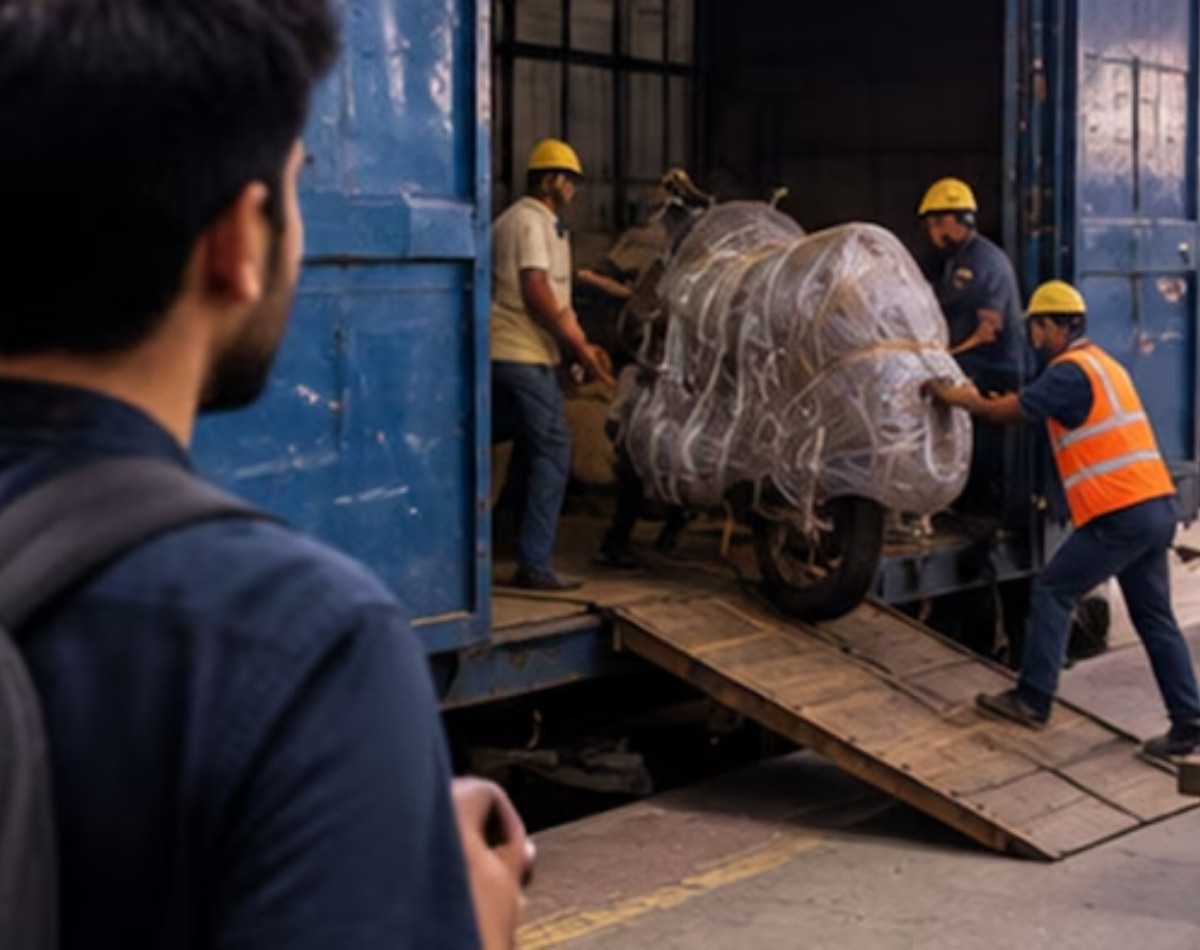
When moving belongings between cities or states, the problem of transporting luggage often arises. When it comes to motorcycles, instead of driving them long distances yourself, people prefer to send them via train. If you plan to send your motorcycle by train, it is crucial to familiarize yourself with the rules set by Indian Railways regarding booking, necessary documents, fuel, packaging, fees, receipts, and delivery.

Indian Railways provides passengers with the convenience of sending two-wheeled vehicles and all types of baggage from one place to another, which simplifies transporting a motorcycle between cities. However, the vehicle owner is obliged to comply with the rules related to special booking, packaging, and documentation.

You cannot simply take a motorcycle and hand it over for loading onto the platform. There is an important rule that must not be ignored: before the motorcycle is approved and loaded for shipment as a parcel, its fuel tank must be completely emptied.

It is impossible to send a motorcycle through the railway parcel system based only on verbal requests. Passengers must have a complete set of documents with them. Required documents include the motorcycle's registration certificate (Bike RC), a valid identity document, an active mobile phone number, and insurance papers. If the motorcycle belongs to another person, additional permission may be required. A motorcycle cannot be sent by train without these papers.

According to Indian Railway rules, the cost of sending a motorcycle by train depends on its weight, the distance between stations, and the train category. Usually, the total cost for shipping a parcel and packaging for a journey of approximately 800 kilometers is around 3000 rupees, but it should be noted that this amount may vary depending on specific circumstances.

After handing over the motorcycle to the railway, you will be issued a parcel receipt for the motorcycle from Indian Railways. This small receipt is the most important document. When receiving your motorcycle at the destination, you will need to present exactly this receipt. Losing this receipt can turn a simple process of receiving your own vehicle by train into a serious problem.

The most important aspect of Indian Railways' motorcycle shipping rules is that your motorcycle does not necessarily travel on the same train you are traveling on. If there is no space in the train's luggage van, Indian Railways may send your vehicle on another train, meaning your motorcycle may arrive later or separately.

Similar stories

Destinations that require travel insurance for Brazilian tourists
Read more
viagemeturismo.abril.com.br

Destinations that require travel insurance for Brazilian tourists

Travel insurance is highly recommended for any type of travel, whether domestic or international, as it covers medical emergencies, flight cancellations, and other unforeseen events, according to the contracted policy. Although local health plans do not always cover events outside the contracting state, some countries make travel insurance mandatory for foreigners.

When planning trips, exchanges, or stays outside Brazil, it is crucial to check the specific requirements of each destination to avoid unexpected costs.

South America

In South America, only Argentina, Ecuador, and Venezuela legally require travelers to have travel insurance. To enter Argentina, the policy must cover medical and hospital expenses, without a specified minimum amount. In Venezuela, the health insurance must guarantee a minimum coverage of US$ 40 thousand. Ecuador requires coverage for illnesses and accidents throughout the trip, without a minimum amount, with stricter inspection in the protected area of the Galapagos Islands.

In other South American countries, such as Chile, Uruguay, Colombia, and Brazil itself (if receiving foreign visitors), insurance is not mandatory for entry, but its purchase is strongly advised.

In Central America and the Caribbean, having a policy is necessary to enter Cuba.

North America

The countries of North America—Canada, the United States, and Mexico—do not impose mandatory insurance for entry. However, caution is recommended, as the absence of insurance may force the use of private emergency services, which can result in costs much higher than expected, especially in the United States.

Europe

The most popular destinations in Europe follow the rules of the Schengen Area, a free movement zone comprising 29 nations, including Germany, Austria, Belgium, Bulgaria, Croatia, Denmark, Slovakia, Slovenia, Spain, Estonia, Finland, France, Greece, Hungary, Italy, Latvia, Lithuania, Luxembourg, Malta, Netherlands, Poland, Portugal, Romania, Czechia, Sweden, Iceland, Liechtenstein, Norway, and Switzerland. Tourists from outside this zone can stay for up to 90 days every 180 days for tourism purposes. The insurance rule requires that the policy covers a minimum of € 30 thousand in average expenses and repatriation.

European countries outside the Schengen Area have their own regulations regarding entry documents, which must be checked individually before traveling.

Africa

Generally, African countries do not require travel insurance for entry. However, there are exceptions, such as Zanzibar, in Tanzania, where a policy is mandatory to access the archipelago. Furthermore, nations like Angola and Algeria may request travel insurance linked to the visa, depending on the category of the requested visa.

Asia

In Asia, Saudi Arabia and Qatar require travel insurance for tourist entry, and this insurance is tied to the entry visa. In Nepal, although the policy is not mandatory to enter the country, it becomes compulsory if the traveler plans to hike or climb mountains, as is common among foreigners seeking Everest.

Oceania

For tourists on short trips, it is not necessary to present insurance to enter the countries of Oceania. Conversely, long-term study visas in Australia require proof of OSHC (Overseas Student Health Cover), a specific insurance for this purpose, and other long-term visas have their own insurance requirements.

Recipe for Homemade Masala Tea Spice Blend with 9 Spices for Authentic Flavor
Read more
www.aajtak.in

Recipe for Homemade Masala Tea Spice Blend with 9 Spices for Authentic Flavor

Tea is an integral part of Indian life, from morning rituals to evening conversations. For many people, a cup of tea sets the tone for the entire day, and the hot drink helps relieve fatigue in the evening. However, many who prepare tea at home complain that it does not achieve the rich and vibrant flavor note found in street stalls.

If you are facing this problem, there is no need to worry. A recipe for making chai masala is presented, which guarantees that your tea will taste like what is served at street vendors. If you like masala tea but are tired of having to add ginger, cardamom, cinnamon, and other spices separately, there is a simple way.

You can make this tea spice blend at home and store it in an airtight container. It contains spices that give the tea a strong aroma and a light spiciness. The advantage of this method is that after preparation, you only need to add a small amount of the mixture each time to instantly change the taste of regular tea.

Ingredients for Homemade Chai Masala

Creating this spicy blend does not require many ingredients; it can be made from spices that are easily found in the kitchen.

How to Prepare Chai Masala

To begin the process, all spices must be roasted. Place a pot over low heat and add cardamom, black pepper, large cardamom, small cardamom, cinnamon, and cloves. These spices should be gently heated over low heat for about two to three minutes, avoiding high heat. As soon as the spices begin to emit a pleasant aroma, turn off the gas.

Afterward, transfer the hot spices onto a plate and allow them to cool completely. It is crucial not to grind the spices immediately after this step. Once they have cooled, add dried ginger, cardamom, and dried tulsi leaves to a food processor. Grind all components until you obtain a slightly coarse powdery mixture, without aiming for an absolutely fine grind.

The finished chai masala should be transferred into a clean and completely dry airtight container. It is important that no moisture gets into the container, otherwise, the mixture may spoil quickly.

How Much Masala to Add to a Cup of Tea?

When making tea, you can use approximately one-quarter to half a teaspoon of this masala per cup. If you prefer a more pronounced spicy flavor, you can increase the amount to your liking. After adding the masala, the tea must be allowed to boil well so that the aromas and flavors of the spices are fully dissolved in the milk and tea.

Thanks to this homemade masala, you will not have to prepare it every time. You just need to make it once and store it, then add a little of the mixture whenever you want to drink masala tea. Thus, ordinary tea acquires a completely different taste and aroma, which is especially useful for those who love masala tea but do not have time to add individual spices to every cup.

Popular