The desire to decorate a home with plants is popular among many people because they not only improve the appearance of the dwelling but also transform the atmosphere. However, caring for plants can become a financial burden due to the high cost of purchasing new specimens. For those who want to avoid frequent spending on acquiring plants, there are certain types of houseplants capable of significantly simplifying this process.
The feature of these plants is that, provided they are properly cared for, they begin to form new, smaller plants around themselves. This means that after buying one specimen, you can gradually obtain many new ones. Some plants release small shoots near the roots, while others produce small sprouts on long stems. These young plants can then be carefully separated and planted in another pot, allowing a small home garden to gradually expand without significant expense.
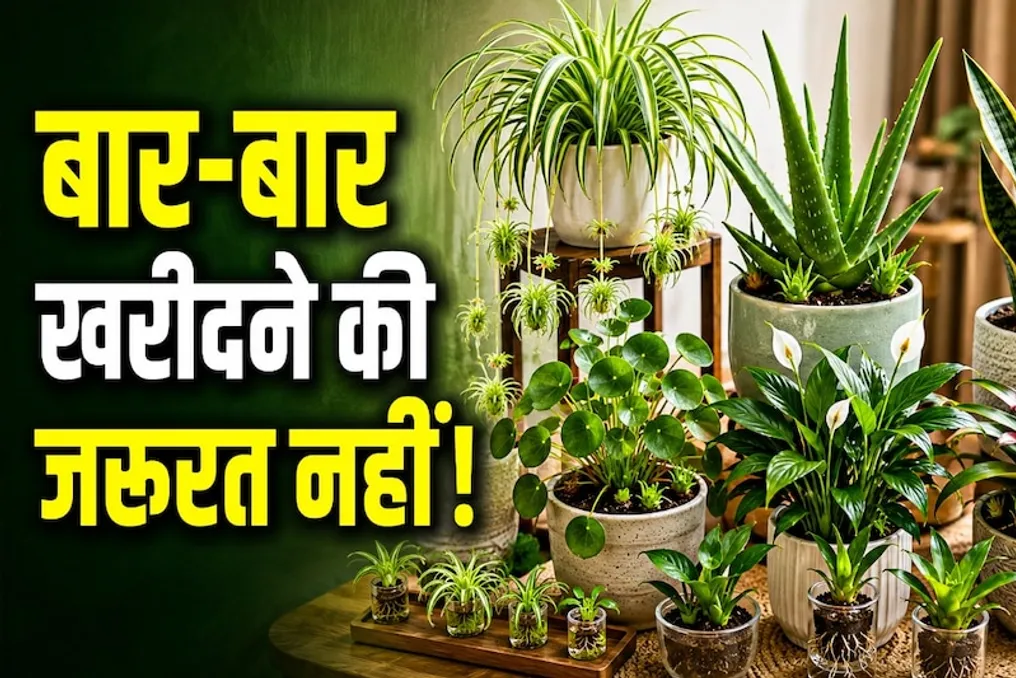
Spider Plant: This type is ideal for those looking for an easy-to-grow houseplant. The spider plant produces small new plants on its long stems. When these young shoots are strong enough, they can be separated and repotted into a new container. With good care, one spider plant can eventually yield an entire collection.
Aloe Vera: Aloe Vera is also among the plants that generate new specimens around themselves. As the aloe matures, small sprouts, often called 'pups,' begin to appear at the base of its roots. After these young plants have grown well and formed their roots, they should be carefully separated and planted in a separate pot. If several such sprouts appear in one pot, separating them will provide more growing space for all the plants.
Snake Plant: The snake plant is very popular in homes, and its advantage is that it can be easily propagated without much effort. It is capable of producing new small plants from the roots located underground. When many new shoots appear in the pot and the plant becomes quite dense, it can be carefully divided into sections. It is important to ensure that each separated part has healthy roots and the plant as a whole is in good condition before planting them in separate pots.
Chinese Money Plant: If you need a plant that will gradually yield many new specimens, the Chinese money plant is a good choice. It also produces small plants around itself. When these young plants develop well and start forming their own roots, they can be separated from the main plant and planted in a new pot. Thus, many new plants can be obtained from one without using seeds.
Scripted Lilies: Scripted lilies are valued for their ability to bring greenery and beauty into the home. Over time, the plant can become so dense that the pot starts to feel cramped. This is the ideal time to divide the plant and get new specimens. For this, the plant is removed from the pot, and the root ball is carefully divided into parts. It is necessary to ensure that each part has good roots and leaves before planting them in separate pots.
Bromeliads: Bromeliads are also among the plants that produce small new specimens next to the main plant. These small sprouts are called 'pups.' When they become large and sturdy enough, they can be carefully separated from the mother plant and transplanted into a separate pot.