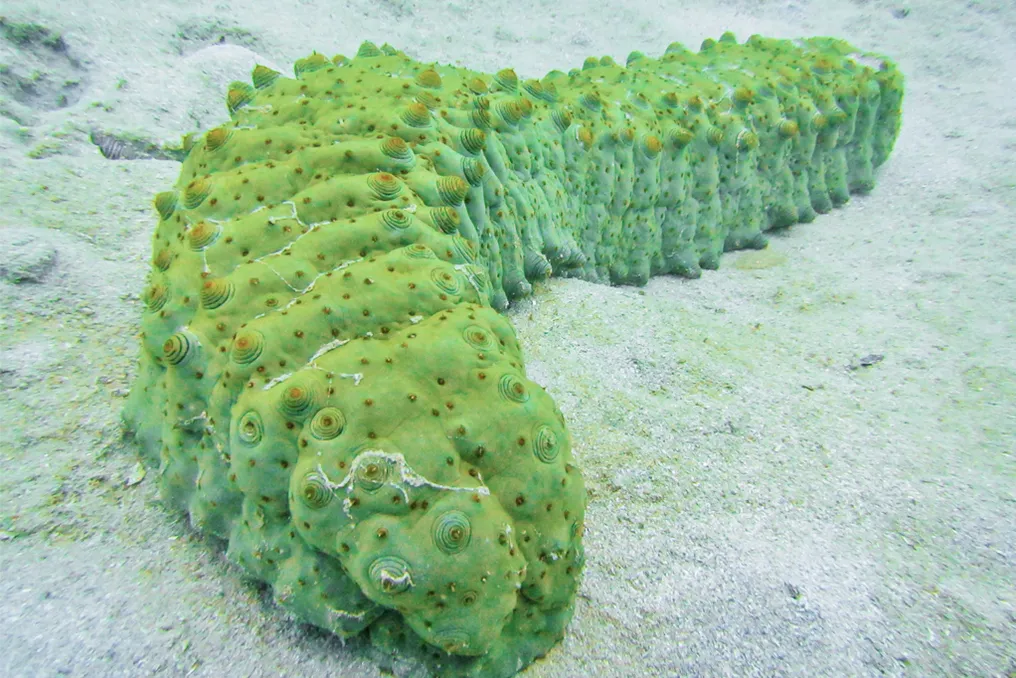
The sea cucumber is classified as a fascinating marine invertebrate, belonging to the echinoderm group, which also includes starfish and sea urchins. It is important to note that invertebrates are animals that do not possess a backbone or a skull, representing about 95% of the planet's species, encompassing mollusks, crustaceans, and arthropods.
Regarding their dimensions and appearance, sea cucumbers exhibit great variation in size and color. Most of these animals measure between ten and thirty centimeters, although there are very small species, only three centimeters, and others of giant size, such as those observed in the Philippines, which can reach two meters in length, displaying black, brown, or olive-green hues.
These marine creatures predominantly inhabit the ocean floor, preferring sandy or muddy substrates. Despite generally being slow, certain varieties of sea cucumbers have the ability to swim.
Known for their harmless nature, sea cucumbers use unique methods to defend themselves. Biologist Cláudio Gonçalves Tiago, who works at the Marine Biology Center of USP, explains that when they feel threatened, their first reaction is to seek shelter, either by burying themselves in the sand or hiding among rocks. This simple tactic ensures protection against predators and contributes to the survival of these oceanic creatures.
The diet of the sea cucumber is quite particular: it feeds on sand, using ten to thirty retractable tentacles located around its mouth to capture it. Its digestive system is efficient in utilizing organic matter, such as algae remains, which are mixed with the sand, discarding only the unusable material.
In addition to its ecological role, the sea cucumber has cultural value in various societies. In China and other Eastern countries, this marine delicacy is considered a sophisticated and luxurious dish.