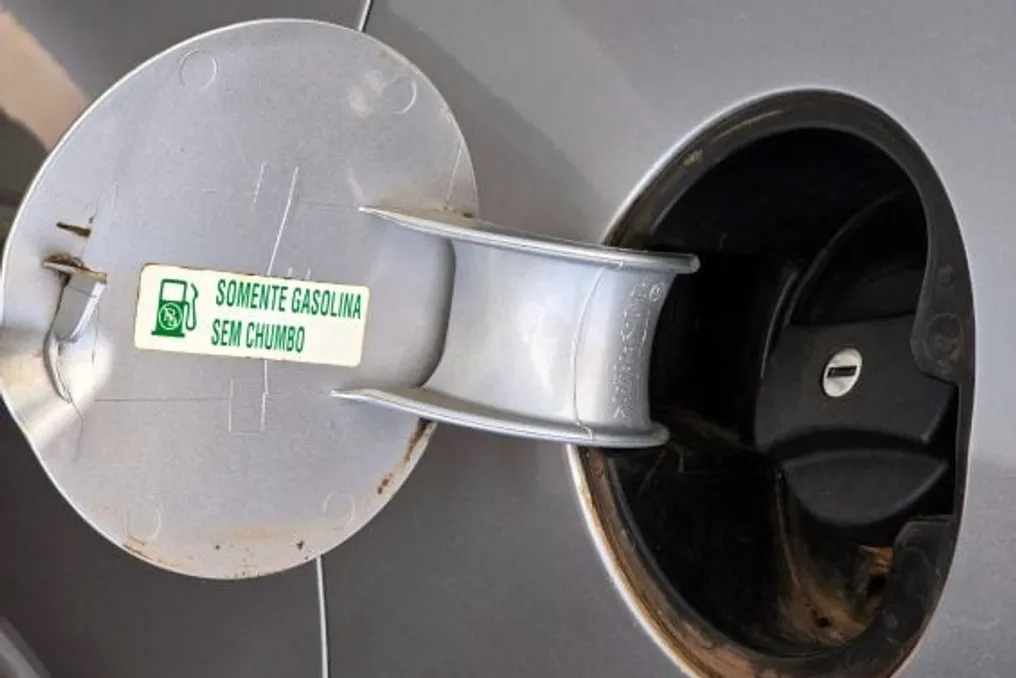
The introduction of E32 gasoline, which raises the ethanol content to 32%, has generated concerns and alarmist publications on social media, with claims that this new blend could cause corrosion in engines, especially those that are not flexible.
However, experts indicate that, as long as the gasoline is not adulterated, the negative impact on the vehicle is not as severe as reported on social media. Therefore, it is always recommended to refuel at trusted stations.
To understand the composition of fuels, it is necessary to differentiate between hydrated and anhydrous ethanol. Hydrated ethanol, found directly at the pumps, may contain between 4% and 5% water, which is part of its production process. If the water content is higher than this, it may indicate adulteration at the station.
Anhydrous ethanol, which contains no water, is more expensive due to the treatment required for its extraction. This anhydrous ethanol is incorporated into gasoline to act as an anti-knock agent, increasing its octane rating. Although this addition occurs globally, usually in percentages up to 10%, in Brazil the content is higher due to sugarcane production and the goal of reducing dependence on external oil.
To detail how changes in the concentration of anhydrous ethanol affect non-flex engines, engineer Erwin Franieck, advisor and R&D mentor for SAE Brazil, who has experience with electronic injection since the beginning of this technology in the country, was consulted.
Vehicles sold in Brazil from 1997 onwards are equipped with a lambda sensor, which monitors fuel combustion. This information is used by the electronic injection to adjust the map according to the fuel and other factors. The same sensor is responsible for identifying the type of fuel used in flex engines, determining the ethanol content for the control unit.
The ideal ratio between air mass and fuel mass for complete combustion, known as the stoichiometric ratio, is about 14.6:1 for pure gasoline and 9.0:1 for ethanol. According to Erwin Franieck, injection systems implemented after 1997 have a tolerance base of 20% variation in stoichiometric ratio at partial load, and up to 30% at idle. This safety margin for the inclusion of ethanol is universal and applies to imported models.
Franieck exemplified the stoichiometric difference between the old E22 gasoline and the new E32, which remains below 5%. Thus, engines over twenty years old are capable of adapting to the current fuel, with only a change in consumption being noted. The engineer reported testing gasoline with up to 40% ethanol in his own single-fuel car, and the operation remained normal. However, he warned that fuel quality is the point that requires drivers' attention.
With the popularization of flex cars, owners of dishonest stations have modified their adulteration practices, starting to add more ethanol instead of solvents. The risk for cars that use only gasoline lies in the use of hydrated ethanol in this fraud, as the present water can corrode internal engine parts, with direct injection engines being even more susceptible.
In flex or alcohol engines, there are protection mechanisms that allow operation with up to 23% water; above this limit, failures may occur. Information about the lambda sensor and injection adaptability is valid for vehicles manufactured from 1997 onwards, including imports. Injection systems without a lambda sensor do not have this flexibility.
Engines equipped with carburetors, including those in motorcycles, may also have difficulties with E32 gasoline, since ethanol can damage aluminum components of the carburetor and require a different adjustment from the original.
Despite the recent increase in ethanol content in gasoline being approved without specific tests, manufacturers assure that their single-fuel cars will operate correctly. Chevrolet confirmed that its non-flex models, such as the Equinox and Silverado, are fit to run on E32. The North American brand mentioned that its regional engineering center is prepared to develop vehicles according to local conditions, and this tropicalization helps mitigate problems related to high-ethanol gasoline.
Similarly, GWM guarantees that all its gasoline vehicles sold in the country can use E32 without problems. The company stated that its cars were validated before the national launch and are ready for even higher blends, such as E35. According to the Chinese brand, its automobiles undergo engine and fuel system calibration for the Brazilian market, considering all specificities of local gasoline with high ethanol content. GWM is also introducing flex engines in the Haval H6 and Tank 300 lines, with new launches expected.
It is important to note that hydrated ethanol can corrode engines not designed for it, which does not happen in flex vehicles or those powered exclusively by alcohol, due to the use of anti-corrosion treatments in these machines. Gasoline itself, even E32, does not present this risk, as anhydrous ethanol is added precisely to prevent such a problem.
Although anhydrous ethanol is hygroscopic and can absorb up to 6% of water, when mixed with gasoline, the risk of internal part corrosion is eliminated. What can happen is the evaporation of gasoline in the tank, but this is managed by the recirculation system, which returns the fuel to the reservoir or burns it in the engine, all foreseen in the vehicle's design.
Additionally, the engines marketed in Brazil are already prepared to handle ethanol. Rogério Gonçalves, Director of Fuels at the Brazilian Automotive Engineering Association (AEA), clarifies that Brazilian engines are developed for gasoline with ethanol, regardless of whether they are flex or not, since ethanol has been used in Brazilian gasoline since the 1970s, with the creation of Proálcool.
The risks of mechanical damage are associated with adulterated fuels. E32 gasoline, compared to the old E30 or premium E25 (still available), will only result in an increase in vehicle consumption. This applies even to officially sold imported cars in Brazil. Models available on the market undergo a tropicalization process to operate with Brazilian gasoline and meet other requirements, as pointed out by Rogério Gonçalves. In theory, there is no forecast of the need for maintenance on vehicles due to the increase in ethanol. Imported vehicles that have not been tropicalized by manufacturers for Brazilian gasoline must receive special attention and, if necessary, may opt for premium gasoline, which maintains 25% ethanol.