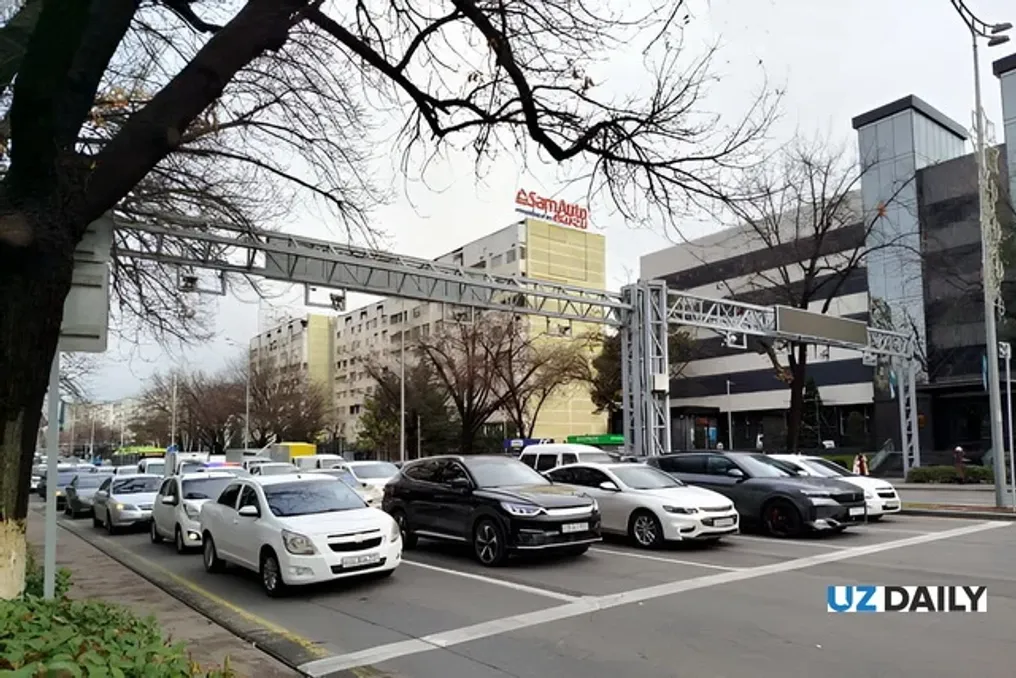
According to data from the Tashkent City Traffic Management Center, a total of 1,469,948 vehicles traveled on the roads of Uzbekistan's capital on September 5. This figure was 32,109 less than the previous day, when 1,502,057 cars were recorded.
On the same day, the capital's bus service covered 170 routes, completing 19,778 trips and transporting 1,098,438 passengers. Additionally, the Tashkent Metro served 745,951 passengers over 24 hours.
The road congestion level in the capital on September 5 fluctuated between 4 and 5 points. The traffic situation was partially complicated by repair works being carried out in seven different locations across the city.
Work was conducted on Bogishamol, Al-Khorezm, Shokiraryk, P. Mahmud, and Samarkand Darvoza streets, as well as on Westminster Lane and at the intersection of Farhod and Lutfi streets. Due to these construction activities, the use of certain road sections and the overall traffic flow were partially restricted.
Drivers were advised to take into account information about road works when planning trips and, if necessary, choose alternative routes.
In parallel, the Road Safety Service continued to monitor compliance with traffic rules. Violations recorded on September 5 included eight instances of vehicles driving on pedestrian walkways, 18 parking violations, and 17 stopping violations.
Four cases related to the violation of the use of lane 'A', designated for public transport, were also noted. These monitoring measures are aimed at ensuring priority for public transport, increasing pedestrian safety, and controlling adherence to established rules by all road users.
Drivers were reminded not to leave vehicles at or directly before pedestrian crossings, to yield to pedestrians at marked crossings, and not to occupy bus stop zones. Drivers must also follow the requirements when using special lane 'A' and avoid obstructing buses when they approach or depart from stops. The situation in the capital is tracked in real time by the Situational Monitoring Center, which allows tracking changes in traffic volume and promptly controlling road conditions in the city.