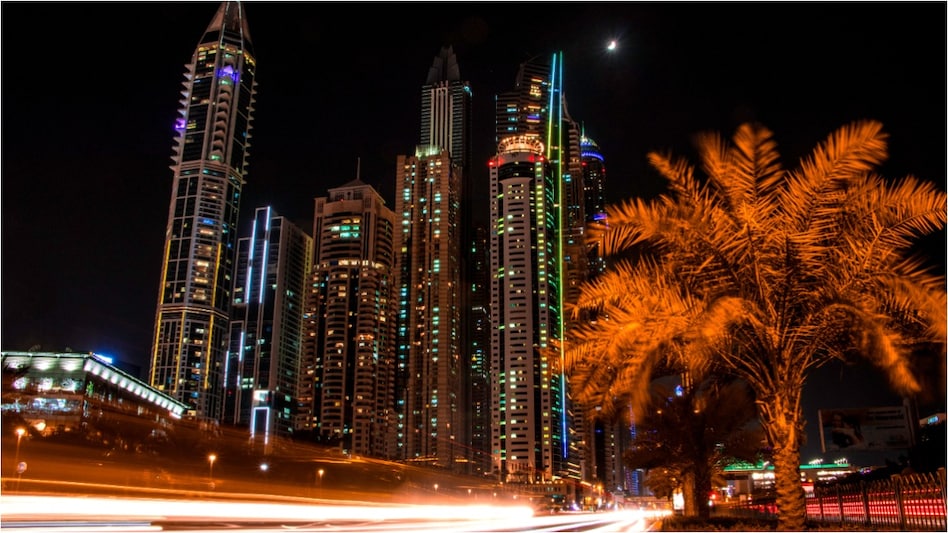
Dubai is known for its skyscrapers, luxury cars, and modern lifestyle, attracting major technology companies and innovators. However, this modern state of the UAE also has another side connected to centuries-old folk tales and beliefs.
Traditional stories in the UAE often feature jinn, the evil eye, and mysterious creatures. Nevertheless, it is inaccurate to claim that all residents of the UAE or Dubai believe in them today; they are mainly part of old folk concepts and oral traditions.
In old UAE folklore, jinn were not exclusively frightening characters. According to reports by The National, these stories were used to warn children and prevent them from committing undesirable acts.
Abdulaziz Al Musallam, who documented UAE folklore, noted that many old tales included jinn and other enigmatic beings. These stories were often scary and had a strong influence on children. Thus, the basis for warnings like 'a jinn will catch you' is indeed present in UAE folklore, although it was not necessarily used everywhere.
Another surprising belief revealed in a report by The National, quoting UAE historian Dr. Hassan Al Naboodi, is that some local traditions held the belief that scattering salt and burning incense on the foundation before building a house helps ward off jinn. Today, this is not considered a scientific fact but reflects the worldview and beliefs of people of that era.
One of the most famous UAE folk stories is the tale of Umm al-Duwais. According to The National, in traditional narratives, she appears as a mysterious and alluring female jinn. Her image varies in different stories: in some, she targets unfaithful men.
These stories were told not only to frighten; they also served as a lesson for children and youth, teaching them to avoid greed, envy, and improper behavior.
Old maritime culture in the UAE also featured stories about jinn. Baba Daria, or the 'father of the sea,' is such a well-known figure in folklore. The National reports that this story was previously told among fishermen and pearl divers, portraying Baba Daria as a dangerous jinn to seafarers.
Another report indicates that figures like Baba Daria and Umm al-Duwais became so popular in traditional UAE folklore that they have been re-documented in contemporary culture through books and cultural projects.
Jinn stories were not limited to books. For a long time, stories of jinn and ghosts were told around Al Qasimi Palace in Ras Al Khaimah. A 2020 report by The National mentioned such stories, stating that children's voices were heard and strange events occurred in the palace. However, it is interesting that not all residents living there believed these tales; some locals completely rejected them.
In the past, when scientific knowledge and modern technology were not what they are today, folk tales played a huge role in explaining natural phenomena and unknown things. According to a 2026 publication by the Sharjah Institute for Heritage, folk beliefs are a complex part of cultural heritage. They demonstrate the link between fear, symbols, and society's worldview regarding the local environment. The institute also noted that some folk beliefs have disappeared, while others remain in cultural memory despite changing lifestyles.
Therefore, phrases like 'a jinn will catch you' were not just a scary slogan; behind them lay a tradition of warning children, teaching social behavior, and passing down stories from older generations.
Today's Dubai is known for the Burj Khalifa, the metro, luxury cars, and advanced technology. But behind this modern city lies the cultural heritage of the UAE, which includes stories of the desert, the sea, jinn, the evil eye, and mysterious characters. Many of these beliefs are now merely part of folklore and cultural memory, although some convictions continue to manifest in various forms.
Thus, to understand Dubai, it is not enough to just look at its glittering buildings; in the past, this city and the entire UAE concealed an entire world of folklore, from frightening warnings like 'a jinn will catch you' to Baba Daria roaming the sea.