
DP Abhushan plans to open 51 stores in second and third-tier cities and achieve revenue of ₹15,000 crore by the 2030 fiscal year
Read more
Business Standard
business-standard.com

DP Abhushan plans to open 51 stores in second and third-tier cities and achieve revenue of ₹15,000 crore by the 2030 fiscal year

The head of jewelry retailer DP Abhushan stated that the company aims to achieve a revenue of ₹15,000 crore by the 2029-2030 fiscal year and intends to increase the number of stores to 51, with a particular focus on second and third-tier cities.

Currently, the company operates 12 stores in Madhya Pradesh and Rajasthan, but it is now expanding its operations into Gujarat, Chhattisgarh, and Maharashtra. The goal of 51 stores by 2029-2030 is primarily concentrated in central, northern, and western India. To realize this phase of expansion, DP Abhushan is utilizing both a franchising model and an owned ownership model.

DP Abhushan's promoter, Vikas Kataria, noted that in the 2026 fiscal year, the company generated a revenue of ₹4,065.13 crore, and thanks to expansion plans, it expects to reach total sales of ₹15,000 crore by the 2030 fiscal year. The company aims to have a presence in 7-8 states.

As part of its expansion, DP Abhushan is entering the Chhattisgarh market by opening a store in Raipur. In Maharashtra, options are being considered in Nagpur and Nashik, while opportunities are being studied in Dahod and Baroda in Gujarat. Meanwhile, the company continues to strengthen its position in Madhya Pradesh and Rajasthan. Plans include opening stores in Sagar and Mansur in Madhya Pradesh, as well as in Jodhpur and Bikaner in Rajasthan, aligning with the strategy of expanding into second and third-tier cities.

To accelerate growth, the company is considering franchising or franchisee-owned models, as well as a company-owned operation (FOCO) model. A contract for one franchise store in Jabalpur, Madhya Pradesh, has already been signed. Although all 12 existing jewelry stores are owned by the company, starting from the current fiscal year, the implementation of franchising or FOCO models is planned for faster presence growth.

For this expansion, the company is allocating capital expenditure (capex) of about ₹50 crore, which will be raised through internal accruals. Kataria also added that the jewelry retailer, headquartered in Ratlam, has a total current debt of ₹180 crore, which the company plans to reduce in the future.
Similar stories

UP government's scheme transformed the amla market in Pratapgarh, increasing farmers' income
Read more
www.aajtak.in

UP government's scheme transformed the amla market in Pratapgarh, increasing farmers' income

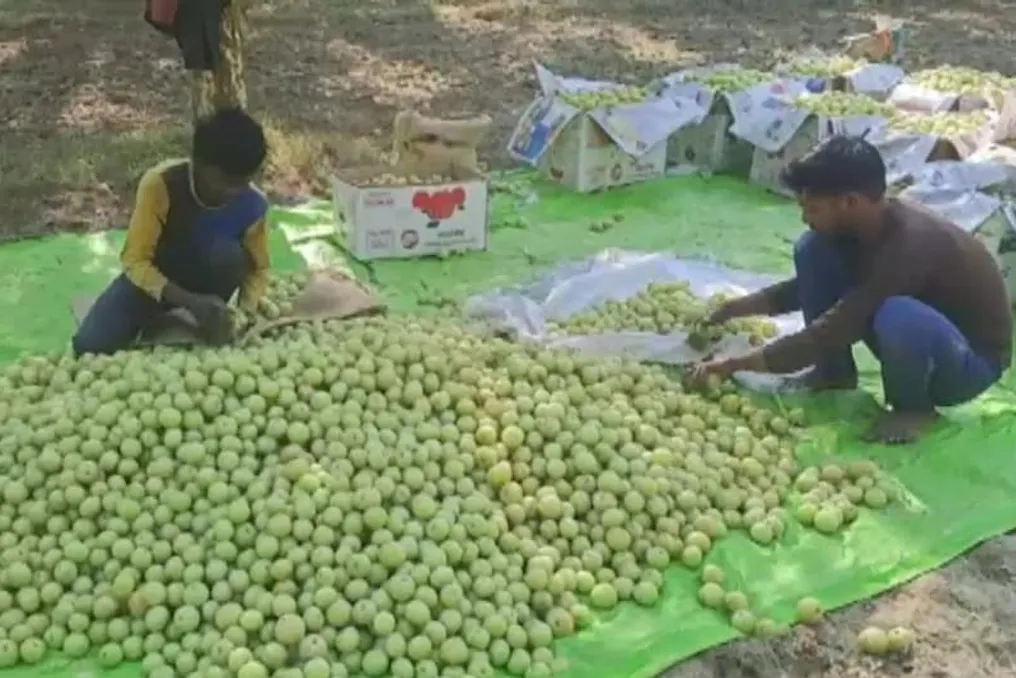
Amla fruits from Pratapgarh are no longer limited to gardens thanks to the UP government's One District One Product (ODOP) program, which has helped bring them to large national and global markets. Now, numerous products are made from this fruit, such as candies, murabba, juices, pickles, and laddus. This has ensured farmers a higher price for their harvest and also created employment opportunities for women.

Pratapgarh is known as the amla city due to the long-standing cultivation of this fruit. Thanks to the ODOP program, the processing of this fruit is now actively supported. More than 15 amla processing units have been established in the district, where various products are prepared, including candies, chawanprash, powder, and hair oil.

The most significant aspect of these transformations involves women from rural areas. Women associated with self-help groups have received training on producing products from amla. As a result, women who previously engaged only in household chores have now become a reliable source of income for their families by working in packaging and processing units.

The administration and the Horticulture Department have not only focused on farming but have also taught farmers how to sell their produce in the market along with processing. With subsidies, easy credit, and e-commerce assistance provided under ODOP, the taste of Pratapgarh is now available not only at local fairs. Through platforms like Amazon, Flipkart, and government portals, the produce reaches the tables of residents in metropolitan cities. Last year, the total turnover in the district exceeded 50 million rupees.

Ramesh Kumar, involved in the business, notes that the plant's capacity has grown from 1000 tons to 10,000 tons. Farmer Mahesh Yadav states that after the program's implementation, there has been a huge increase in demand, and crop prices have risen by 20 percent. Since supplies are made directly from Katni and Jabalpur to Haryana, the dishonest practice of middlemen has disappeared, and all profit goes directly into the farmer's pocket.

Thus, the ODOP program has turned amla cultivation in Pratapgarh into a full-fledged business. Farmers, entrepreneurs, and women from self-help groups are participating in this process, opening up a large market for this traditional district product.

Popular