Even after thorough washing, fruits can contain pesticide residues. Before reaching the table, vegetables and fruits go through stages of cultivation, harvesting, and transportation. Although most people instinctively wash produce before consumption, regular water can only remove visible dirt, not all traces of pesticides.
National studies revealed the presence of pesticide residues in one of five fruit samples, raising a problem that is often unnoticed on the kitchen table. It was this everyday issue that caught the attention of Dr. Asmita Prabhune from Pune.
Five Years of Searching for a Solution
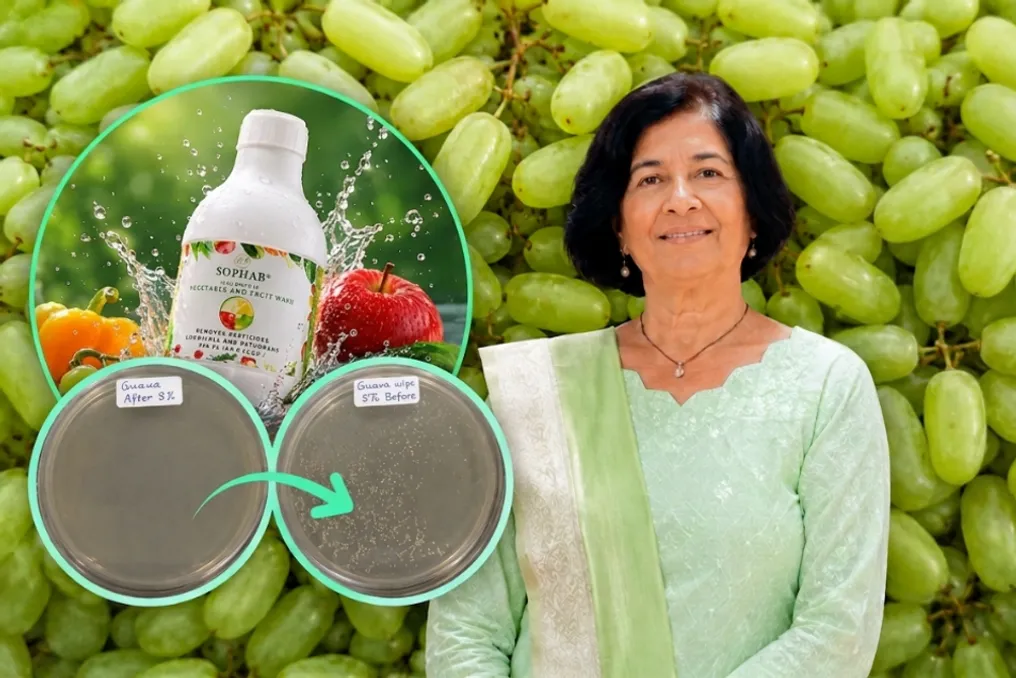
Instead of simply urging consumers to wash their produce more thoroughly, Dr. Prabhune set out to create an effective solution to combat pesticides. Over five years, she worked on development, testing, and overcoming formulation challenges to create Sophab—an organic product for cleaning produce made from natural herbal oils and salts.
According to the team, Sophab can eliminate up to 99% of pesticide residues from fresh produce in about two minutes. The process is simple: Sophab is diluted with water, fruits or vegetables are soaked in the solution for two to three minutes, gently wiped, and then rinsed with clean water.
From Lab to Kitchen
However, turning the idea into a practical product took years of work. Dr. Prabhune's journey involved multiple trials and tests to achieve a formula suitable for daily use. Today, a 100 ml bottle of Sophab costs 85 rupees. For her, the motivation was never purely commercial; she states that she wanted to help people, not make a profit.
The problem she is solving is extremely important. A recent study showed that people who consumed more spinach, strawberries, and bell peppers had higher levels of pesticide biomarkers in their urine. While washing cannot replace responsible agricultural practices or food safety standards, innovations that allow consumers to take an extra step at home can make daily eating habits more conscious.
An Idea That Continues to Evolve
Dr. Prabhune and her team are now working on another version of this concept—wet wipes that could help clean fruits and vegetables for those who eat on the go. This is a reminder that significant innovations do not always require complex machinery or futuristic technology. Sometimes they start with a question in the kitchen: can we make something we do every day a little safer?