Test run of new 16-coach Vande Bharat between Yashwantpur and Mangaluru Central conducted
Read more
Aaj Tak
www.aajtak.in

Test run of new 16-coach Vande Bharat between Yashwantpur and Mangaluru Central conducted

Indian Railways continues to expand its fleet of luxury trains to make journeys more comfortable for millions of daily passengers. Among these new sets, the Vande Bharat Train holds a special place, with its numbers constantly increasing.

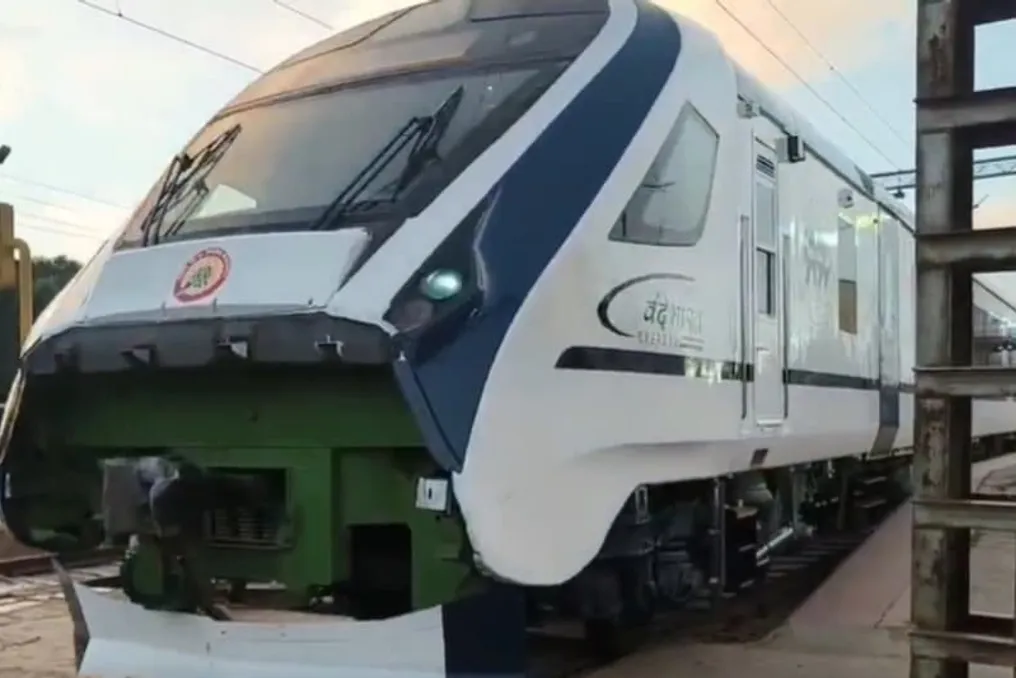
A test run of the new white and blue Vande Bharat express train was recently conducted between Yashwantpur and Mangaluru Central. Video footage of this journey was published by the Divisional Railway Manager (DRM) Bengaluru on social media.

Indian Railways is receiving a new Vande Bharat Express train for Bengaluru. The trial run commenced on the new route between Yashwantpur and Mangaluru Central. This semi-high-speed train will play an important role in strengthening connectivity between Bengaluru and Karnataka. The route covered during the Vande Bharat's trial run is a section of about 360 kilometers belonging to the South Western Railway.

The video of the trial run on the Yashwantpur-Mangaluru Central track, published by DRM Bengaluru, showcases the new 16-coach luxury Vande Bharat train moving along the tracks in white and blue hues. The objective of this test was to assess the time and quality of service provided by the Vande Bharat train on this section.

During this test launch, senior staff and personnel from the operations, electrical (TRO/TRD), and mechanical engineering departments will monitor various operational and safety aspects. It should be noted that 12 pairs of Vande Bharat Express trains are currently running in Karnataka, and this train will be the thirteenth in the state serving the Yashwantpur-Mangaluru route.

Vande Bharat series trains have come a long way since their launch in 2019, and their numbers are steadily growing. The Vande Bharat Express, initially launched as a premium class service with seats, is now expanding its capabilities towards overnight travel. Thanks to the Vande Bharat Sleeper trains, long-distance semi-high-speed rail journeys have become more convenient and comfortable.

In January 2026, the Vande Bharat Sleeper maintained a load factor above 100%. Currently, 162 Vande Bharat services are operating nationwide, and the demand for them is driving the development of Vande Bharat plans in India. The railway company is focused on further increasing the number of Vande Bharat trains. According to last week's report, the current plan involves manufacturing a total of 260 Vande Bharat Sleeper coaches. This will allow for the expansion of the network of fast and modern trains for long-distance night travel.

According to the plan, the coaches will be manufactured by Bharat Earth Movers Limited (BEML) – 10 units, Chennai Integral Coach Factory (ICF) – 50 units, Kinet Railway Solutions (KRS) – 120 units, and Titagarh-BHEL – 80 units.
Similar stories

120 Vande Bharat sleeper coaches to be manufactured in Maharashtra; first prototype expected in 2027
Read more
www.aajtak.in

120 Vande Bharat sleeper coaches to be manufactured in Maharashtra; first prototype expected in 2027

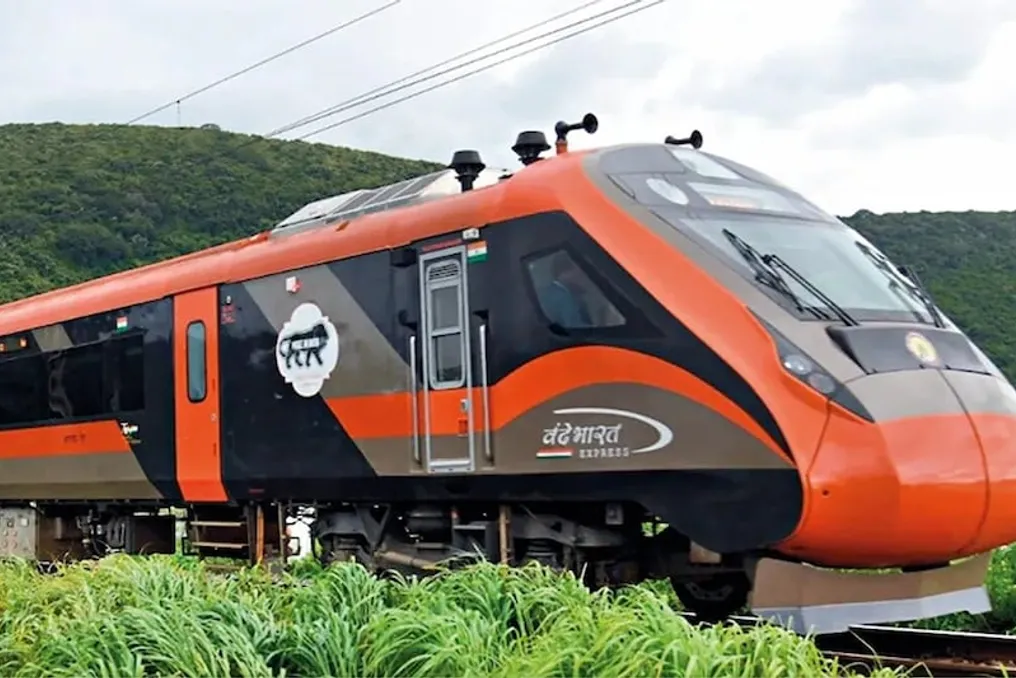
Important information has emerged regarding the Vande Bharat Sleeper trains. The first prototype of the Vande Bharat sleeper coach is expected to be presented at the modernized Marathwada Rail Coach Factory (MRCF) in Latur, Maharashtra, in the current financial year. Previously, the completion deadline was set for June 2026, but it has now been extended to March 31, 2027. This was announced by Salim Ahmed, Chairman and Managing Director of Rail Vikas Nigam Limited (RVNL), at the company's 23rd annual general meeting.

According to the company, the production of Vande Bharat sleeper coaches at the Marathwada factory is ongoing. The responsibility for creating the Vande Bharat Sleeper series has been assigned to the joint venture Kinet Railway Solutions Ltd, established between Rail Vikas Nigam Limited and the Russian company Transmashholding. This JV is tasked with producing 120 such series, with each series consisting of 16 coaches, totaling 1920 coaches.

According to Salim Ahmed, Chairman of RVNL, the Vande Bharat Sleeper project is transforming the company's business. RVNL is now expanding its activities beyond traditional railway construction and infrastructure projects into rolling stock manufacturing. He noted that this change is linked to the revision of the order book, entry into rolling stock production, development of large communication infrastructure projects, and securing contracts through competitive bidding.

Salim Ahmed also emphasized that in previous years, Rail Vikas Nigam Limited strengthened its capabilities in executing complex railway infrastructure projects. The company operates in 16 states across the country, and its international operations are also growing. According to him, RVNL has already handed over 158 projects to Indian Railways. These projects include the construction of new railway lines, track gauge changes, doubling of tracks, electrification, as well as workshop and other critical infrastructure tasks. Over 17,000 kilometers of railway infrastructure have been created through these projects.

RVNL reported that during the financial year 2025-26, the company completed and handed over 173.82 kilometers of railway infrastructure to Indian Railways. Among these is the Fefna-Indra-Mau-Shagandj section measuring 150.28 kilometers. The company asserts that these projects have contributed to improving the safety, speed, and efficiency of rail transport.

During this period, the company also carried out electrification work on 173 kilometers of railway tracks. This work included the installation of four traction substations, eight switching stations, and 12 SCADA systems. These works were conducted as part of track doubling projects and related third-line projects.

RVNL worked on numerous projects even in challenging geographical conditions. In the financial year 2025-26, the company completed earthworks for the construction of a 23-kilometer tunnel. Furthermore, the company made progress in major mountain railway projects being implemented in Uttarakhand, Himachal Pradesh, Madhya Pradesh, and Maharashtra. During the same period, 19 workshop projects were launched.

The company also reported progress on workshops for Periodic Overhaul (POH) of coaches in Kajipet and on the electric locomotive POH shop in Vadodara. Both these projects are planned to be commissioned in the current financial year. Salim Ahmed added that to advance connectivity projects, the company has already established five Special Purpose Vehicles (SPVs) in the form of joint ventures.

Construction of Indian Railways' high-speed test track worth ₹967.07 crore nears completion
Read more
www.aajtak.in

Construction of Indian Railways' high-speed test track worth ₹967.07 crore nears completion

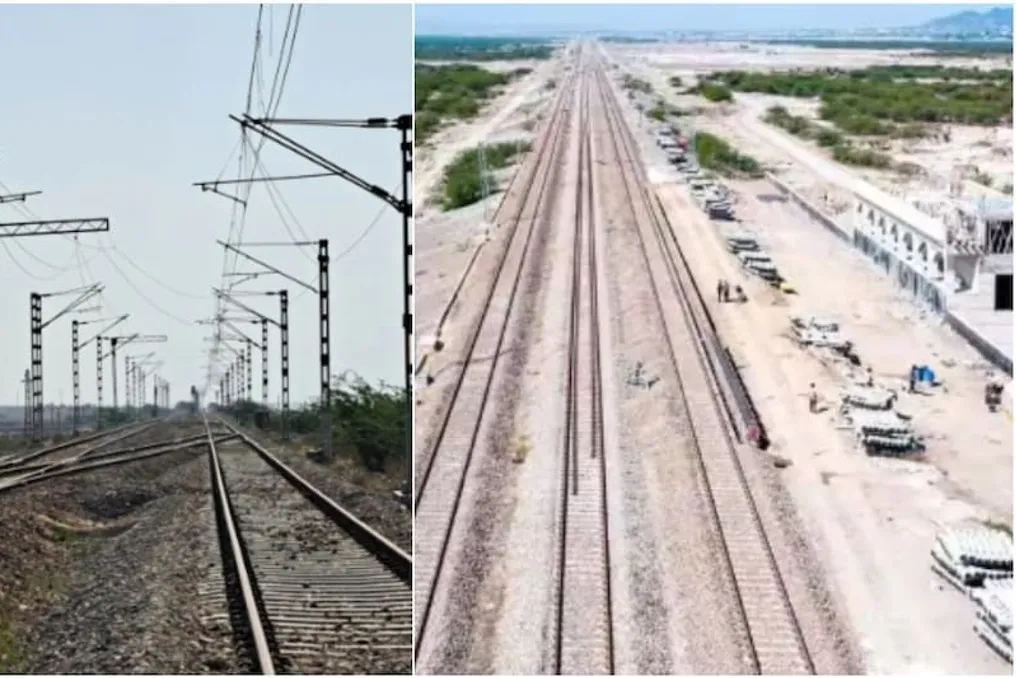
The first specialized high-speed test track for Indian Railways is nearing completion. This track, spanning approximately 59 kilometers and located between Gudha and Tatana Mitri in Rajasthan, is being built with a total budget of ₹967.07 crore.

According to the railway, testing and trials of various types of rolling stock, including the Vande Bharat train, are expected to commence on this high-speed track between 2027 and 2028. The project is being developed by the Research Designs and Standards Organisation (RDSO), and the administrative responsibility lies with the North Western Railway (NWR).

This test track is being constructed in the Nava area, which falls under the Jodhpur division, and is situated about 70 kilometers from Jaipur. According to Amit Sudarshan, the Chief Public Relations Officer of NWR, this infrastructure will help the railway implement new technologies more quickly.

The specialized test track project was approved in two phases: the first phase received approval in December 2018, and the second phase in November 2021. The entire complex includes seven major bridges, 129 minor bridges, and four stations: Gudha, Jabdinagar, Nava, and Mitri.

Necessary modifications have been made at the Gudha station to integrate the test track into the existing railway network. The North Western Railway has modified the existing Kyosan electronic interlocking system to connect the specialized RDSO test track. Furthermore, adjustments have been made to the slot control scheme and the indication circuit of all 18 points on the Gudha end, aligning with new safety guidelines and aimed at enhancing operational safety.

This 59-kilometer test track is designed to accommodate several sections for conducting diverse tests. It comprises 23 kilometers of main line and a 13-kilometer high-speed loop at Gudha. A 3-kilometer accelerated testing loop is being built at Nava, and a 20-kilometer curve testing loop is being constructed at Mitri. Moreover, a 4.5-kilometer curved track for static rolling stock testing has already been completed and commissioned.

The railway reports that work on the 31.5-kilometer high-speed section and the 3-kilometer accelerated testing loop is nearly complete, with finalization planned by September 2026. Additionally, the 20-kilometer curve testing loop at Mitri is in an advanced stage, and its commissioning is expected by the end of 2026.

This new infrastructure is intended not only for checking the speed and performance of trains. It will also be used to test track materials, bridges, TRD equipment, signaling systems, and geotechnical parameters alongside rolling stock. Amit Sudarshan emphasized that the new 59-kilometer broad-gauge specialized track between Gudha and Tatana Mitri will be the first in India to possess comprehensive capabilities for testing rolling stock according to international standards such as UIC-518 and EN-14363.

Indian Railways launches first long-distance train with double containers
Read more
www.aajtak.in

Indian Railways launches first long-distance train with double containers

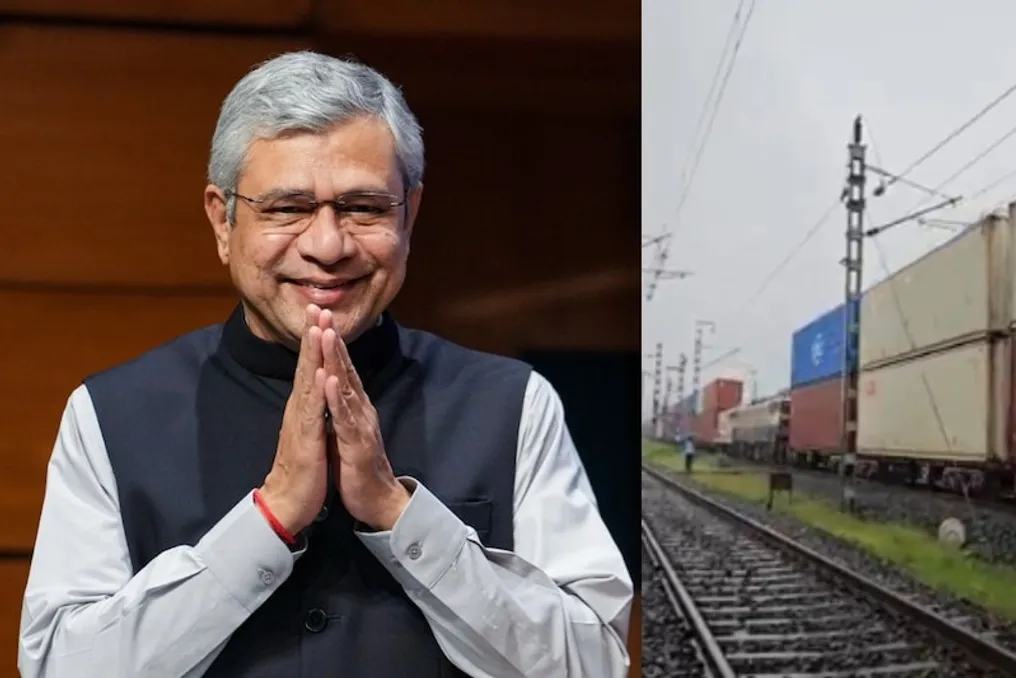
The Minister of Railways, Ashwini Vaishnaw, shared a video of an Indian Railways freight train. This consist is 1.3 kilometers long and is notable for carrying stacked containers (double stacking).

This train is the first in India to utilize double container stacking technology. It transports 360 TEUs (Twenty-foot Equivalent Units) of cargo from Jawaharlal Nehru Port (JNPT) to Varna, a district in the Gujarat division.

Sharing the video on social media, Ashwini Vaishnaw noted that this train became the first on the Western specialized freight corridor to cover such a long distance (1.3 km). The train departed from JNPT on August 21st at 19:00 and traveled approximately 422 kilometers to the Goods Container Terminal (GCT) in Varna, owned by Koncor.

Two double-stacked consists participated in this long-haul journey, each loaded with 45+1 units. According to railway data, the first consist was pulled by locomotive number 60311, weighing 1817 tons, while the second consist, pulled by locomotive number 24690, weighed 2105 tons. Thus, the total weight of the train was 3922 tons.

According to an ANI report, both consists together transported 360 TEUs in one go, demonstrating the railway's capacity to handle large volumes of cargo through long-distance transport. This initiative is expected to accelerate container offloading from JNPT by allowing the transportation of maximum cargo volume in a single consist.

The use of double stacking can reduce the number of trains required to transport the same volume of cargo. This will lead to reduced terminal congestion and more efficient utilization of railway capacity. Furthermore, such long double-stacked trains can decrease the need for locomotives, container platforms, and other rolling stock.

Accelerated offloading can reduce the dwell time of containers at ports and terminals, as well as lower overall transportation times and costs. This electrified train also supports Indian Railways' efforts towards eco-friendly freight transport. Such trains can reduce dependence on road transport requiring trucks, thereby decreasing traffic jams and air pollution caused by vehicles.

Popular