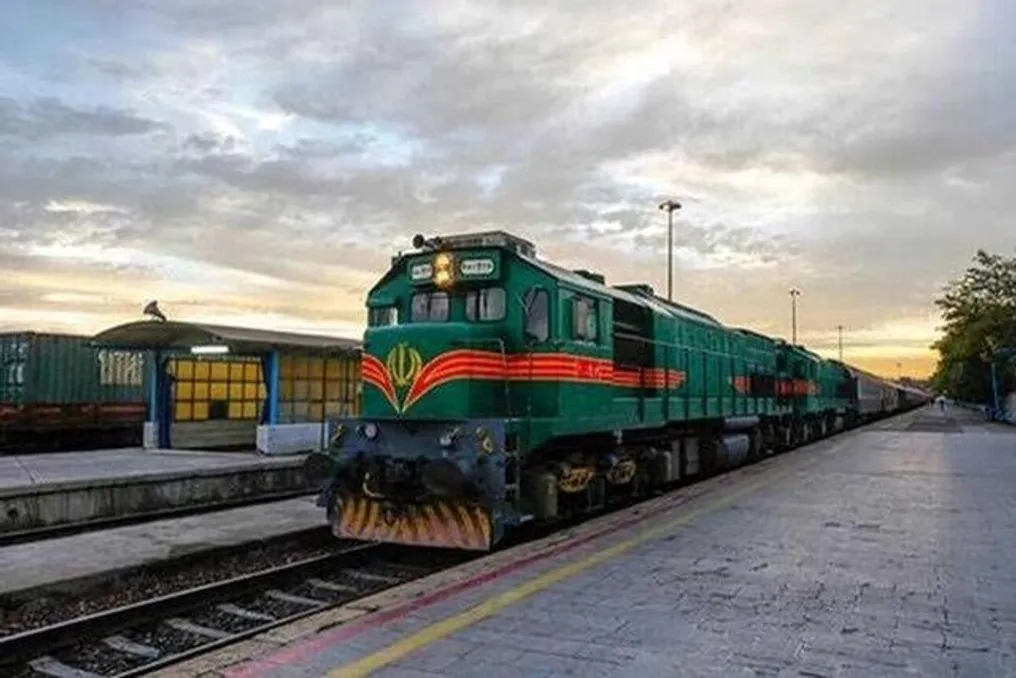
The Director of the General Directorate of Foreign Trade of Iranian Railways emphasized the stability and growth of trade turnover through all 13 railway border crossings. He refuted rumors about the cessation of transit operations and announced plans to double the transit potential on the northeastern borders, as well as the development of ports connected to the railway network.
Stability of Railway Borders Operations
As Shahriar Nagizadeh reported in an interview on Saturday, the national railway network plays a key role in connecting international routes. He noted the growing trend in trade exchange and dismissed any doubts regarding the movement of goods at railway borders.
Explaining Iran's geographical location, he specified that the northeastern railway network is connected to Turkmenistan's network via the border points of Sarakhs and Incheh Borun. Turkmenistan acts as a vital link, connecting Iran with CIS states within the Shanghai Cooperation Organisation along the East-West corridor (from China to Europe), as well as along the North-South corridor (from Russia and Kazakhstan to Iran).
Nagizadeh added that due to this feature, rail transport and border exchange with Turkmenistan hold special strategic and economic significance for the country.
Refuting Rumors and Development Plans
Responding to reports circulated on social media, the director of the general directorate stated that it is natural for opponents to try to create fake news to heighten the atmosphere. However, he stressed that the railway serves peace, the environment, and the country's industrial development.
He emphasized that, contrary to rumors aimed at creating black markets and disrupting supply chains, the movement of goods is proceeding normally across all 13 railway borders, including Sarakhs and Incheh Borun. Moreover, the trend of exchange at these borders has not stopped but has significantly increased compared to last year.
Speaking about the need to improve service levels, Nagizadeh noted that due to increasing international demand, it is necessary to develop the logistical capabilities of border stations, including loading and unloading operations, railway tracks, and equipment. This will allow goods to enter the country quickly and safely without border delays. Close cooperation exists in this matter with the Iranian Customs Administration.
He continued, referring to Articles 57 and 58 of the Seventh Development Plan, which define the railway's obligations to achieve target transit volumes. Through the modernization of Sarakhs and Incheh Borun stations, which currently handle about 5 million tons combined, the goal has been set to increase this figure to over 10 million tons.
Route Diversification and Maritime Transport
Regarding alternative routes, the director of the general directorate reported that new combined routes have been planned and implemented to diversify the supply chains of essential and industrial goods. Cooperation with Kazakhstan, which is a gateway to China's railway network, has increased manifold. Currently, the number of trains on the China-Iran route has increased from 7 annually to 3 monthly, indicating high demand and great potential for the railway network.
Concerning maritime capacities, he added that on the Caspian Sea coast, the national railway network is connected to the ports of Amirabad and Caspian. The productivity of these ports has increased compared to last year. Given the development of the southern coasts, the capacities of northern ports are being expanded to strengthen ties with Russia and the North-South corridor.
The railway official stressed that by utilizing 15,000 kilometers of railway network and 35,000 freight wagons, their goal is the economical, safe, and efficient movement of goods from entry points to other destinations and countries.