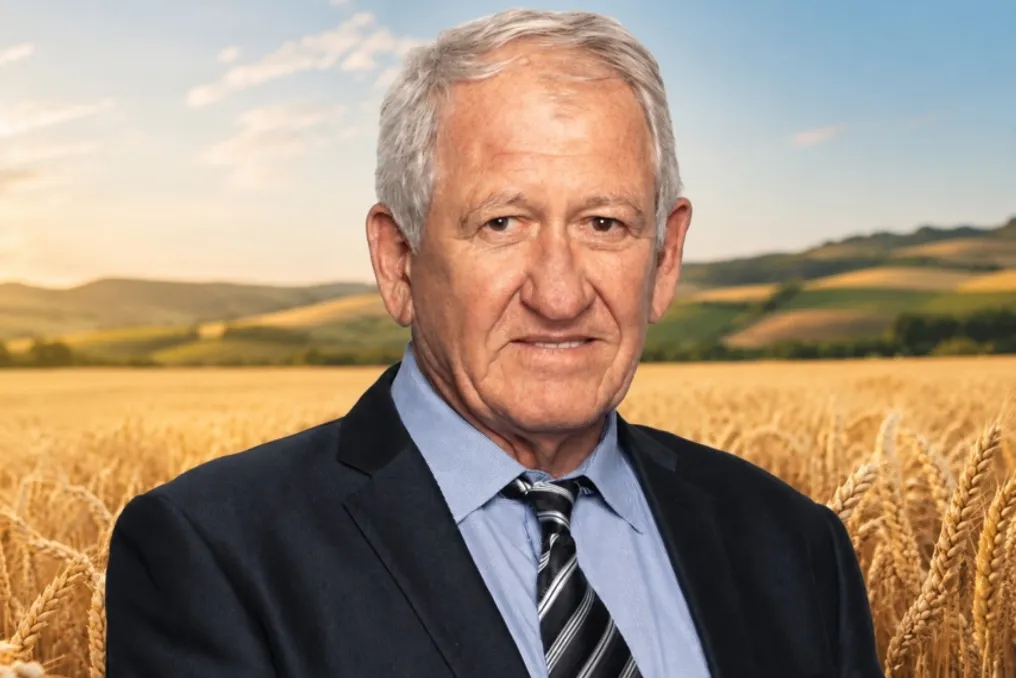
Tjaart Kruger, CEO of Tiger Brands, called for the creation of a stronger and more interconnected agricultural and food value chain. He warned that South Africa's food security and economic growth depend on the collaboration between producers and processors to form a more competitive system.
Speaking at the Swartland Show in Murrizburg, Western Cape, on Friday, Kruger used his position in one of the country's largest food companies to examine the link between agriculture and the broader food industry. He argued that value is generated throughout the entire chain: from the producer to the processing stage and the end consumer.
He emphasized that the relationship between buyers and producers should not be viewed as a simple transaction, but as part of a wider value chain where the sustainability of each participant is crucial. The central theme of his presentation was the assertion: 'Producers need buyers, and buyers need producers,' as he highlighted the importance of understanding how value moves within the agricultural economy.
For Tiger Brands, this means ensuring the competitiveness of production operations while maintaining reliable access to agricultural raw materials. Kruger stated that the company is focused on strengthening its positions at key points in the value chain, including increasing productivity, reducing costs, and ensuring food safety.
He also stressed the importance of food security, asserting that South Africa cannot take its ability to produce and process food for granted. Therefore, the sustainability of the agricultural sector is closely linked to the sustainability of the country's food system.
A recurring message in Kruger's presentation was the need for long-term thinking. He stated that businesses across the agricultural chain must have plans covering three, four, and five years ahead, instead of focusing only on immediate pressure. Such planning allows farmers and companies to prepare for changing market conditions, manage risks, and make more informed investment decisions.
This long-term approach is particularly important in agriculture, where producers face risks such as weather conditions, resource costs, market volatility, and changes in consumer demand. Kruger also pointed to the importance of diversification and embedding sustainability into business strategies, rather than relying on a single source of income or one set of market conditions.
Kruger's speech also touched upon issues related to price pressure on businesses and consumers, as well as the challenge of improving the competitiveness of food production in South Africa. He argued that the industry needs to look beyond individual companies and consider how the entire value chain can become more efficient. For food producers, the cost of agricultural goods is only one component of the final price; processing, logistics, labor, energy, and other expenses contribute to the total amount paid by consumers.
This makes collaboration across the value chain increasingly important, especially during periods of financial pressure from both producers and consumers. Kruger also highlighted the role of investment and the necessity of maintaining an attractive environment for doing business and expanding in South Africa.
The CEO of Tiger Brands presented agriculture and food production not as separate industries, but as interconnected parts of a broader economic system. Access to viable markets is critical for farmers. For food companies, a productive and sustainable agricultural sector is equally important, as it provides the raw materials upon which processing and production depend.
Thus, Kruger's message to the farming audience boiled down to common interests: a healthy agricultural sector supports food producers, while a competitive processing industry creates markets and adds value to agricultural production. He also spoke about leadership in difficult times, noting that leading is relatively easy in favorable conditions, but it is tested when budgets are under pressure, circumstances change, and people turn to their leaders for direction.
For farmers facing complex economic conditions, this could have been one of the most relevant messages of the presentation: resilience is not just about surviving a tough season, but about making necessary decisions and investments to maintain viability amidst inevitable changes in conditions. Kruger's appearance at the Swartland Show offered a view from another side of the farm gate, emphasizing how closely intertwined the destinies of South African agriculture and its food producers are.