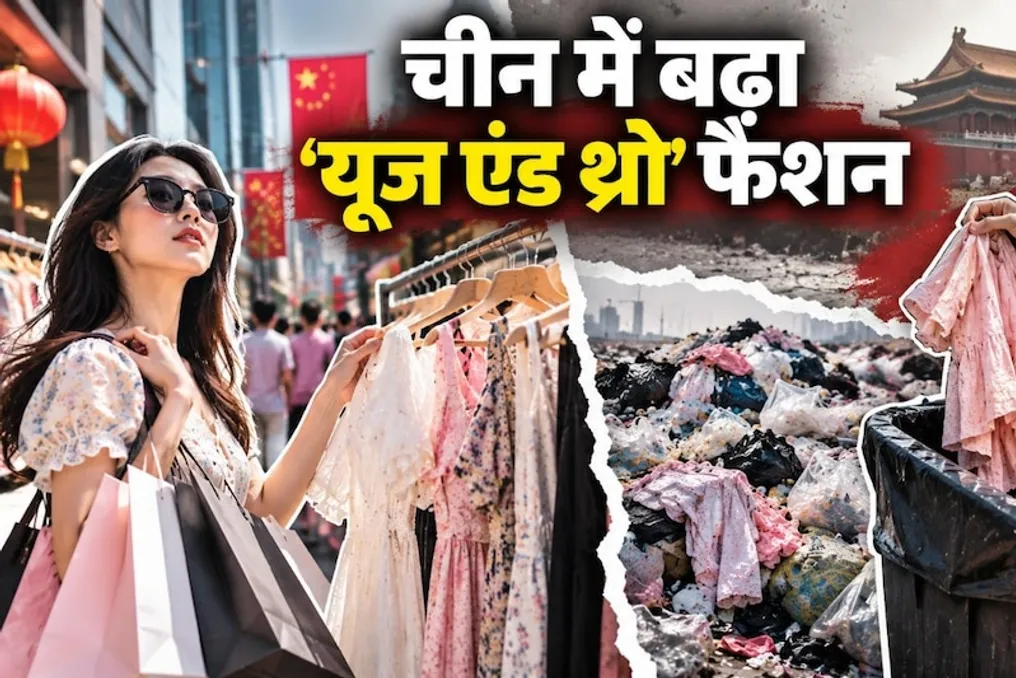
Currently, people prefer to wear diverse clothing while traveling to take beautiful pictures and post them on social media. However, a new and striking trend has emerged in China: some tourists purchase clothing that they discard after using it only once. This phenomenon is called 'disposable clothing' or 'disposable fashion.' Questions regarding environmental damage and health issues are arising around this trend.
According to a report, during the summer period of this year, demand for 'disposable clothing' sharply increased on Chinese social media platforms. Hashtags related to this term were viewed over 6.8 million times on one social platform, and the number of discussions reached approximately 135 thousand. People consider such clothing affordable and convenient for trips. Some explain the purchase of these items by saying it is simpler than packing a lot of clothes for a trip and then having to wash them. One woman shared on social media that she bought five sets of clothing for a seven-day trip, spending no more than 200 yuan, which is equivalent to about 30 US dollars. She did not plan to keep this clothing after the trip was over.
These items are not intended for everyday wear but for creating photographs in specific locations. Among them are bright long dresses, long cloaks, jackets, and various attractive outfits. Many clothing items are sold with consideration for specific tourist spots or events. For example, there are dresses available for beach holidays, Hanfu for traditional Chinese festivals, and special clothing for trips to the Xinjiang region in China.
One clothing store owner reported in the report that her shop sells about 15 thousand such items monthly. The main buyers are people aged between 18 and 30. The cost of these outfits is also very low; the most popular models cost between 10 and 50 yuan, which is approximately between 1.5 and 7.5 US dollars. Converted to Indian rupees, this price is comparable to the cost of one ordinary meal.
Despite the fact that this trend seems cheap and convenient for consumers, concern is growing among environmentalists and social media users. If clothing is thrown away after one use, it inevitably leads to an increase in textile waste. The fashion industry is already under close scrutiny due to the large volume of production and waste. Thus, the habit of discarding clothes after one use may exacerbate the problem. Furthermore, questions are being raised about the quality of extremely cheap clothing and the materials used in its production. This is why this popular fashion trend gaining traction in China has become a subject of discussion not only on social media but also in the context of ecology and health.
The desire to make every trip special on social media has contributed to the development of this new approach to fashion. People buy new clothes depending on the location, take photos, and then throw them away instead of reusing them. The question arises: what long-term impact will these items, bought for a few minutes of photos and social media posts, have on the environment? Currently, 'disposable fashion' is actively being discussed in China, and its growth has initiated debates about the need for responsible and sustainable fashion alongside cheap fashion.