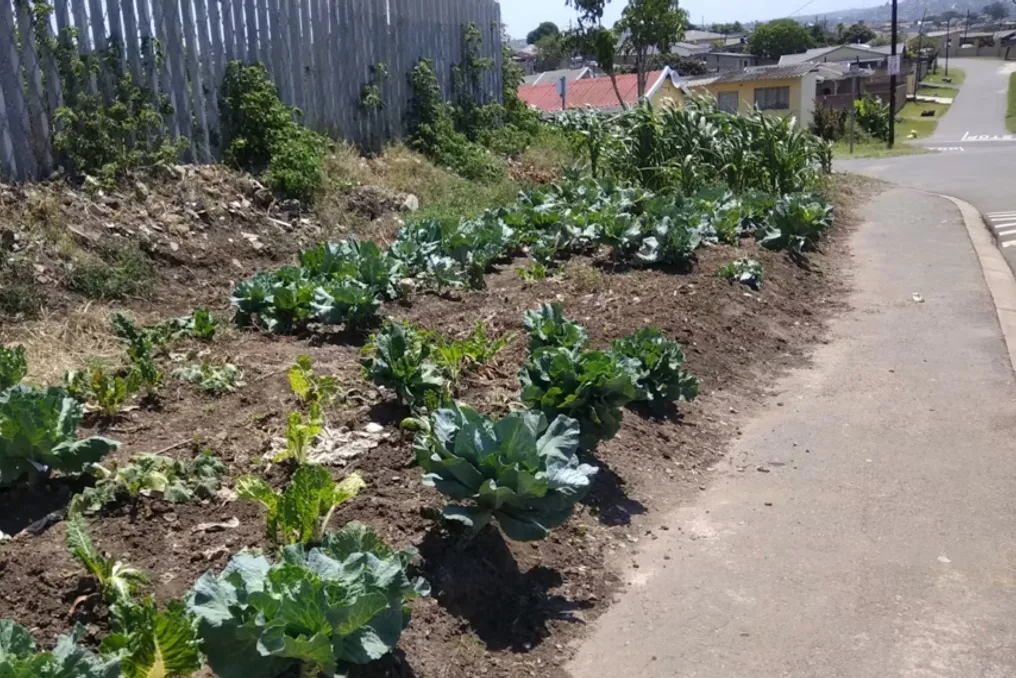
Foraging, which is the collection of wild plant and animal materials from the environment, is becoming increasingly popular in cities around the world. In South African cities, some residents gather wild berries and imfino (wild spinach) in open areas, considering them more nutritious and fresh compared to store-bought produce.
Many people associate foraging with their cultural heritage, recalling time spent in the savanna or on rocky beaches gathering mussels with elders or childhood friends.
Although some plants popular among foragers are grown in public parks, many city dwellers fear that authorities might demand they stop collecting in parks and gardens. However, research has shown that this fear is often unfounded.
As an urban ecologist, the study's author investigated how city residents interact with nature through foraging. He visited cities along South Africa's east coast, surveying 80 foragers and 15 municipal officials responsible for managing public parks, gardens, verges, and reserves, while also studying the theories underlying this phenomenon. The goal was to determine whether city residents share an understanding of how foraging can benefit both people and nature, and where it can be practiced safely and sustainably.
The research found that most people collected plants in wasteland areas and along roadsides, avoiding parks and public gardens due to fear of reprimand. Nevertheless, land managers generally supported foraging in public spaces, and some even planted useful species for people to collect.
The author identified four main green zones in the city that can be managed by both landowners and the public to improve foraging conditions: community residential gardens and yards, public verges and curbs, public parks and gardens, and natural reserves. Wastelands were not considered because, although these areas are important to foragers, they are not actively managed by the municipality or their owners.
To protect urban biodiversity during its use, the author addressed the issue often described as the 'tragedy of the commons': if everyone freely collects wild plants and other resources, populations will deplete, and habitats will suffer. However, studies show this is not always the case. When people share an interest in a resource, they can agree on ways to use it without destruction.
In the context of urban foraging, this may mean that foragers, land managers, and other users of these spaces agree on what can be collected and where. They may also agree on who, when, how much can be collected, and how to ensure that plants and other species are not overused.
A key element is ensuring the practicality and clarity of these rules, as well as involving the people who use these spaces in the foraging management process. Most people agreed that designated foraging zones, both separate and within existing parks and gardens, would be the best option for both people and biodiversity. This is because foragers would feel confident knowing they are not breaking the law, and park managers would not worry that foraging everywhere would make the gardens untidy.
However, they believed that encouraging foraging in specifically designated natural reserves carried the greatest risk due to the danger of human interference.
Municipalities should collaborate with local communities to develop spaces that allow for sustainable urban foraging and reach agreements on how to manage these zones. The author noted that many foragers collect wild edible fruits, herbs, and medicinal plants along roadsides and sidewalks, often during commutes or as part of community activities. It was found that municipalities had only planted three species of wild edible fruit.
The state and municipalities could plant more wild fruit trees, especially near schools and busy public places such as playgrounds and police stations—not just for food, but also for shade. Municipalities need updated internal guidelines on which species to plant and how to design spaces that promote sustainable foraging, including setting norms for how much people should take and leave when collecting.
The author recently published general recommendations for foragers based on years of studying global experiences. These recommendations help consider whether a species is sustainable and viable for collection, or if it is fragile and requires careful handling, at what stage of its reproductive cycle it is, and whether other human and non-human collectors depend on it—but in case of doubt, one should ask an expert.
Based on this research, the author and his colleagues published a guide for urban landowners in South Africa. It suggests planting species such as wild plums (Harpephyllum caffrum), wild date palm (Phoenix reclinata), Numm-num (Carissa sp.), and kiwi apple (Dovyalis caffra), which are resilient to collection. It is also important to communicate how much of a plant can be safely collected without killing it. This can be done through public engagement, such as information boards, lectures, and walks organized jointly by the municipality and citizens.
More recent research by the author has shown that foraging brings significant benefits to physical and mental health in the long term. These benefits include increased intake of nutrients, gut bacteria, and immunity, as well as an enhanced sense of personal satisfaction and belonging to a place. Foraging also contributes to the accumulation of knowledge, skills, and social connections, as foragers learn from each other and often gather around experiences related to nature, food, crafts, and well-being. It can help preserve biodiversity by protecting existing green spaces or creating new ones valued by people for their cultural and spiritual connection to nature. To realize these long-term benefits, urban municipalities and the population must start working together to create foraging zones now.