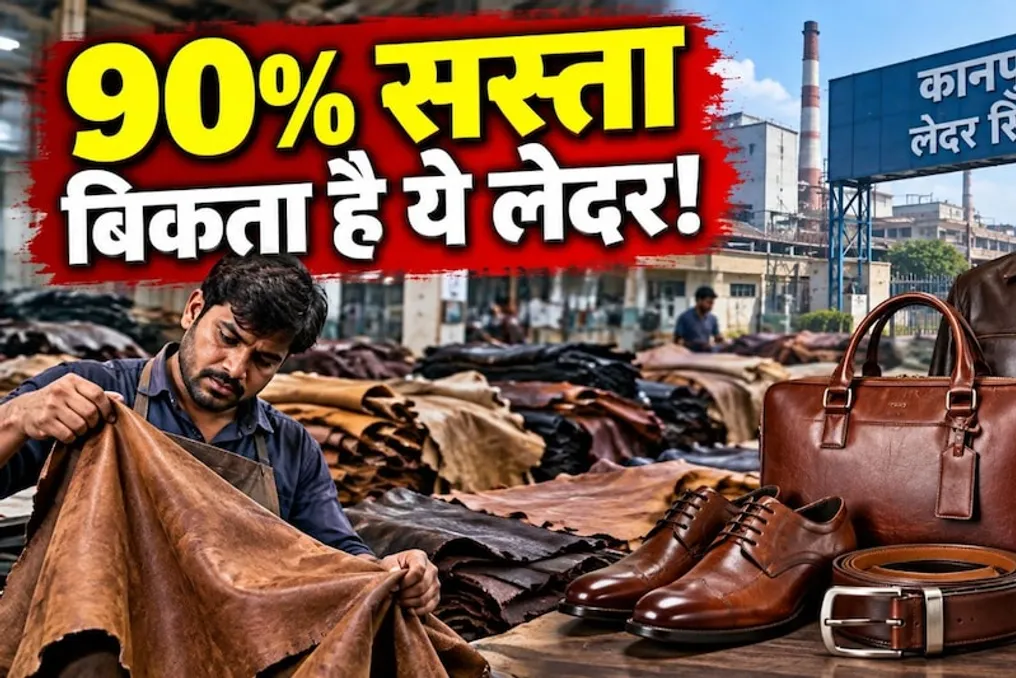
Kanpur city is known as a major center for leather goods production, where footwear, belts, jackets, bags, and many other items are made. The process of creating leather goods that cost thousands of rupees in boutiques is quite complex. It involves several stages—from raw material to finished product. Kanpur's leather industry is important not only for business but also for the city's economy, providing employment for a large number of people.
The leather used in factories comes from various sources, including buffalo and goat hides. Some factories also import specialized types of leather from abroad. After arriving, the raw leather contains moisture, so it is first dried. Then, the leather is pressed using a hydraulic press to make the surface smoother and higher quality. Next, the leather is coated with paints and other chemical substances, using a rotary cutter that ensures even application of the coating on the surface.
After machine processing comes the most crucial stage—quality control. Finished items are not immediately sent to production. Factory employees carefully inspect the leather to ensure there are no stains, wrinkles, or cuts. If even the slightest defect is found, the leather is rejected. What is surprising is that leather with minor wrinkles is not included in premium products. Such leather falls into the category of scrap or defective material. According to the factory, this product can be sold for about 10 percent of its cost price, meaning a price reduction of almost 90 percent due to a minor defect.
There is a significant difference between the cost of leather goods produced in Kanpur factories and their market price. For example, a belt made in a factory might cost between 400 and 500 rupees. However, in retail trade, the same belt can sell for 2000–3000 rupees. This difference is due not only to production but also to packaging, transportation, seller's margin, and brand price. Furthermore, when it comes to major luxury brands, the price increases manifold, reaching hundreds of thousands of rupees. The main reason for this is not just the cost of the leather itself, but the brand value, as most of the amount paid by the customer goes towards the name and recognition of the brand.
Kanpur's leather industry is important not only for the domestic market. Significant volumes of leather and leather goods are exported abroad. It is stated that Kanpur's share in the total export of leather goods from Uttar Pradesh is very large. The Kanpur-Unnao cluster has a special reputation in this industry, making Kanpur a key center for foreign buyers looking for leather goods suppliers in India.
Various types of raw materials are used in the factories, the main ones being buffalo and beef leather. Buffalo leather is in high demand in the domestic market, while some types of beef leather are used for export-quality products. Leather is also imported from abroad because the quality of raw materials and processing methods there are at a higher level. The belt manufacturing process includes stages such as cutting, sanding, polishing, edge dyeing, and final finishing. After all these operations, the leather transforms into a premium and shiny product.
Support for the development of the industry is provided to small entrepreneurs and artisans. Under the government program 'One Village—One Product' (ODOP), small producers receive support. This assistance includes providing equipment, sewing tools, and other necessary apparatus for working with leather. This allows people engaged in producing footwear, slippers, bags, belts, and other leather goods on a small scale to expand their businesses.
Kanpur's reputation has long been associated with the leather industry. An entire industry operates here—from raw material to the final product. This is why Kanpur is considered one of the leading global centers for the production and export of leather goods. Thus, the next time you see an expensive leather belt or bag in a store, remember that the story of this item begins not in the store, but with a long process involving raw leather, machinery, craftsmen, quality control, finishing, branding, and market entry.