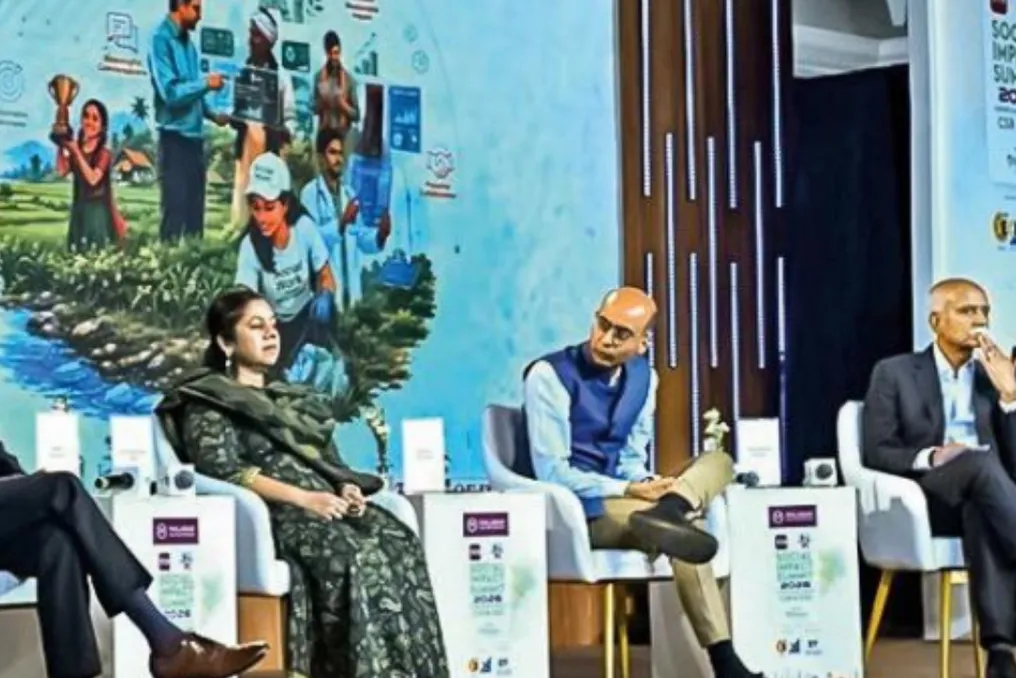
It was stated that technology has the potential to help reduce the educational gap in India if it is used in a personalized manner, and simultaneously, it will not replace teachers. At the TOI Social Impact Summit in 2026, Pranav Kotari, CEO of Educational Initiatives, debunked the myth about the high cost or exclusivity of educational technologies.
Kotari emphasized that teachers remain indispensable in aspects such as inspiration, values, discussions, experiments, and project-based learning. However, he noted the strength of technology—its continuity: since Indian schools operate for about 180 days a year, and children attend them for approximately 140 days, technology allows learning to continue throughout the entire year.
B. V. R. Mohan Reddy, Chairman of the Board of Directors of Cyient, stated that technology can also narrow the gap between rich and poor by creating individualized learning trajectories. He noted that unlike the traditional classroom model, which is often oriented towards students sitting at the front, adaptive platforms allow each learner to progress at their own pace.
Reddy also cautioned against excessive apprehension regarding artificial intelligence, warning that the real divide may arise between those who understand AI and those who do not. His company implemented solutions in 37 government schools, where the proportion of girls increased from 16–18% to 56%, and his school's students accounted for a significant share among the highest achievers, while the dropout rate decreased to approximately 2%. This initiative was also expanded through skills training, AI labs, and employment-related training. Under one program, which started as a summer project for his granddaughter Pratinya Bodanapu, rural girls are receiving training in skills determined based on market research.
Abdul Salam KP, Vice Chairman of Malabar Gold, shared a similar experience. He recounted how during the Covid pandemic, the link between poverty and education became evident while distributing food in urban slums. He mentioned that after schools resumed operations, they found children on the streets, which prompted the creation of micro-learning centers in slums where teachers, forms, books, and food are provided to help undocumented children enter the formal education system. The network now includes about 2500 centers serving approximately 120 thousand children daily.
Gayatri Nair Lobo, CEO of Educate Girls, pointed out that school enrollment is only the first barrier. Poverty, lack of documentation, homework, early marriage, and distance from secondary schools continue to impede girls' education. According to her, there are only 20 senior secondary schools for every 100 primary schools. The organization Educate Girls helps adolescents and young women return to studies through an open education system. She cited the example of a girl who returned after ten years and achieved top ranks in Class 10 in Madhya Pradesh.