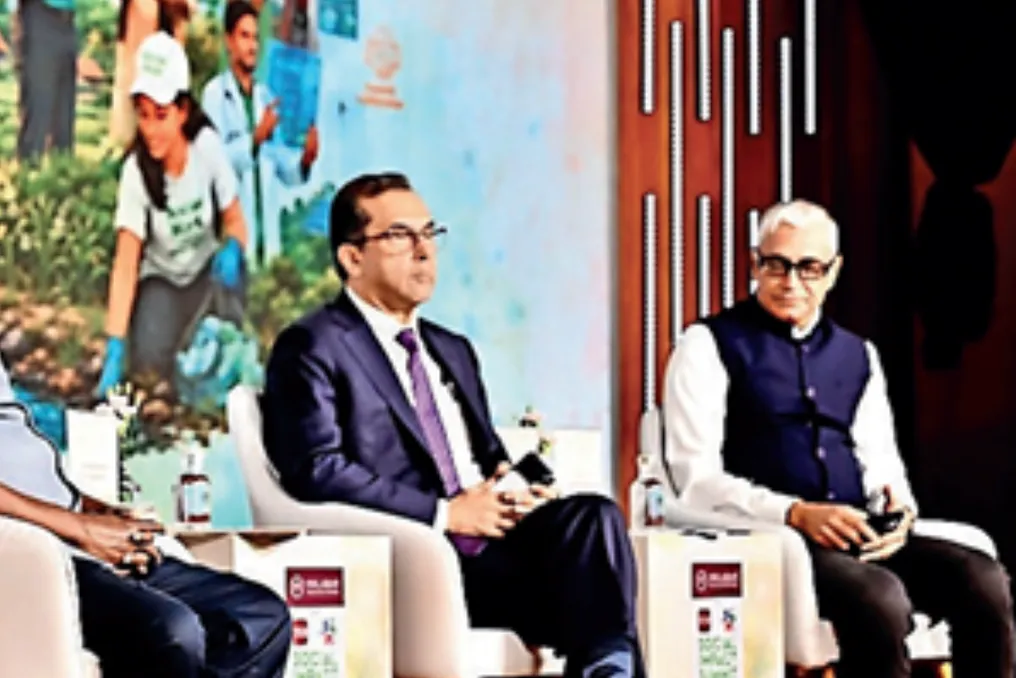
Sanjeev Puri, Chairman and Managing Director of ITC, stated that sustainable development and inclusive growth must be an integral part of the corporate sector's business model, following the example of his conglomerate.
According to Puri, economic progress cannot be viewed separately from sustainability; both aspects must go hand in hand. He emphasized that corporations are obliged to generate not only economic but also social value, which he calls 'responsible competitiveness.'
Speaking at the TOI Social Impact Summit, he called on organizations to move beyond merely creating shareholder value. Puri noted that this will become even more important in the future, not only due to the growing number of regulatory requirements in this area but also because stakeholders are beginning to demand such behavior beyond environmental or social norms.
He also pointed out that there are many problems in the world, ranging from geopolitical instability and the use of tariffs as weapons to the climate crisis, which puts pressure on food security and livelihoods. Puri characterized the current situation as a 'perfect storm' requiring new strategies, as vulnerable populations are under maximum threat.
Puri called for joint efforts from the government, the corporate sector, and civil society to address climate change, noting that India has chosen a path of low-carbon growth.
Citing ITC as an example, he described how the company created an entire ecosystem that includes research and development, cultivation of low-water-consuming trees, and collaboration with small farmers to reduce the dependence of paper products on pulp—a model that was also extended to fruit juice production.
Regarding Corporate Social Responsibility (CSR), Puri believes it should be treated as a business venture and its results evaluated. He advised investing first in capacity building at the community level so that initiatives can be sustained and developed, otherwise, they may fade over time.