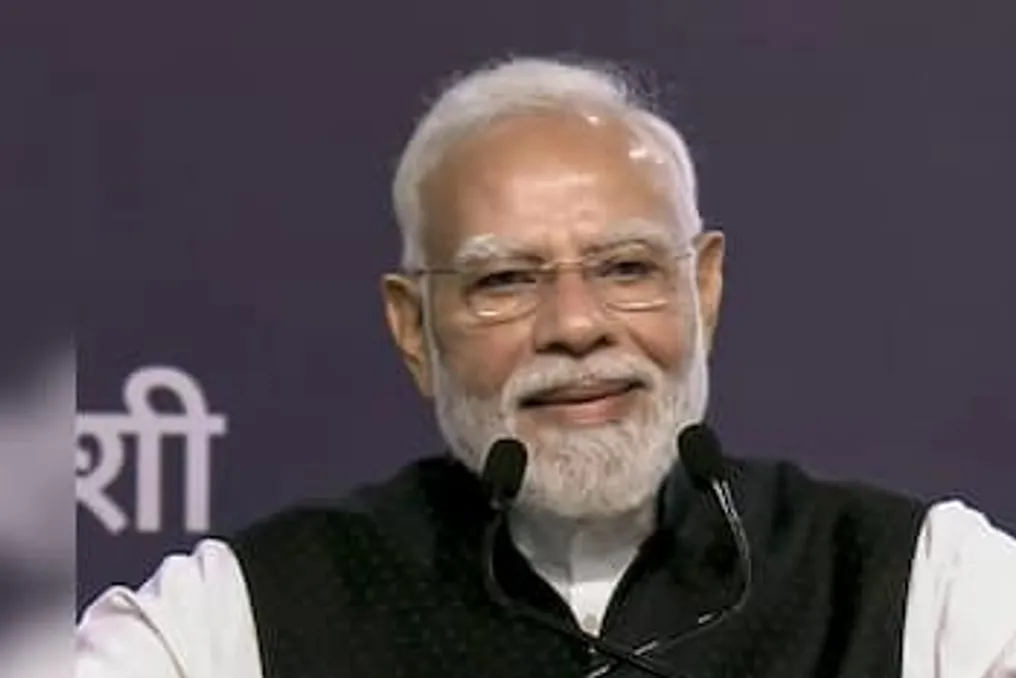
Speaking at the centenary celebrations of SRCC in Delhi, Prime Minister Modi stated that the economic growth indicator has strengthened confidence in it, despite military actions in West Asia and global trade problems.
He warned those who take his words, break them down into small pieces, and use them to their advantage. Modi recalled the media environment of 2013, citing examples that dominated the media at that time.
Such examples included the death of Indian soldiers along the Line of Control (LoC), the World Bank lowering its GDP growth forecast, a record current account deficit, and inflation around ten percent. He noted that the industrial sector was experiencing a slowdown, corruption in the helicopter deal was exposed, and explosions occurred in Hyderabad.
Modi also mentioned discussions about policy paralysis, noting that the world's perception of India at that time included the concept of 'Fragile Five'. At that time, growth was low, inflation was at its peak, while fraud was rampant and corrupt individuals acted with impunity, leading to an economic crisis and widespread discussions of policy paralysis.
During his speech at SRCC in 2013, Modi also spoke about the 'P2G2' concept, which stands for People-to-Governance, emphasizing that previous leaders had a certain approach: they only reacted when there was a fire or drought. After the formation of the government in 2014, they demonstrated a change in this approach.
Furthermore, he criticized those who opposed expanding access to banking services. Modi stated that such people enjoy the fact that citizens, especially the poor, continue to depend on them, sustaining the so-called 'mai-baap' culture for decades.
Addressing his government's 'report card', Modi reminded people of his early statements regarding the 'Make in India' initiative, which some did not understand at the time. He stated that he stands firm against those who support the 'mai-baap' culture, possessing the courage for which he recalls his words. He noted that at the same event in 2013, people from the ecosystem of that time simply could not understand the idea of 'Make in India', considering it impossible during a period of despair, but today the value of the 'Make in India' brand can be seen.