The next field of technological confrontation between the United States and China may be energy infrastructure, rather than Silicon Valley or Beijing's Zhongguancun. This is because the rapid development of artificial intelligence increases the demand for computing power, which in turn requires stable and relatively inexpensive electricity supply.
A prime example is the city of Ulanqab in Inner Mongolia. Previously known mainly for agricultural products, especially potatoes and processed potato products, this city is now striving to become one of the largest AI computing centers in China.
According to China News Service, an agreement was signed in Ulanqab by the end of June 2026 to create 89 data centers with a total investment exceeding 500 billion yuan. Companies such as DeepSeek, Huawei, Alibaba, Apple, Kuaishou, Baidu, and ByteDance are involved in developing the regional computing infrastructure.
One of the largest planned projects is the DeepSeek data center with a capacity of about 1 GW. The generative AI company, after attracting significant funding, has directed part of its resources toward building large-scale computing infrastructure in Inner Mongolia.
The scale of the planned investments has attracted the attention of the international financial community. Analytical reports from Goldman Sachs characterize Ulanqab as one of the fastest-growing AI computing clusters in the Asia-Pacific region. As of June 2026, the cumulative operational and planned capacity of Ulanqab's data centers was estimated at approximately 12.5 GW, significantly exceeding existing capacity and indicating potential for further expansion.
The main factor attracting this region is energy. As large language models and other AI systems develop, the demand grows not only for computing chips but also for the electricity required for their operation. Modern data centers are energy-intensive facilities that require power not only for servers but also for cooling systems and other infrastructure. Experts increasingly cite electricity availability as a limiting factor for AI scaling.
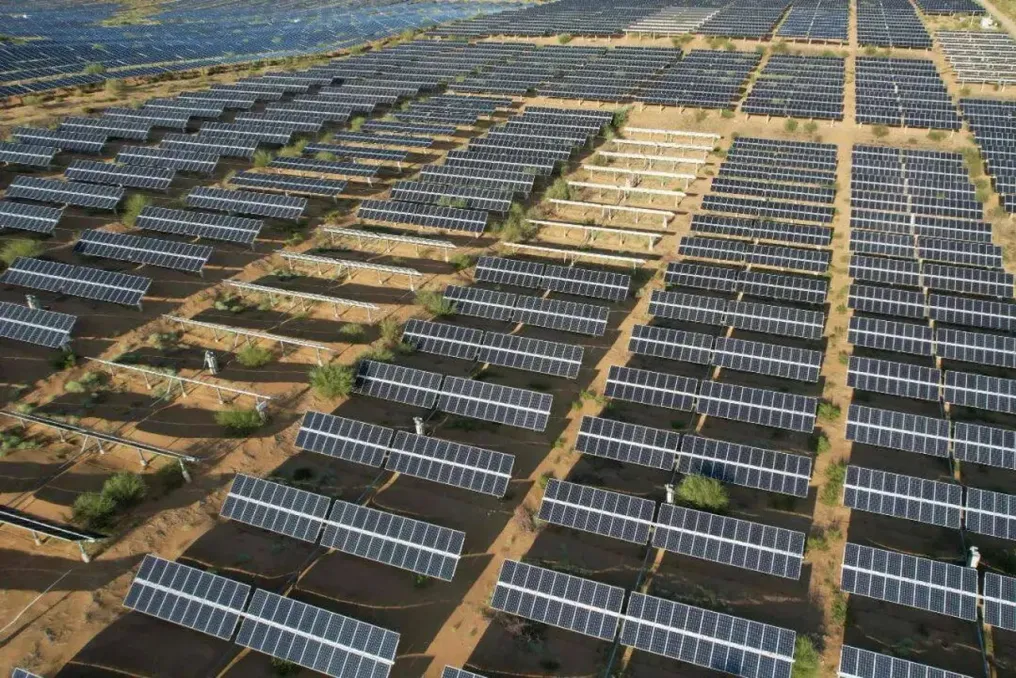
Inner Mongolia has several advantages in this regard. Firstly, the region possesses significant renewable energy potential; a large share of China's technically available wind and solar potential is concentrated there. The total installed capacity of new energy sources in the autonomous region has already reached 174 million kW. Secondly, the cost of electricity is lower than in China's major economic centers. While industrial tariffs in Beijing, Shanghai, Guangzhou, and Shenzhen are around 0.7 yuan per kWh, prices for end consumers in some parts of Inner Mongolia can be almost half as low, at about 0.35 yuan per kWh. Thirdly, the region's climate allows for reduced cooling costs. Ulanqab is located on a high plateau where the average annual temperature is about 4.3°C. For a significant part of the year, data centers can use cold outside air to cool equipment, reducing the energy consumption of cooling systems.
Data transmission speed is another advantage. Ulanqab is connected to Beijing by two direct fiber optic lines, with a data transmission delay of about 4.2 milliseconds. This allows the region to serve as a computing base for larger economic centers in the country.
China is also developing a model for directly supplying data centers with 'green' electricity. A demonstration project has already been implemented in Inner Mongolia, where renewable electricity from solar power plants is fed into the computing park via dedicated lines under a 'point-to-point' model. Thus, computing infrastructure is gradually moving to locations where cheap and clean energy is available.
The development of Ulanqab is part of China's broader strategy of 'East Data, West Computing.' Its basic logic is that the developed eastern regions of the country generate large volumes of data and provide most of the demand for digital services, while the western and northern territories possess large land and energy resources. Consequently, computational loads are gradually distributed among regions according to their infrastructural advantages.
Gansu Province serves as an example: the total computing power of the Qinyang data center cluster reached 215,000 P, with about 99% allocated to intelligent computing. In the Ningxia Hui autonomous region, a large project for the direct supply of 'green' electricity to data centers has also been implemented. As a result, western regions of China already account for about 32.6% of the country's total intelligent computing power.
The situation in the United States is different. The AI industry in the US boasts leading chip developers, large technology companies, and significant investments. However, the rapid expansion of data centers is increasingly limited by grid capacity. According to estimates from Morgan Stanley cited in the source, the demand for electricity from American data centers could reach 68 GW between 2026 and 2028, while the existing infrastructure can only provide about 30 GW of additional capacity. This means that potentially more than half of the demand may remain without the necessary power supply.
This problem has several aspects. One is public resistance to the construction of new data centers. Their development increases the load on regional power grids and often requires the construction of new power plants, transmission lines, and substations. Another aspect is the state of the US energy system itself. The US electrical system has historically developed as several large interconnected systems—Eastern, Western, and Texas. Interregional power transmission is limited, and building new high-voltage lines can take many years. Meanwhile, electricity demand in the US has grown relatively slowly for a long time, resulting in parts of the energy infrastructure not being ready for the sharp increase in demand associated with AI development.
Thus, the global race in AI is gradually moving beyond the competition between processor manufacturers and AI model developers. Chips remain a critical resource, but without electricity, they cannot function as a computing system. China is betting on the geographical distribution of computing power and the relocation of energy-intensive workloads to regions with high renewable energy potential. Inner Mongolia holds a particularly important position in this strategy due to the combination of relatively inexpensive electricity, wind and solar resources, cold climate, and proximity to major demand centers.
The United States, conversely, faces simultaneous challenges of growing electricity consumption, grid modernization, construction of new generation capacity, and addressing issues of public opposition to large-scale infrastructure construction. The next stage of technological competition between the US and China may focus not only on which country has the best AI chips, but also on which one has enough electricity to run those chips at the required scale. In the steppes of Inner Mongolia, the deserts of Ningxia, and the energy facilities of Gansu, China is creating a new foundation for the digital economy based on solar and wind resources, available land, and the ability to generate electricity at a relatively low cost. Ulanqab may become a symbol of this emerging era, where computing power is increasingly determined by energy power.