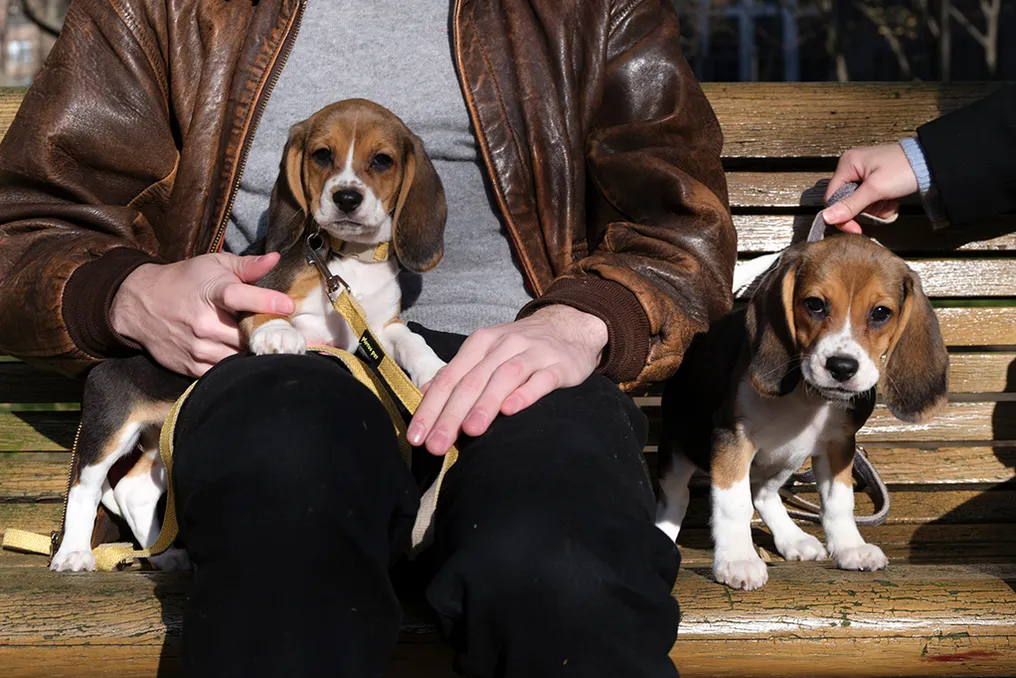
A biotechnology startup based in the United States is conducting experiments to create the first genetically modified dogs aimed at reducing human allergies. The researchers employed the CRISPR-Cas9 technique, which won the Nobel Prize in 2020, to alter the genes responsible for producing a protein that causes most human allergic reactions.
The company, named Kindred Companion Sciences, released the study results in August in the journal CRISPR Journal, in a peer-reviewed article. The initial results are considered positive: two female beagles, named Alfie and Bailey, have lived for two years without adverse effects or allergic reactions in humans.
The experimental process involved using the CRISPR technique to inactivate a gene known as Can f 1, which is responsible for transmitting one of the main canine allergens. Subsequently, the edited genomes of these cells were transferred into dog embryos, which were implanted into a surrogate female. Two embryos were successful from this implantation and were born in September 2024.
Later, scientists confirmed that the Can f 1 protein was not found in the saliva or fur of Alfie and Bailey, which are the main routes of allergen exposure. Complete genome sequencing also ensured that there were no unexpected or detectable alterations in any of the analyzed DNA sequences.
Despite the advances, it is necessary to monitor the animals in more detail before the safety of the modification can be fully guaranteed, as side effects may arise over time or when production increases to detect rare reactions.
The company's expectation is to develop so-called 'founder animals,' capable of reproducing naturally and perpetuating the trait. If two genetically modified animals mate, the offspring will inherit the alteration, which could initiate a lineage of hypoallergenic dogs.
The commercialization of dogs like Alfie and Bailey is still distant, as the genetic alteration requires approval from the FDA, the US regulatory body. Additionally, this modification does not protect all allergy sufferers, as other proteins, such as Can f 2, can also trigger allergies.
Currently, there are no truly hypoallergenic dogs on the market. Some breeds, such as Shih Tzus, Poodles, and Schnauzers, shed little fur, which may be suitable for mild allergies, but these dogs still produce allergens that cause itching and sneezing.
Regarding cats, a similar genetic edit was performed two years ago, but hypoallergenic felines are not yet available to the public.
Matt Walker, co-founder of Kindred Companion Sciences, expressed a strong personal involvement with the project, stating in a statement: 'As someone who lives with dog allergies, this work is deeply personal. For most of my life, I thought I would never have a dog, but I have been living with Bailey for almost two years now. She is a happy, healthy, and incredibly sweet female dog, who reminds me every day why this work is important.'
Genetic editing frequently generates debate and divergent opinions. While experts raise ethical concerns, in the canine context, the modifications are compared to traditional breeding and domestication practices. Alison Van Eenennaam, an animal genetics specialist at the University of California, Davis, commented to the New York Times that 'ultimately, both practices are producing animals for companion purposes' and that 'it is not the technology that is creating the ethical questions.'
Walker added in an interview with the New York Times that ethical parameters are subjective, but for him, the potential benefit justifies the practice, provided animal health is preserved. He emphasized that for many people, including himself, allergies prevented them from adopting shelter dogs, and genetic editing enabled their bond with dogs. He also expressed interest in applying this technology to service dogs for allergic people.