Bangalore Teen Helps Children Overcome Fear of Speaking English
Read more
The Better India
thebetterindia.com

Bangalore Teen Helps Children Overcome Fear of Speaking English

At the age of twelve, Neha knew the answers in English but remained silent for fear of ridicule from those around her. For many children, it was easier to understand English than to speak it confidently.

Roshni Gupta, who was seventeen at the time, began visiting schools and nursing homes in Bangalore. The children answered freely in their native languages, but as soon as English appeared in the room, they fell silent.

The young woman notes that the problem was not a lack of understanding but a lack of confidence. She recalls an instance when she asked a student to explain what she had written and found that everything was correct, but the girl could not pronounce it in English; then Roshni realized that the issue was not knowledge but the ability to express thoughts.

By August 2023, Roshni decided to take action. The Vidya Project focused on conversational English, communication, and building confidence, abandoning traditional grammar exercises and rote memorization.

She explains that the project's goal was to eliminate the fear of speaking by making the process natural and comfortable, rather than correcting every mistake. Seminars were conducted with an emphasis on interaction.

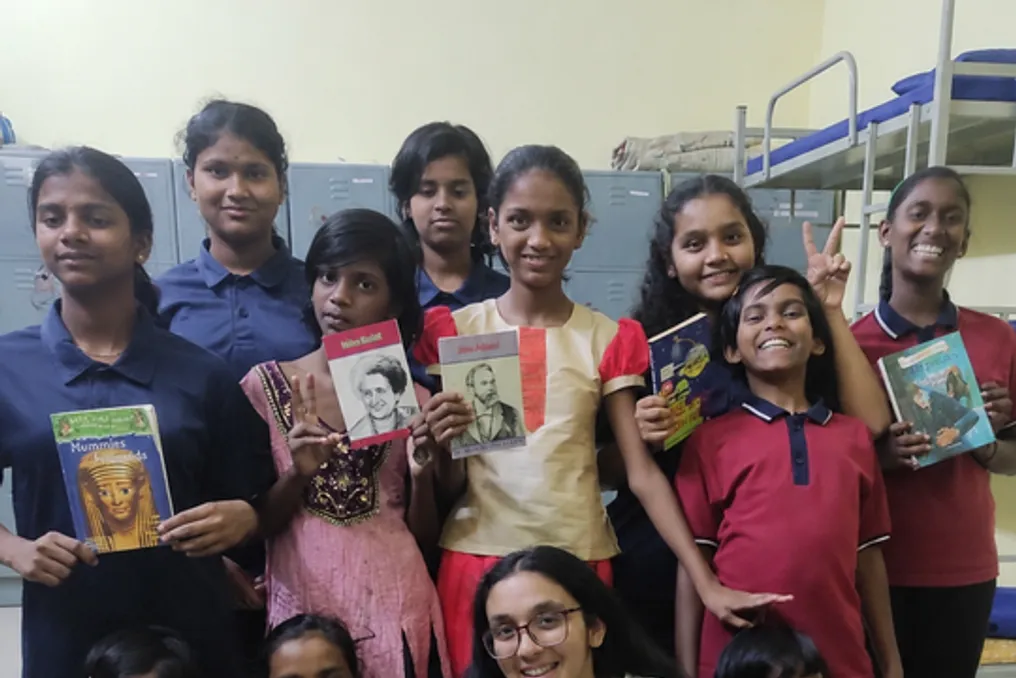
Through book drives in apartments across Bangalore, approximately 300–400 books were collected, including textbooks, dictionaries, and storybooks, which were donated to partner schools and orphanages.

Currently, the Vidya Project covers India, the UAE, Rwanda, Kenya, and Lesotho. It is managed by volunteers aged 13 to 25, and about 40 active participants work in various branches of the project.

Roshni expresses a desire for children to feel that their voice matters, not only in English but in any language, in any setting, and this is the direction the Vidya Project is moving.

Similar stories

Children from poor backgrounds in Bihar study in huts without furniture or toilets; anxiety grows over snakes
Read more
www.aajtak.in

Children from poor backgrounds in Bihar study in huts without furniture or toilets; anxiety grows over snakes

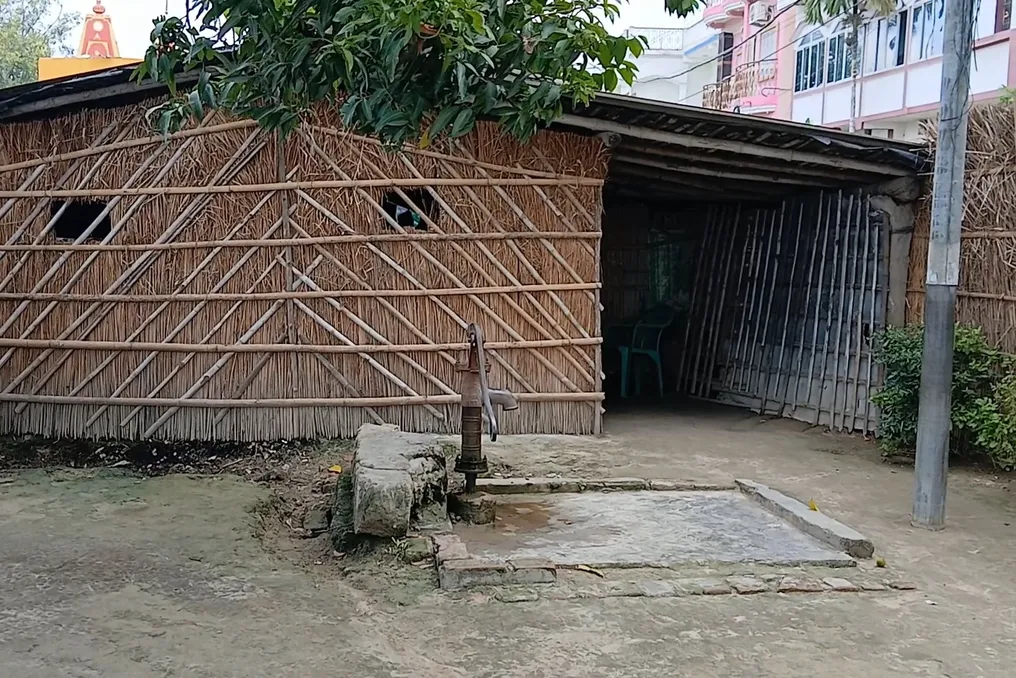
Despite claims of modernizing government schools in Bihar, transforming them into exemplary institutions and providing children with modern amenities, the reality at one of the government primary schools in the center of Samastipur city tells a different story. Here, children are forced to study on the ground in hut-like premises because there are no permanent classrooms. The school lacks desks, tables, or even a decent blackboard. In the summer, when the fan is not working, students try to cool down by covering their textbooks and notebooks. During the rain, the roof leaks, forcing classes to be interrupted. Furthermore, the school lacks sanitary facilities.

The greatest concern is that most students in this school come from the nearby Dalit community. Their parents face serious financial difficulties and cannot afford to send their children to more distant educational institutions. The situation is complicated by the increased sightings of snakes in the vicinity of the school, which heightens anxiety among children and their parents. This school is located on the roadside near the B.Ed college in Samastipur city, and it hosts students from the first to the fifth grade.

The condition of the school can be assessed by the fact that only two rooms are used for teaching children from the first to the fifth grade. Students from the first to the third grade attend simultaneously in one room, while the fourth and fifth grades have lessons in another. The insufficient amount of seating furniture forces many of them to open their textbooks and notebooks directly on the ground while teachers strive to conduct the lesson. The problem is exacerbated by the increasing number of students. It is difficult for teachers to educate children of different grades in one place: while first-grade students are occupied, second and third-grade students must be in the same room. Moreover, the separate room for fourth and fifth graders is also inadequate.

The children's problems worsen on hot days. Due to the lack of sufficient fans in the school, students suffer from stuffiness and heat. The situation is such that the teachers themselves are seen waving their hands as fans. Children also use their notebooks or books as fans to ease the heat. At an age when children should be provided with the best learning environment, they are forced to learn while enduring the effects of the weather. For the students of this school, heat is not just an inconvenience; prolonged stay in closed and hot premises makes learning extremely difficult. After the heat problem, the rainy season becomes another serious test for the school. Water begins to seep through the school building's roof. Under these conditions, conducting classes is difficult, and there is a risk of books and notebooks getting wet. This is why classes are often suspended and declared holidays during the rains. While government schools talk about smart classrooms, digital education, and improved buildings, this school in Samastipur cannot even provide basic protection from the rain.

The state of basic amenities in the school can be judged by the fact that there are not even toilets for the children. A toilet is an absolutely necessary basic condition for primary school students. However, this service is also unavailable at this school. The question arises: when will the responsible authorities pay attention to this government school facility located in the middle of the city?

In addition to the poor construction of the school, another problem worries the children and parents. According to local residents, snake sightings are regularly recorded nearby. In a school situated in a hut-like and open environment, fear persists among the children. Parents are also concerned about possible accidents involving their children. A school should be a place where a child feels safe, but due to the dilapidated building and surrounding environment, safety becomes a matter of concern.

The school director, Vishwajit Jha, stated that he has repeatedly discussed the school's condition with officials from the Education Department. According to him, officials have suggested several times merging the school with another educational institution. However, this decision is unacceptable to the parents. The director explains that a large number of children from the nearby Dalit community attend this school. Parents argue that they are not willing to send their children to another school located about two kilometers away. Thus, the option of merging the school is also not a simple solution.

The main concern of the parents is the distance to the school. Families state that, being economically weak, it will be difficult for them to transport young children to a school located two kilometers from home daily. Therefore, parents insist that the school building must be permanent right here.

Identity of young man detained during Barawafat procession established, 12-year mystery solved
Read more
www.aajtak.in

Identity of young man detained during Barawafat procession established, 12-year mystery solved

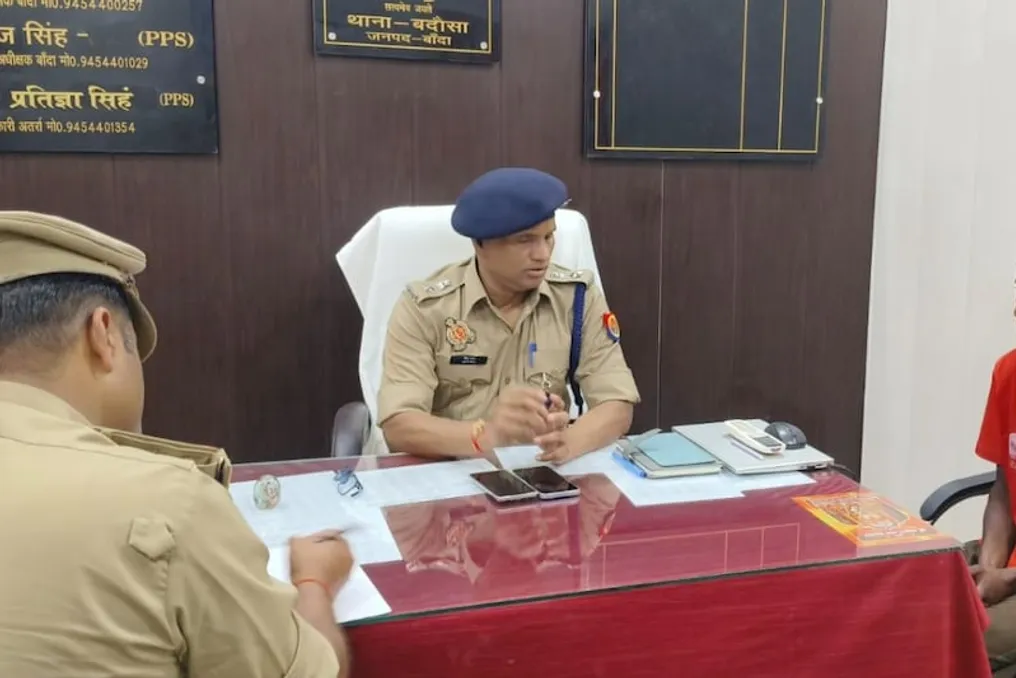
In the city of Banda in the state of Uttar Pradesh, police discovered a suspicious young man during the Barawafat procession. Due to his inability to understand the local language and clearly state his name and address, confusion arose at the scene. Initially, there were suspicions about his origin from Bangladesh. Given the sensitive nature of the situation, groups from the police, as well as intelligence and IB services, were involved in the investigation.

According to the police, this individual was stopped on August 25th at the Fatehganj intersection in the Badausa police station area during a check. During a routine interrogation, his speech was incomprehensible to law enforcement officers, and he could not clearly provide his name, address, or place of residence. He was subsequently taken to the Badausa police station for more detailed questioning.

During the interrogation, the man identified himself as Md. Safiur Rahman, son of Hussain Ali, approximately 45 years old, residing in the village of Vargala, Bongigaon district, Assam. The police contacted the relevant police station via the internet to verify his stated address, which completely changed the direction of the investigation.

Based on the information received from the concerned police station, the police called Safiur Rahman's brother, Shujaul Haque. Shujaul Haque resides in the village of Balarpet, Tilpukhuri post office, Abhyapuri police station, Bongigaon district, Assam. The police conducted an identification of the suspect via a video call with his brother.

Upon seeing his brother, Shujaul Haque recognized him as his brother Md. Safiur Rahman. To confirm his identity, the police requested documents via WhatsApp. The data provided in the documents was cross-referenced with the name, address, and other information given by the man himself.

Family members informed the police that Safiur Rahman had left home about 12 years ago due to disagreements with his father, and his whereabouts have been unknown since then. The family searched extensively but without success. Upon learning of his life through the Banda police after such a long period, relatives began preparing for his return.

The investigation revealed that Safiur Rahman had been in Chitrakutta for the last 15 days, earning a living by begging due to his poor financial condition. When necessary, he also worked in hotels. He then arrived in Banda during Barawafat, where he came into the police's view during a check.

ASP Shivaj stated that an initial general interrogation was conducted with the man found under suspicious circumstances. Since his language was unintelligible, he was taken to the station for clarification and further information gathering. Subsequently, based on the stated address, contact was made with Bongigaon in Assam, and communication with the family was established. The police also sent photos and videos of him to his brother for identification. The brother confirmed his identity as his brother. Relatives informed the police that they were traveling from Assam to Banda to pick up Safiur Rahman. Further legal action would be taken upon their arrival according to regulations.

Despite discussions regarding his alleged Bangladeshi origin, the police did not rush to take any legal action based on initial suspicions and rumors. Under the direction of SP Palash Bansal, a thorough verification of the man's identity and his stated address was conducted first. Information was gathered at the level of the police, intelligence services, and IB. The investigation made it clear that the suspicious young man was not a resident of Bangladesh, but was actually from Bongigaon district, Assam, and had been separated from his family for about 12 years. Thanks to the police investigation, a reunion with his family is now expected.

According to the police, after the relatives arrive in Banda, further procedural actions will be taken following the confirmation of identity and documents in accordance with rules. This case, uncovered during checks related to Barawafat, surprised even the police, as the story of a man who appeared suspicious turned out to be connected to a disappearance spanning 12 years.
Popular