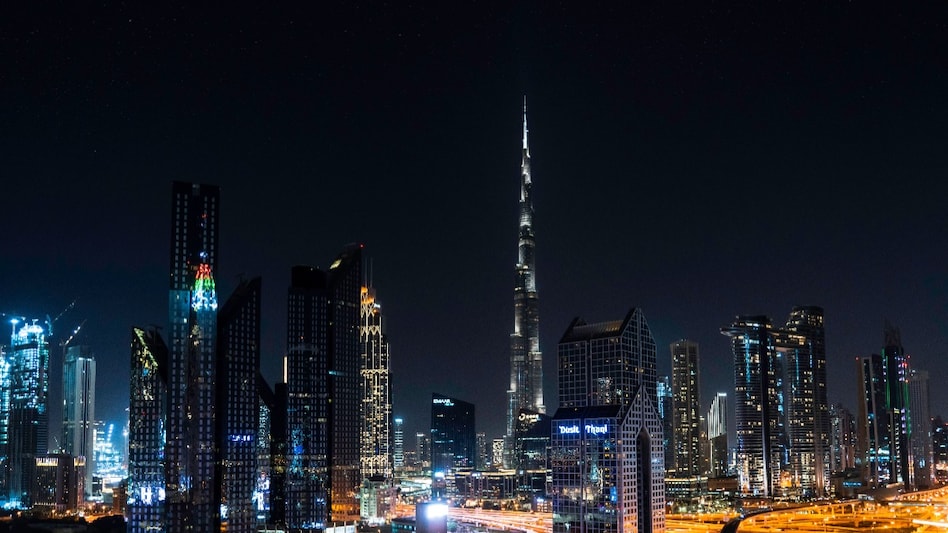
When evening comes and you look out your window, you see cars rushing through the streets and shining buildings. However, imagine if your home is on the 80th floor of the world's tallest building, Burj Khalifa—what would Dubai look like below? We will explore this question.
Shubhra Bhardwaj from India lives on the 80th floor of Burj Khalifa. Her home tour was presented on the YouTube channel Finance with Sharan in April 2025, after which the Indian Express reported on it.
The panorama of Dubai from the height of Burj Khalifa is drastically different from a ground-level view. During the day, one sees an extensive network of roads and buildings, and at night, the entire city shines with lights. Thus, for a person living here, the urban landscape of Dubai is not a tourist attraction but an integral part of daily life.
Looking at the city from above gives a certain feeling: below, there is constant movement of traffic and people, whereas from the height, the same city appears calmer and more distant.
Ascending and descending in Burj Khalifa is a unique experience in itself. According to Google Street View data, the elevators in the building can move at a speed of about 35 kilometers per hour. Imagine that leaving home in such a building, located hundreds of meters above the ground, represents a completely different daily routine compared to a regular apartment.
Residents of Burj Khalifa enjoy another special convenience. According to building information, there is direct access from the skyscraper to the Dubai Mall. This means that to visit one of the world's largest shopping and entertainment centers, one does not need to exit onto the street in the traditional way.
The sensations from the air at hundreds of meters are different. Burj Khalifa is specially designed to withstand the pressure of strong winds. Its 'Y' shape helps prevent direct impact of the wind on the entire structure. Consequently, although the wind outside can be quite strong, a person inside the building does not feel gusts of wind as they would on an open mountain or roof. Furthermore, the slight swaying of the building at such a height may be part of its design.
An interesting aspect of living at such a height is air quality. Pollutants generated by cars, road dust, and other local activities near the ground can have a more direct impact. With increasing altitude, there is a change in air mixing and pollutant dispersion, so the air quality on the upper floors may differ from the air quality at ground level.
Dubai, sprawling below in the morning, the changing sky in the evening, and the city glittering with thousands of lights at night—all of this is not just an impression from staying in a hotel, but part of the daily routine.