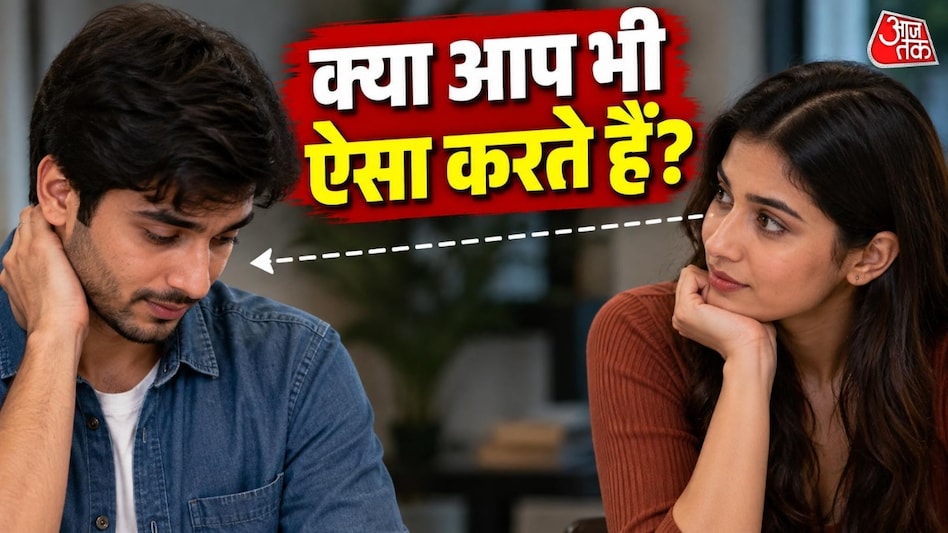
Do you ever notice that some people constantly look away during conversations? They might look down, shift their gaze to the side, or avoid direct eye contact with the person they are speaking to. Often, in such cases, people hastily conclude that the counterpart is lying, hiding something, or simply not interested in the conversation. However, according to psychological principles, this is not always the case.
There are numerous reasons why a person might not look directly into someone's eyes, and the significance of each reason is unique to the individual. Psychologist Binda Sinha notes that sometimes people look away when they are thinking about an answer to a difficult question. Studies have shown that when asked challenging questions, people are more likely to divert their gaze while reflecting. This can aid in concentration and memory retention. Therefore, if someone suddenly starts looking down or to the side during a conversation, it does not necessarily mean they are evading the topic; perhaps they are formulating an answer mentally.
Some individuals experience a degree of anxiety when socializing. For them, maintaining constant eye contact can be uncomfortable. Such a person might fear that the interlocutor is judging them or misunderstanding their words, so they may look away in an attempt to feel more relaxed. It is important to understand that a lack of eye contact is not always a sign of shyness or lack of self-confidence. A 2022 study indicated that people who themselves considered eye contact difficult did not always exhibit obvious avoidance in real-life interactions.
Scientific research has also demonstrated that looking away while performing a complex task or deep in thought helps the brain focus on the relevant information by diverting attention from external distractions. This is why a person might periodically look away instead of constantly staring into someone's eyes, and then look back at the speaker.
Interestingly, the impact of a lack of eye contact is felt not only by the person looking away. The interlocutor can also interpret it in their own way. Therefore, moderate eye contact in a conversation helps create a comfortable atmosphere and improves mutual understanding. At the same time, constant intense staring is not a necessary condition. If a person does not look into your eyes during a conversation, one should not jump to conclusions that they are lying or uninterested in you.
They might be contemplating, feeling nervous, concentrating, or simply having that communication style. The most reliable approach is to try to understand the situation by considering their overall behavior, manner of speaking, and circumstances. From a psychological perspective, making judgments about a person solely based on eye contact is unreliable.