The collapse of municipal entities rarely has an ideological basis; rather, it is a consequence of contractual immaturity. Municipalities that failed to pay Eskom's bills in July 2026 began experiencing difficulties not in that month, but much earlier—in the council chambers.
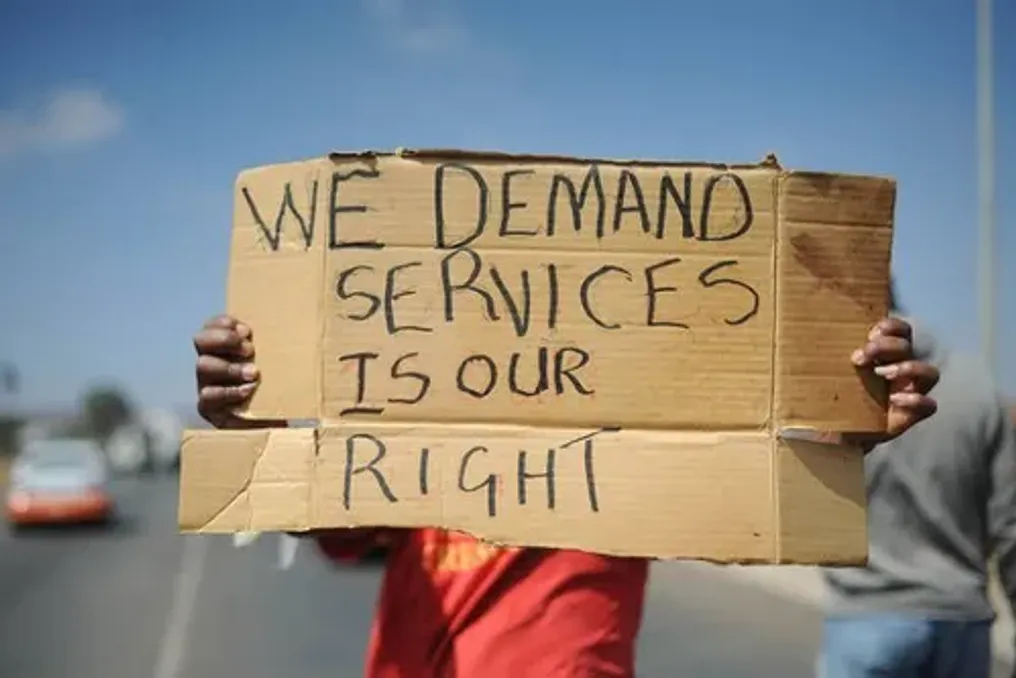
The new LGCSI index explains this earlier institutional failure. In July 2026, the National Treasury suspended transfers of the fair share for 69 municipalities, citing Section 216(2) of the Constitution. These funds were subsequently released, but the Fiscal and Fiscal Commission questioned the application of this tool, and Parliament ruled that coercion must be accompanied by support, not used as a recovery strategy.
The study's author previously argued that withholding funds would not restore the disrupted budget structure. On the night of September 2, 2026, PA-IFS published the collected data. The Local Governance and Coalition Stability Index (LGCSI) is the first volume in the Municipal Intelligence series. It analyzes 103 out of 257 South African municipalities over the full period, starting from the 2021 elections until now, using exclusively official data sources: AGSA, National Treasury, CoGTA decrees, and IEC council records. The index's main question is: are these councils capable of governing themselves?
Since the sample was intentionally structured with an emphasis on struggling councils, the index does not allow determining what percentage of South Africa's municipalities are in crisis, nor does it rank municipalities or political parties, or predict election results.
A municipality that could not pay Eskom in July 2026 did not begin its decline in July 2026. It failed earlier, in the council chamber, when the rules defining who holds executive power were weaker than the rivalry for it. Over one term (2021–2026), there was a shift from one mayor to six in eight metropolitan areas. Each such change abolished the entire mayoral committee, and the office of the municipal manager went through appointments, judicial dismissals, and temporary powers.
This is the mechanism and the central contribution of LGCSI. It is called the 'administrative shield': whether the positions of the municipal accountant and financial director are maintained during a change of mayor. Where this shield works, the budget is still passed, the main account is paid, and audits are conducted. Where it breaks down or staff lose their jobs, all three processes are likely to stop. The damage is transmitted not through politics, but through administration.
Currently, Parliament is considering a bill amending municipal structures (the Coalition Bill), which regulates the political level. The reform, which is silent on the position of the accountant, leaves this mechanism untouched. The most alarming finding is that instability is not a characteristic of a coalition government. Mangaung was run by a single party with an absolute majority but showed the same rotation of executive power, dismissal of senior officials, and fiscal deterioration as the most fragmented coalition metropolis in the country.
Midvaal is also run by a single party and is among the most stable in the sample. The difference between them is not the number of parties, but whether the ruling agreement is formalized and can be enforced. Of the 94 assessed councils, 18 have some governance agreement that can be found in the LGCSI sample. Those with published, binding agreements and an independent dispute resolution mechanism experienced limited disruptions during the term. Those with pacts but no way to resolve disputes outside the meeting room were calmer but not stable. Tshwane signed a formal pact in December 2021, which collapsed in September 2024. Clearly, signing itself is not architecture.
There is also a second half that councils do not control. Local government provides about 46% of frontline functions that citizens interact with directly and receives 9.9% of nationally collected revenue to perform these functions. Municipalities spend about 31 billion rand annually on functions assigned to other sectors—libraries, primary healthcare support, housing administration. This is not a management failure, but an arithmetic problem, and coercion will not solve the arithmetic problem.
Thus, LGCSI proposes a set of measures in the following order:
- Institutionalization of policy: written, published coalition agreements submitted within 30 days, with independent dispute resolution and a constructive vote of no confidence, dismissal only upon electing a successor in the same session.
- Protection of administration: separating the term of office of the municipal manager and financial director from political leadership, with temporary delegations that ensure payment of main creditors during the transition period.
- Financing and mandate assurance: withholding the fair share from councils that pass unjustified budgets, but with a clear correction deadline, differentiated for the council, and combined with an obligation to build capacity.
And above these three points—reforming the revenue distribution system. Note the sequence. We support withholding funds, but we place it third. Applied first, it disciplines the council that has not provided funds to comply with requirements. Councils elected on November 4, 2026, must form executive bodies within 14 days in accordance with existing legal frameworks, and no law or regulation requires these deadlines to be formalized in writing.
In December 2026, the next fund transfer deadline arrives. LGCSI is not just a record of the past municipal term. It describes the conditions under which the next one will begin. The question is whether South Africa can institutionalize its municipal policy, protect professional administration, and ensure mandate funding before the cycle begins again.