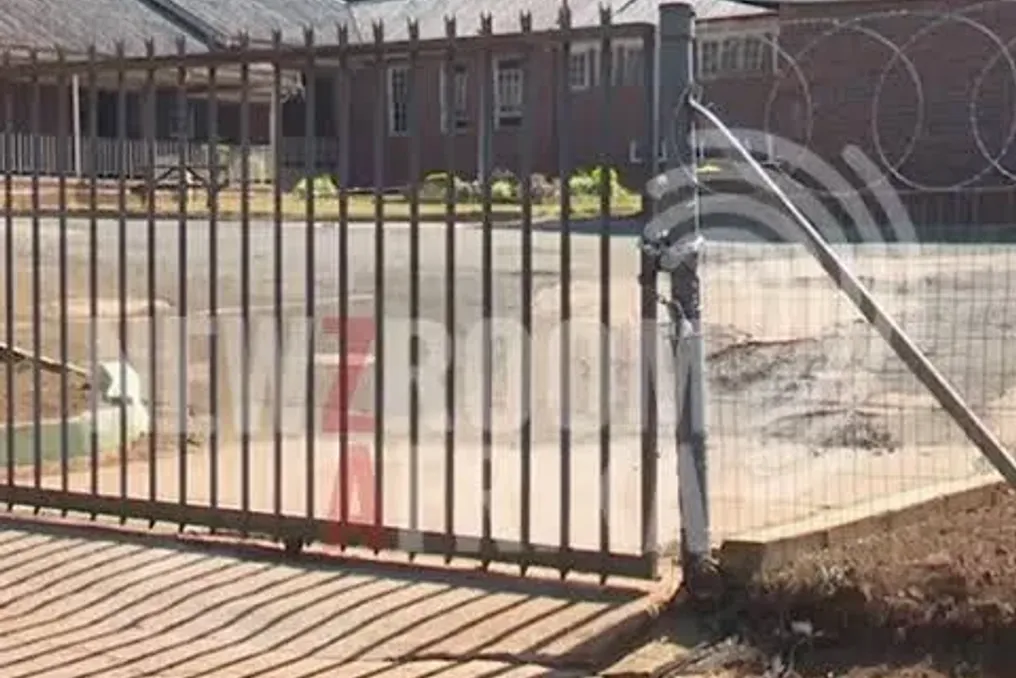
Parents are forced to keep their children out of the primary school classrooms in Indlovana, Greytown, due to the critical condition of the premises. Children and teachers at this primary school in northern KwaZulu-Natal have been working for decades in unsafe and deteriorating classrooms.
The School Governing Body (SGB) claims that the provincial Department of Education has made little progress in renovating Indlovana Primary School, located in the center of Greytown, despite the first request for assistance submitted in 2014. Due to safety concerns, parents have not attended the school with their children for several weeks.
The SGB Chairperson, Nana Mkhize, stated that parents preferred their children lose study time rather than risk their lives. She emphasized: 'They will recover study time, but not lives.'
Mkhize recounted an incident where a teacher teaching in a dilapidated classroom in a park structure fell into a pit on the wooden floor in March, sustaining a serious leg injury that required surgery. Furthermore, Mkhize noted that all brick classrooms have leaking roofs, causing ceiling boards to fall.
The KwaZulu-Natal Department of Education did not provide comments on inquiries directed to its communications services at the time of publication. In March, IOL listed five schools in need of urgent infrastructure modernization. In July, the organization Equal Education presented a report to the provincial legislature on the state of rural schools, highlighting overcrowded classrooms, broken toilets, water shortages, lack of textbooks and materials, as well as unsafe, inadequate, or absent transport for students and general deterioration of buildings.
Indlovana School has sixteen brick and eight mobile classrooms accommodating 1184 learners, 98% of whom come from low-income families. This reporter saw two letters sent to the ministry by Director ZL Myaka and the SGB. One, dated January 25, 2022, indicated that the school did not meet the conditions for the presence of children and teachers.
The letter stated: 'We are risking the lives of learners and teachers by allowing them to occupy this space, but at the same time we know that education must continue. This has been happening for years, and the Ministry is aware of it.' The letters refer to broken windows, doors that do not close, falling ceiling boards, and holes in the wooden floors of mobile classrooms—one of which led to a teacher's injury.
Parents also fear that snakes may be under the mobile classrooms, as they have been encountered there previously. Myaka and the SGB sent another letter to the ministry on March 3, 2024, detailing the unbearable condition of the school. It reported that in 2023, there were instances where a ceiling board and a door in one of the classrooms fell on learners.
For years, the school operated using park homes to replace some severely damaged classrooms, and these park homes, erected on bricks, have also begun to deteriorate, having holes in the floor. Myaka wrote: 'In one of the park homes, the floor collapsed while children were in class. Other park homes are in poor condition, and we fear for the lives of the children.'
'Every year we send letters, but they do not prioritize (the school). We would like to draw your attention to the fact that the condition of the school buildings is completely unsuitable for students and staff,' the letter read.
Mkhize, who is now 40 years old, shared that she enrolled in this school after her previous school in the village of Nhlalalakhele burned down during political violence. Four new park homes were delivered on July 24, but this was not enough. The SGB proposed two options to the ministry: renovate the school or build it from scratch, as the park homes are only a temporary solution.
The toilets at the school are also a concern as they pose a health threat to children. The letter noted: 'We only have eight toilets, and all of them are in very poor condition. The lives of learners and teachers are at risk.'
The letter also pointed out that municipal doctors threatened to close the school due to sanitary hazards. The school management also demanded the installation of fencing, as people enter the school at any time.
According to other correspondence from a senior manager of the Department of Education, Tutukani Magubane, the then Minister of Education, Mbali Fraser, ordered in 2024 for the school to receive infrastructure assistance after the SGB first threatened to stop sending children to the school. At that time, the SGB accused the ministry of deliberately endangering the lives of children and teachers.
Mkhize reported that following pressure, Magubane visited the school. An email stated that the school would be provided for in the next budget, meaning a wait until March 2027. She added that 'they plan to replace the entire roof of the brick classrooms.' Mkhize clarified that the brick walls remain in good condition, but window replacement and construction of more toilets are necessary.
According to the letter, Magubane showed the SGB but refused to provide them with a copy; the school renovation would cost 10 million rand. The current Chairperson of the Provincial Portfolio Committee on Education, Khlengive Mavimbelela, stated that after reviewing the school's condition, the committee asked the ministry to explain the measures taken. She emphasized: 'Although the committee is aware of the financial strain and delays in implementing infrastructure projects in most of our province's schools, we do not allow this issue to completely halt education in any school. The committee will never accept a situation where children are deprived of the right to education. It is the duty of this committee to hold the ministry accountable, and when a report comes that students are not attending school, the committee expects the ministry to provide a report urgently to resolve such a situation.'
A Member of Parliament from the uMkhonto weSizwe party, Tutukani Madondo, stated that the crisis in Indlovana is not isolated, as it reflects broader infrastructure problems in the province's rural schools. He noted: 'The government cannot wait for buildings to collapse before acting. Preventive maintenance, risk assessment, and timely intervention are necessary to protect students. MKP will use its oversight role in the Legislature to demand accountability and ensure solutions for the Indlovana community. Children should never bear the consequences of government failures.'