Ten years after China and Egypt launched the second phase of the joint economic and trade cooperation zone in the desert along the Suez Canal, this area has transformed into an industrial cluster, incorporating about 200 companies and providing employment for approximately 10,000 people. This example demonstrates how bilateral partnership can foster local development.
According to reports from People's Daily, the China-Egypt economic and trade cooperation zone in Suez has attracted enterprises in the fields of building materials, oil industry equipment, electrical equipment, and mechanical engineering, accumulating cumulative investments exceeding $4.7 billion. The previously undeveloped desert area has become an industrial site linking China's 'Belt and Road' initiative with Egypt's development strategy for the Suez Canal corridor.
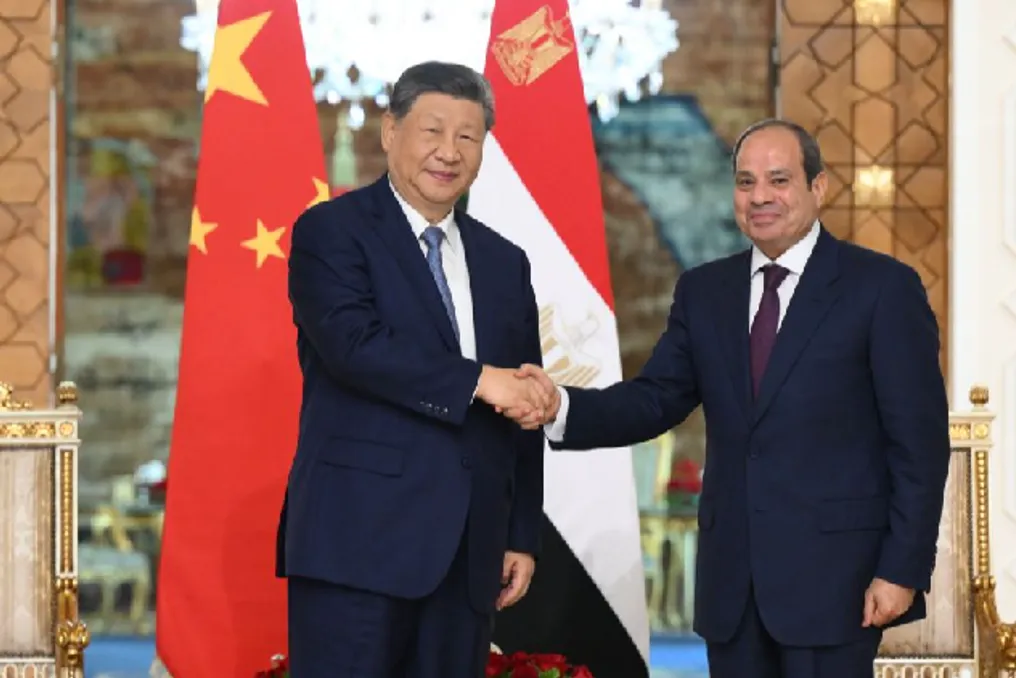
This transformation reflects a broader shift in relations between China and Egypt: a transition from isolated infrastructure projects to cooperation that integrates markets, employment, and investment. During meetings with Egyptian President Abdel Fattah El-Sisi on Wednesday, Chinese President Xi Jinping stated that both countries should strengthen cooperation and continue developing the China-Egypt community with a shared future.
A New Engine for Local Development
The Suez region is moving beyond traditional manufacturing, as solar projects and the emerging circular economy point towards more ecological and low-carbon development. Expansion into new industries has also brought greater direct benefits to the Egyptian economy and workforce.
Projects involving Chinese investors have helped strengthen Egypt's energy supply: a solar park substation provided about 16,000 gigawatt-hours of electricity after completion. Furthermore, Chinese companies have trained local engineers and workers, with some Egyptian staff holding technical and managerial positions. In the joint venture China XD Electric and Egypt's EGEMAC, local workers constitute 97% of the personnel.
Such cooperation is part of a broader model of mutually beneficial development. In an article signed and published in Egyptian media before Xi's visit, it was noted that China and Egypt should 'strive for mutual benefit and win-win cooperation, setting a benchmark for joint development.'
Egyptian Products Find Growing Market in China
Relations are becoming increasingly bilateral as Egyptian products gain greater access to China's large consumer market. According to data from Chinese official sources, China-Egypt trade reached 95.19 billion yuan ($14.16 billion USD) in the first seven months of 2026, an 18.7% increase compared to the previous year. Meanwhile, Chinese exports to Egypt increased by 17.5%, and imports from Egypt jumped by 49.4%.
Agricultural trade has become a particularly dynamic area. China's import of Egyptian agricultural products rose by 82.6% in the first seven months, accounting for 41.7% of China's total imports from Egypt. Egypt was the largest supplier of frozen strawberries to China and the third-largest supplier of flax, with these two products making up 96.7% and 7.7% respectively of China's respective imports.
Egypt, one of the world's leading orange exporters, supplied fresh oranges worth about $26 million to China in 2025. An exporter who regularly visits China noted that the high demand for Egyptian oranges among Chinese consumers has prompted producers to improve quality.
An article in the newspaper Al-Ahram stated that China's zero-tariff measures for African products have opened access to a market of over 1.4 billion people. However, the publication emphasized that reduced tariffs alone are not enough to guarantee success; for Egyptian companies seeking to expand in China, product quality, supply stability, and localized marketing will remain crucial.
Beyond Bilateral Relations
The significance of these relations extends beyond trade and investment, as China and Egypt mark 70 years of diplomatic ties. Egypt became the first Arab and African country to establish diplomatic relations with the People's Republic of China, and since then, the countries have expanded cooperation in culture, education, science, technology, healthcare, and other fields.
Xi Jinping noted that China and Egypt serve as an example of friendship, solidarity, and coordination among developing countries, emphasizing that both are important members of the Global South. Egypt's position gives this partnership a broader regional dimension, as a major Arab and African country, it acts as a bridge between the Arab world and Africa. China and Egypt coordinate their actions in multilateral structures, including the United Nations and BRICS.
Amid ongoing instability in the Middle East, Xi also called for greater regional autonomy in security matters, comprehensive approaches to hotspots, development as a basis for security, and enhanced international coordination.