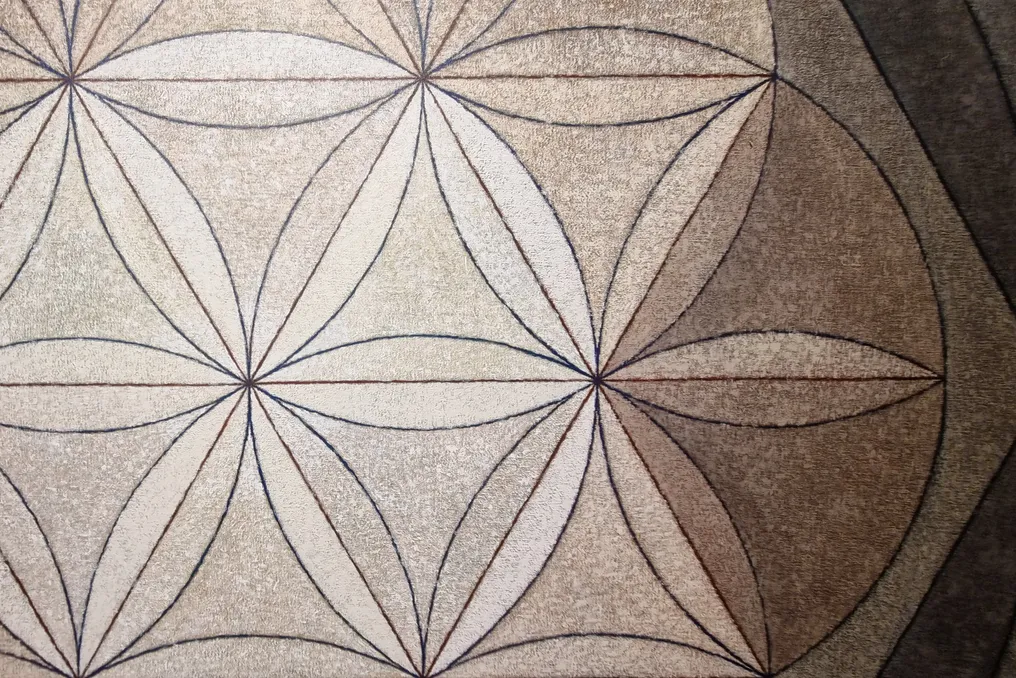
The Indian Habitat Centre (IHC) recently hosted an art exhibition titled 'One | Many,' featuring the works of twelve artists. The exhibition was curated by artist Pabitra Pal.
Pal explains that 'One | Many' is an interdisciplinary exposition combining painting, sculpture, ceramics, and mixed media. It celebrates both unity and diversity: a single impulse toward creativity and the countless forms this impulse takes.
He notes that one idea can manifest through multiple voices, each reflecting a different shade of human experience. 'On the canvases, bold strokes meet quiet washes in conversations about identity, memory, and belonging,' he describes.
Sculptures, according to Pal, occupy space through their presence and pauses, presenting figures, fragments, and abstract forms that prompt viewers to walk around, contemplate, and discover new perspectives. Ceramics, meanwhile, introduces tactility and ritual, as handmade vessels and fired surfaces bear the traces of touch, time, and transformation.
Mixed-media works connect image, object, and text into multilayered narratives. Pal suggests they resist singular interpretation and reward careful contemplation.
As shown in the photo essay, art allows people to convey emotions, ideas, and experiences that might be difficult to express in ordinary language. Each artist develops a unique style based on their personality and views.
Personal struggles and moments of reflection stimulate artists to explore new forms of self-expression. Thus, creativity often becomes a means of self-discovery and making sense of personal experience.
Presenting a group exhibition in a large hall, as done at IHC, creates an environment where visitors can freely move from one piece to another and find multiple paths of interpretation. The arrangement of the works allows guests to choose their own route through the space, making the experience personal and even unpredictable.
Each viewer can notice different connections between the works depending on their interests and life experiences. Since artists approach similar themes in very different ways, viewers are encouraged to compare, question, and interpret what they see.
In this sense, the group exhibition becomes more than just a collection of artworks; it is an open journey in which each person creates their own meaning through movement, observation, deduction, and reflection.
Thus, the exhibition presented at IHC explores how individual stories merge into collective textures. Pal clarifies: 'Some works begin with a personal memory, others with found materials or communal rituals, but every part participates in a larger chorus.'
Pal's own work explores the merging of dreams and reality through circular, nature-inspired forms. His pieces use lines and textures to reflect the difficulties of daily life, promoting awareness and harmony between external and internal realities.
Deb Dutta's works reflect numerous facets of nature. She states: 'Nature is not pure. It is a child of the love of order and chaos. I lean towards order because in its symmetry I find hope and clarity.'
Dutta continues: 'Look at the sky: no planet is a perfect sphere, nor is any orbit a flawless circle. The universe itself deviates. It is in this tension, this elegant imperfection, this controlled wildness that I find beauty. It is the playfulness I choose to live by.'
The works of Ashis Mridha are based on fragments and traces. Although they may seem unfinished or not fully resolved, they seem to express a feeling that finds no complete peace.
Debangshu Bisas depicts energies and flows of life. He explains: 'My work reflects my inner world—a space where reality, history, fantasy, and memory intertwine.' His paintings often feature everyday characters engaged in conversations and interactions. He adds: 'I am deeply fascinated by the complexities of human relationships and the subtle ways people are connected to each other.' He concludes: 'Through my work, I strive to express the nuances of human emotion and the enduring desire for connection. These lie at the core of our shared experience.'
Monika Prasad's works attempt to show empty space through architecture. She observes: 'The empty part is not just nothing—it is the most important part of the design.' She also asserts: 'I show how nature and women are subjected to treatment and ignored. I want people to think about this issue in our society.'
Artist Soumen Basu explains that nature is the source of inspiration for his work. He says: 'We tend to overlook the wonders and mysteries of the natural world, the beauty behind transformations, flow, rhythm, and design in every natural event.' He asks: 'Are we aware of the theories and science underlying natural phenomena? But what about our emotions and visualizations through our inner eye?'
Suprakash Nath addresses the ever-changing world in his works, while Susnata Chatterjee portrays thought and nostalgia through form and color. Supriyo Sahu explores a wide range of techniques and media, including acrylic, charcoal, pencil, pen, textile, and tapestry.
Swapan Sutradar shares that his paintings arise from personal memories—childhood recollections, lived experiences, and quiet observations of the life around him. Distorted human figures, portraits, and objects are recurring elements through which he expresses emotions and inner narratives. His recent works are semi-abstract.