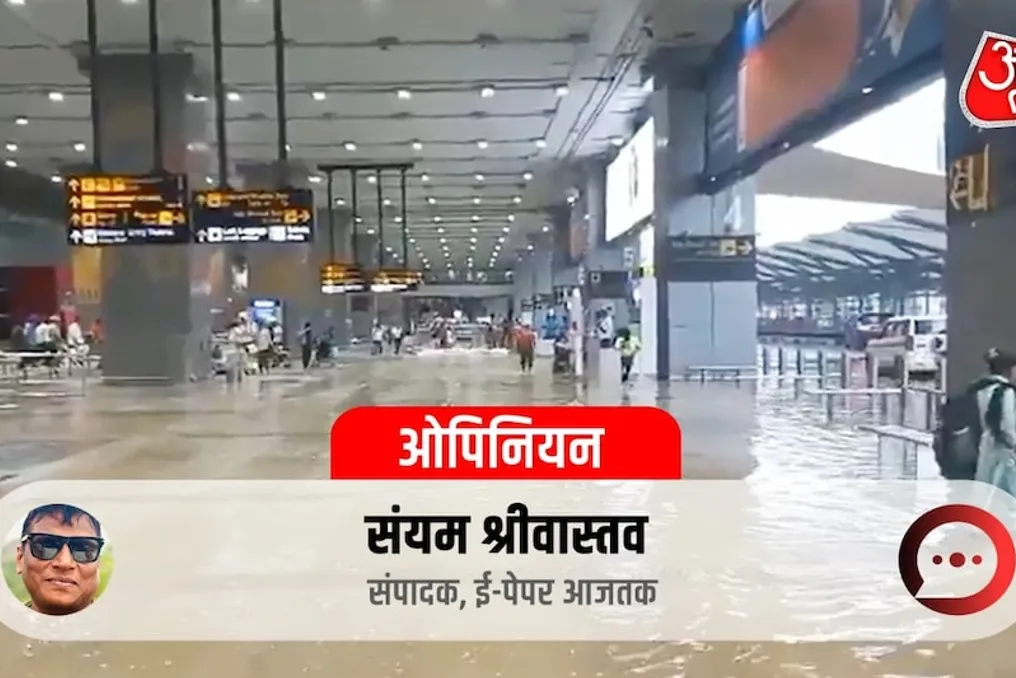
Flooding occurred at Indira Gandhi Airport, raising questions about modern construction culture. This incident is not isolated; similar problems arise regularly, such as recurring roof leaks at new airports in Bangalore, and the roof of Terminal 1 at Delhi Airport previously collapsed during storms.
When water reaches passengers and the grounds of one of the country's largest and most modern airports, one must question not only the intensity of precipitation but also why the building's drainage system, designed for the capital's climate, proved so inadequate.
The situation with leaks, basement flooding, and drainage system failures is observed not only in Delhi but also in many new constructions across the country and globally. Examples of inundation of piers and airports during recent floods in China point to this common issue. The question is not why modern buildings suffer from rain, but why, despite expensive and advanced technologies, we are losing to nature.
Corruption is often cited as the cause: low-quality materials, contractor collusion, compromises in construction, superficial oversight, and neglect of maintenance. However, simply blaming corruption is an easy route. In reality, the problem is deeper and lies in the approach to design and engineering.
India is a country with diverse climates, where North India experiences heat, cold, and rain simultaneously. This calls into question modern architecture. Many contemporary buildings look magnificent from afar: vast glass walls, gleaming roofs, large atriums, open lobbies, extensive parking lots, and attractive exteriors. But have they considered what would happen if an unusually large amount of precipitation fell in an hour, and where that water would go? Were the load-bearing capacity of the roof, drainage, backflow, and the surrounding soil's ability to absorb water, considering future rains, taken into account?
An excellent example is the Chhatrapati Shivaji Maharaj Terminus in Mumbai. Built during the colonial period, this station is not only architecturally beautiful but also demonstrates an understanding of the local climate, wind, and natural light in its design through high roofs, large ventilation spaces, and a structure ensuring natural airflow and light.
Old Kolkata around Howrah Bridge also recalls similar climate-sensitive architecture. The massive structure of Howrah Station withstood the rainy and humid climate for decades. The old Charbagh railway station in Lucknow is also an example of the architecture of its time, created not just for use but also taking into account the local climate and lifestyle.
Colonial architecture around Rashtrapati Bhavan and India Gate in Delhi also testifies to a different approach: thick walls, high roofs, balconies, verandas, and large open spaces for natural ventilation—these are not mere decorations but a reflection of an understanding of the Indian climate. Similarly, old havelis in Rajasthan used inner courtyards and thick walls to protect against heat, while traditional Kerala architecture incorporated sloping roofs to cope with heavy rains. In traditional houses of Assam and Northeast India, they were built above ground to protect against floods and dampness. Even the massive structures of South Indian temples evolved considering the local climate and rainfall.
Thus, our ancestors, without computer modeling and advanced software, possessed local climate experience and an ability to understand nature. Today, we have much more sophisticated technologies. Nevertheless, if a new building begins to accumulate water instead of draining it during the rain, we should question not so much the technology as our mindset.
Another important shift is how buildings were previously viewed as long-term public structures. Today, many projects are implemented under pressure of deadlines and costs. The process of design, construction, and maintenance is divided into three separate streams: the engineer designs, the contractor builds, and then another service handles maintenance. As a result, responsibility is distributed among everyone, but accountability remains nowhere. Climate change has exacerbated the problem. Meteorologists constantly warn of an increase in extreme weather events, such as very heavy rainfall in a short period. Under such conditions, it is insufficient to design drainage based on old average data; cities and buildings must be designed to account for future extreme rains.
And it is not just the airport. In our cities, underground passages turn into ponds within hours, water accumulates under new overpasses, and shopping centers flood in subways.