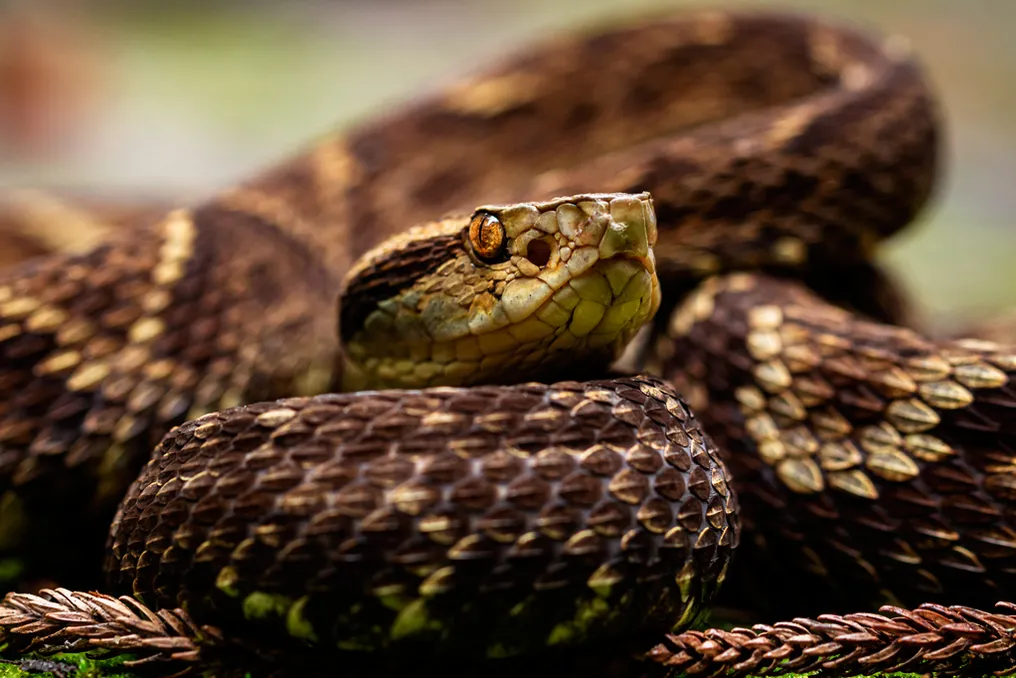
A group of Brazilian scientists received the Ig Nobel award in biology in 2026. Their research was based on an experiment where they stepped on the jararaca (Bothrops jararaca) more than 40,000 times using protective footwear.
The award ceremony took place in Zurich on Thursday (the 3rd). Among the laureates were scientists João Miguel Alves Nunes, Adriano Fellone, Selma Maria Almeida-Santos, Carlos Roberto de Medeiros, Ivan Sazima, and Otavio Augusto Vuolo Marques.
The Ig Nobel Prize is a parody of the Nobel Prize and is awarded by the journal Annals of Improbable Research. It is intended for researchers whose discoveries seem absurd or useless. However, the organizers emphasize that the goal of the prize is to recognize 'achievements so amazing that they make people laugh and then think.'
Ig Nobel recipients receive a certificate worth ten trillion dollars from Zimbabwe, which effectively has no monetary value.
The study involved 116 jararacas of different ages—from adults to newborns. The researchers wore protective boots, brought their feet close to the snakes, and repeatedly made contact in various ways. In one instance, a researcher approached a snake within about five centimeters without touching it, while in another, they lightly touched the animal with their boot.
Unlike most snake studies, which focus on venom or habitat, the Brazilian scientists concentrated on a little-studied aspect—the snake's behavior towards humans. They investigated whether size, temperature, sex, and the body area of contact influenced the probability of the animal biting.
It was found that all these factors influenced the probability of a bite. Firstly, it was established that it cannot be definitively stated whether males or females bite more in any situation. Upon contact with the head, the probability of a defensive bite was about 44%, in the middle of the body—20%, and on the tail—11%.
Age also played a role: the chances of being bitten by newborns were 2.17 times higher than those of adults. Among all age groups, newborn females showed the highest propensity for bites.
Temperature also showed differences depending on sex. For females, warmer conditions were associated with an increased risk of being bitten, whereas males showed the opposite trend: at night, animals attacked less when exposed to high temperatures.
Initially, the study results were published in the journal Scientific Reports. However, after questions arose regarding the ethics of the experiment, the journal demanded the retraction of the article—an official notification of annulment or invalidation of the research findings.
Scientific Reports justified this by stating that the permit issued to the researchers did not cover the use of newborn snakes or the act of stepping on snakes during tests. None of the authors agree with the retraction request, arguing that the foot handling method is based on previous studies where legs were brought close to snakes, and that this method does not compromise the validity of the data obtained.
Interestingly, João Miguel Alves Nunes, the first author of the paper, was removed from the project after being bitten by four snakes and experiencing an allergic reaction to the venom and antivenom.