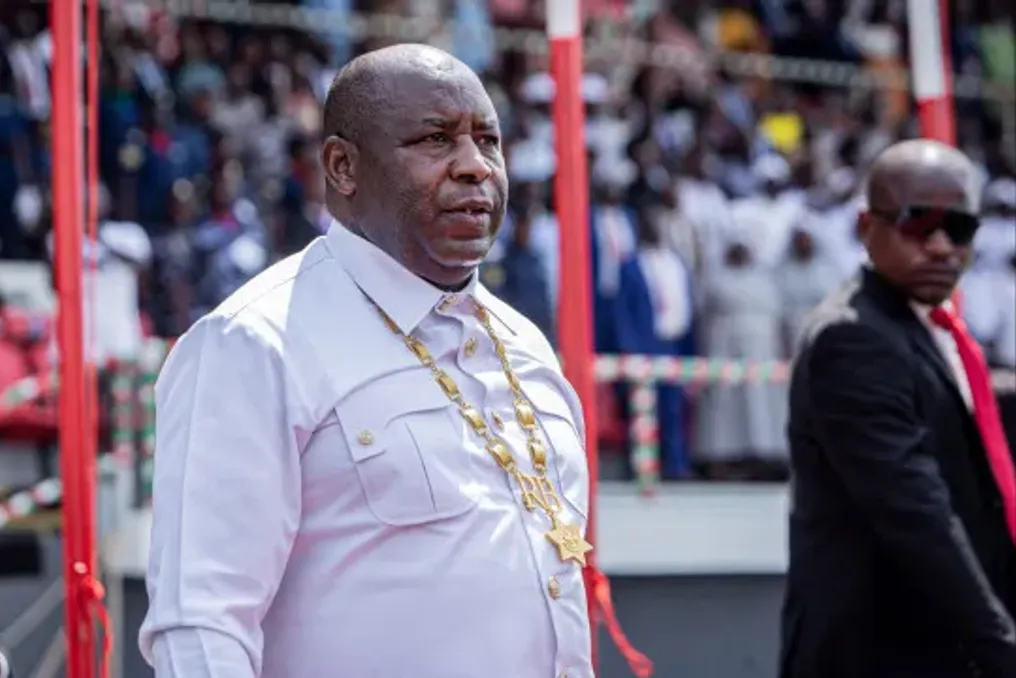
The President of Burundi made statements at the opening of the Extraordinary Summit of Heads of State and Government, held in the Angolan capital. This meeting was specifically dedicated to conflict prevention on the African continent.
The organization's leader acknowledged that the African Union (AU) needs greater capacity for articulation, warning, and prevention. However, he expressed the conviction that the core of the problem does not lie in the absence of mechanisms.
He listed the various instruments available to the African Union, such as the Peace and Security Council, the Continental Early Warning System, the Intelligence and Security Committee, the African Standby Force, the African Union Peace Force, in addition to preventive diplomacy.
Évariste Ndayishimiye admitted that the organization frequently identifies the first signs of a crisis but can only intervene when it is already out of control. As an example, he cited the conflict in Sudan, which caused great human and material losses.
The acting president of the AU advocated for strengthening the capacity for warning, prevention, and articulation of structures, but warned that conflicts are not solely caused by armed violence. He continued by explaining that these are also consequences of governance deficits, political exclusion, inequalities, and social injustices, factors that lead people to resort to arms.
Emphasizing his position, he stated that poverty acts as a conducive factor to conflicts, concluding that poor resource distribution results in precariousness and despair, advocating for the implementation of a comprehensive poverty eradication program on the continent.
For João Lourenço, President of Angola and host of the summit, it is up to African leaders to create conditions for future generations to live in a more prosperous, safer, more integrated, and war-free continent.
The Angolan head of state was the main promoter of the event and recalled during the inaugural ceremony Angola's commitment to peace, assumed during the period Angola chaired the AU in 2025.
João Lourenço stressed the importance of making the instruments Africa possesses to mediate crises, prevent conflicts, and ensure the application of collectively made decisions more efficient. The Angolan president hopes that the Luanda Summit will serve as a turning point to operationalize conflict resolution and prevention mechanisms on the continent.
He declared that all available political, diplomatic, financial, and institutional instruments must be mobilized to prevent conflicts from escalating into wars and to end existing conflicts as quickly as possible.
Mahmoud Ali Youssouf, President of the African Union Commission, addressed persistent crises in Africa, mentioning from Sudan to the Democratic Republic of Congo, Somalia, or northern Mozambique, in his opening speech.
He highlighted that challenges such as terrorism, violent extremism, and transnational crime are continental realities, arguing that the time has come for reforms, which must have a rapid warning mechanism.
Mahmoud Ali Youssouf also emphasized the urgency of increasing funding for the Peace Fund, which is almost inoperative, and the need to accelerate reforms so that the African Union's mechanisms function properly again.
To date, the total number of heads of state and government present at the summit has not been disclosed, with only the President of Cape Verde, José Maria Neves, representing Lusophone Africa in Luanda.