Archaeologists excavating the necropolis of Saqqara, located in Egypt, made a remarkable discovery: a tomb dating back to the Old Kingdom, a period situated between approximately 4,700 and 4,200 years ago. This archaeological site is located about 40 kilometers southwest of Cairo and holds UNESCO World Heritage status.
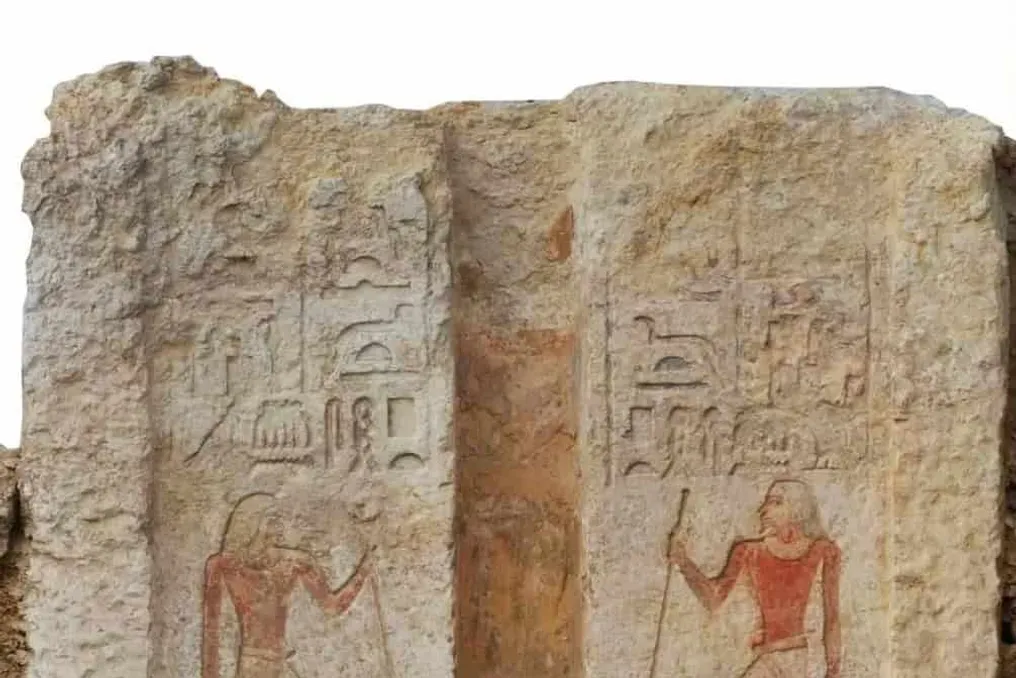
Hieroglyphs found inside the tomb indicate that the burial belonged to a high official named Sekhentyu-Ptah. The inscriptions detail the various roles he held, including royal chamberlain, overseer of the king's works, supervisor of royal documents, priest of the goddess Maat, and supervisor of scribes.
The individual's social relevance is also evidenced by the recovered artifacts. The archaeological team located over one hundred statuettes intended to assist the deceased on his journey after death. Furthermore, three stone sarcophagi, still sealed and in their original state, were discovered, along with a wooden falcon figure, ceramics, and other items.
A particularly intriguing aspect of this discovery is the presence of a so-called false door in the tomb. In this area, various funerary objects were found, such as an offering table, an offering disk, and a purification basin. Although called a 'false door,' its function was not to deceive thieves; rather, it possessed a symbolic and spiritual character, being seen as a transition portal between the world of the living and the dead for the spirits.
Despite its importance, the tomb suffered looting at some point throughout the millennia. According to Egyptologist Magdy Shaker, Saqqara's distinction compared to Giza lies in its greater historical diversity. Shaker explained that 'Giza is architecturally and historically restricted: it is fundamentally a field of Fourth Dynasty pyramids. Saqqara, on the other hand, houses pyramids, temples, private tombs, an underground animal necropolis, and a monastery, encompassing practically all of ancient Egyptian history.'