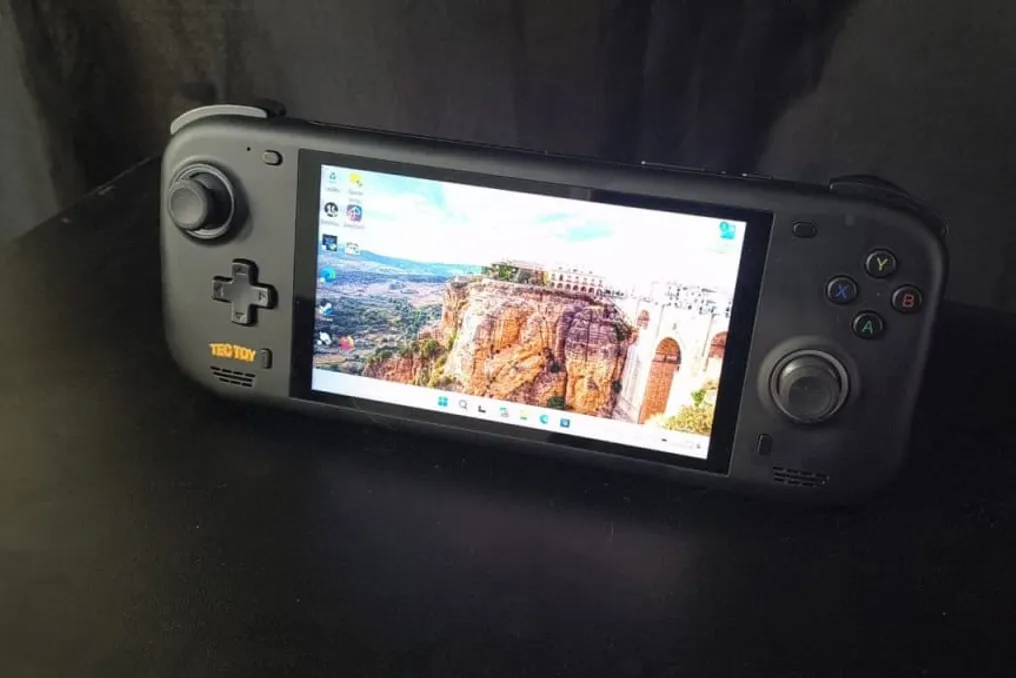
The Zeenix, a domestically produced portable device made by Tectoy, has generated considerable debate in the Brazilian gaming scene since its launch. However, the real experience with the product is irreplaceable. The Olhar Digital team visited TecToy's facilities in São Paulo to examine the line's consoles and conduct practical tests on the Zeenix Pro, also taking the opportunity to revisit the nostalgia of old products displayed on site.
During the visit, there was an opportunity to speak with Eddy Antonini, who is responsible for Zeenix line products at Tectoy. He detailed the distinctions between the Lite and Pro models, explaining the logic behind each device configuration.
A notable aspect highlighted was that the company's Customer Service (SAC) is not outsourced; it operates internally, alongside engineering. This optimizes not only the support offered to customers but also allows consumer improvement suggestions to reach product development directly. In a market where domestic support is a major advantage of the Zeenix over imported devices, this operational model is seen as a positive point for the brand.
The Zeenix is presented as a line of portable computers equipped with Windows 11, capable of running everything from indie games and emulations to AAA titles, depending on the chosen specification. Tectoy markets the product as the first national one in this segment, featuring Anatel certification and local technical support, which constitutes the main selling point against imported competitors who might leave the Brazilian consumer unsupported regarding maintenance issues.
Differentiation Between Zeenix Models
The line is segmented into two distinct models: Zeenix Lite and Zeenix Pro, targeting varied audience profiles.
In practice, the Zeenix Lite is aimed at the casual gamer, retro enthusiast, and those interested in less demanding indie titles. Meanwhile, the Zeenix Pro positions itself at a more competitive level, rivaling the Steam Deck and ROG Ally, as it possesses hardware adequate to support more demanding games.
The Zeenix Pro was launched on the market at R$4,999, establishing a strategic positioning compared to the ROG Ally X (which costs around R$8,800) and the Legion Go (over R$7,000). This price is advantageous for those wishing to enter the universe of portable gaming PCs without incurring import costs and currency fluctuations.
In the tests conducted, older games, such as those from SEGA Mega Drive & Genesis Classics, ran without compatibility or performance failures. Furthermore, the title The Lord of the Rings: War in the North, in its Legacy Edition (released in 2026), maintained fluidity even in the most intense battles, without freezing. It is relevant to note that the Legacy Edition officially recommends an RTX 2060 or RX 6600, surpassing the integrated GPU of the Zeenix Pro, but the practical experience was satisfactory.
In the Sledders simulator, no performance issues were observed either. However, it was noted that the tree shadows were gradually projected as the character advanced, indicating that the environment was not fully loaded immediately, improving as movement occurred.
On the other hand, Injustice: Gods Among Us Ultimate Edition presented difficulties because it did not open on the PC used for testing. To make adjustments to configuration files, the keyboard had to be used, and the reduced screen size complicated this specific task. Although it is possible to connect the device to a television or monitor, the portability experience can be compromised depending on the location of use.
Marvel Rivals was the title that showed the worst results. The game suffered from constant stuttering during action, which harms the essential fluidity in a shooter game. Despite no complete freezes occurring, loading was slow, and the stutter persisted throughout the match.
Negative and Positive Points
Among the drawbacks pointed out, the ventilation system stands out: although efficient in cooling, the fan noise is high and can be bothersome, requiring a significant increase in volume to play without headphones. Additionally, despite good ventilation, the screen heated up considerably, especially in hotter climates.
Regarding the battery, the performance is considered good compared to other portables, but in heavier games, it is crucial to keep the device connected to power or a power bank. For use on a home sofa, it worked adequately, although the cable was a bit short for that distance.
The positive points include the processing, which reaches a level similar to other portable PCs on the market, with the 16GB of RAM offering an advantage over the Lite version. The screen also received praise for its high quality, whose sharpness almost resembles an OLED panel, assisting users with poorer vision. The 100W charger with Power Delivery ensures fast recharging, and the complete kit, which includes a good quality case, charger, and keyboard, is a differential compared to other handhelds.
The audio was also rated positively, presenting good quality in speakerphone and powerful volume, although this latter benefit is mitigated by the fan noise.
In conclusion, the author considers that for those seeking to avoid import taxes, needing a versatile and cost-effective portable PC, the Zeenix Pro is a valid option. It is important to remember that it is a PC and not a console, so typical instabilities of common computers, such as blue screens, may occur, which is why the keyboard is useful for such unforeseen events. For less technical users, they just need to install Steam, which is pre-installed, to start using the device.