
Trump Administration Releases Game Simulating US Border Actions
Read more
Olhar Digital
olhardigital.com.br

Trump Administration Releases Game Simulating US Border Actions

The Donald Trump administration has launched a video game that models the process of deporting immigrants within the United States. This tool is available on the official White House website.

The primary goal of this publication is to provocatively promote aspects of the president's agenda. The launch immediately drew a reaction from human rights groups, while the administration defended the initiative by presenting it as a counterargument to the so-called 'socialist viewpoint' of Democrats.

The game, inspired by the classic 'Snake' game, features a retro visual style and places the user in the role of Tom Hoffman, known as the 'border king.' The player's task is to guide the character to collect people who crossed the Rio Grande into Mexico and carry out their deportation.

This release comes amid the US government's intensification of mass detention and deportation programs for immigrants. The novelty is integrated into the Arcade section of the White House website, which contains five low-polygon games dedicated to various aspects of Trump's agenda.

There is also a variant based on the mechanics of the 'Tetris' game. The game, titled 'Defend the Border Against the Approaching Horde,' tasks the user with building a wall on the border with Mexico—a project actively promoted by the president.

Reaction from Human Rights Organizations

Human rights groups quickly criticized the initiative. America Garcia Gruel, co-director of the NGO Frontera Federation based in Texas, condemned the transformation of government actions into entertainment. She told AFP: 'I find this disgusting. They have been playing with people's lives for years, and now they are making a video game about their actions.'

Gruel added that the game's creator 'has lost sight of what it means to be human and care for others.'

The White House defended the publication. In a statement sent to AFP, it was noted that the video game 'further emphasizes the contrast between a 'fun' and 'successful' culture and the dark socialist picture that Democrats present to the United States.'

This initiative aligns with the communication strategy openly used by the White House on social media—'trolling,' meaning spreading provocative content to incite outrage and ensure viral spread.

Furthermore, the Department of Homeland Security (DHS) recently published a video showing the deportation of Haitian immigrants in handcuffs after Washington revoked their legal status in the country. Trump's opponents deemed this material humiliating and racist.

These video games are part of the White House's increasingly provocative communication strategy during the period of intensified immigration detentions and deportations in the United States.

Similar stories

German woman who came to India at age 20 runs sanctuary for over 2500 rescued cows in Mathura
Read more
thebetterindia.com

German woman who came to India at age 20 runs sanctuary for over 2500 rescued cows in Mathura

Arriving in India in search of meaning in life, the German woman known as Sudevi Dasi now cares for over 2500 sick, injured, and abandoned cows in Radha Kund, Mathura.

Her spiritual quest led her to Radha Kund in Braj, where she embraced devotion and became known as Sudevi Dasi. One day, she found an injured calf by the roadside; its hind leg was broken, and the wound was infected with worms. It had been left to die, but Sudevi took it home.

She treated and cared for the calf, saving its life. However, soon other sick and injured cows began to be brought to her, which she could not refuse. The number of animals quickly grew from a few to dozens, and then to thousands.

In 1996, she founded Radha Surabhi Gaushala, which became a shelter for often unwanted cows: sick, injured, blind, disabled, and abandoned. Here, the animals receive food, shelter, and most importantly, care and love.

Today, this gaushala houses over 2500 cows. Notably, this gaushala does not operate for milk sales; in fact, milk is purchased externally to feed orphaned calves.

For Sudevi Dasi, this is not just a gaushala, but a home for animals that people have abandoned due to illness, injury, or old age. In this place, mothers and calves are never separated, and every cow has a chance to live with dignity.

Over three decades of her service have touched thousands of lives. According to the Foundation, the Trust received benefits for 15,700 cows in the last three years. Furthermore, Sudevi's work across India has received recognition. In 2019, she was awarded the Padma Shri for social work and animal welfare.

Born in Germany, Sudevi found the purpose of her life in India and dedicated it to serving those who cannot speak for themselves.

Housing developer and agency created micro-apartments to demonstrate the housing crisis in Sweden
Read more
designindaba.com

Housing developer and agency created micro-apartments to demonstrate the housing crisis in Sweden

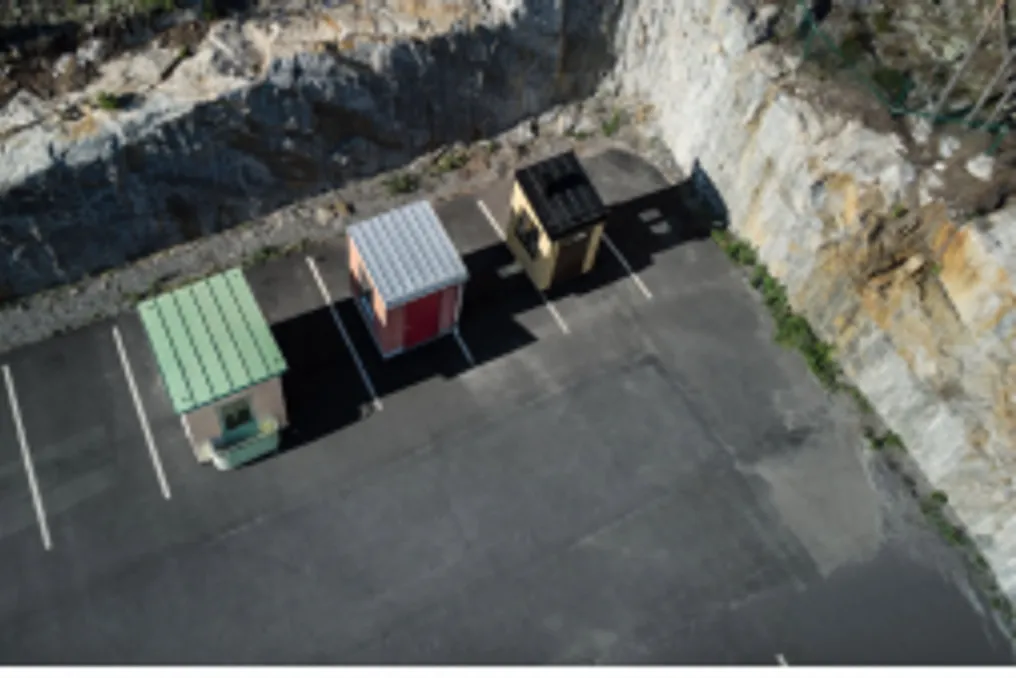
Amid the housing affordability crisis in Sweden, developer Riksbyggen, in collaboration with creative agency BBDO Nordics, developed a concept for micro-housing intended to make the reality of this crisis tangible.

The project, titled 'Visualisation of Reality,' transforms the issue of housing affordability in Sweden into three full-scale micro-apartments. Each one reflects the amount that an average 25-year-old resident can realistically afford in different Swedish cities.

The sizes of these residential units vary: the smallest, located in Stockholm, has an area of only 1.9 square meters. In Gothenburg, it is 3.1 square meters, while in Umeå, a more spacious apartment of 4.5 square meters is offered.

The size calculations were made using the Riksbyggen Square Meter Index, which takes into account factors such as income level, real estate cost, and mortgage lending conditions.

This campaign turns alarming statistics into an interactive experience that visitors can enter. The goal of the project is to translate economic data into habitable space, allowing for an immediate understanding of a complex social problem. Visitors can see how financial pressure not only affects abstract affordability indicators but also radically changes people's living spaces.

Inside each apartment, essential elements, including sleeping areas, seating, kitchen utensils, and storage space, are fitted into extremely limited space. The interiors reference various eras of Swedish architecture, creating a strong contrast between the country's architectural heritage and the increasingly limited opportunities available to the younger generation.

Popular