Amit Shah announced plans to make Gujarat a sports hub, while 19 countries participated in the para-shooting series
Read more
The times of India
timesofindia.indiatimes.com

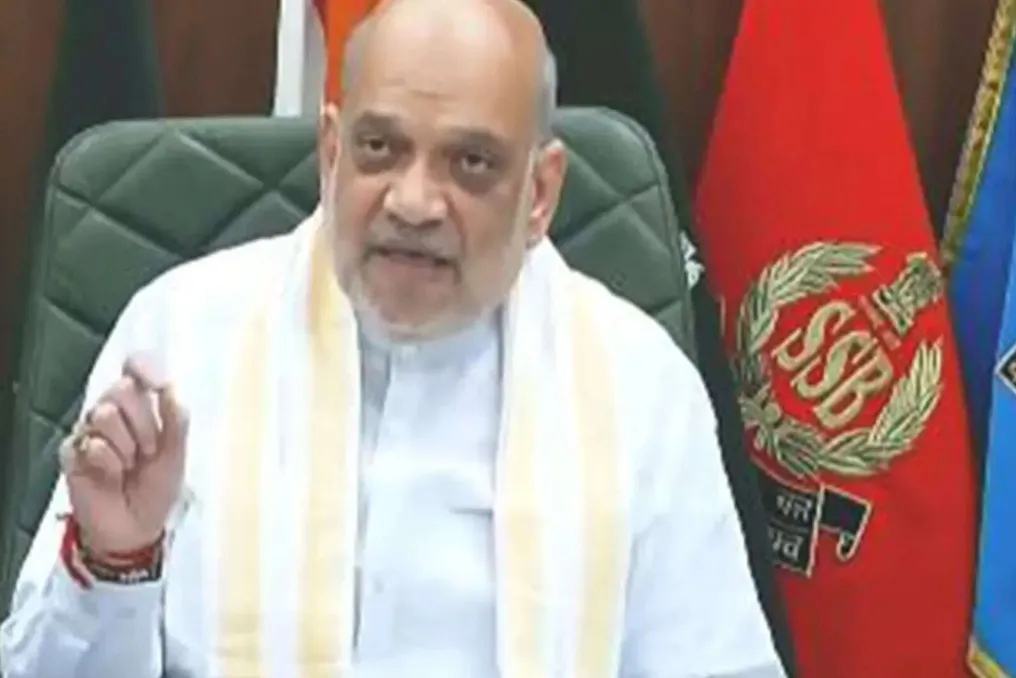
Amit Shah announced plans to make Gujarat a sports hub, while 19 countries participated in the para-shooting series

Home Minister Amit Shah stated on Friday that India will soon transform into a major center for all sports-related activities. This includes hosting international competitions such as the Olympic Games, becoming a training and preparation center for athletes at both national and international levels, and managing sports injuries.

Shah emphasized that in the near future, India will become a global leader in the medical science of sports injuries, and Gujarat will play a central role in this field.

Similar stories

Rahul revives 'vote theft' allegations over exclusion of 20.7 million voters in Maharashtra
Read more
timesofindia.indiatimes.com

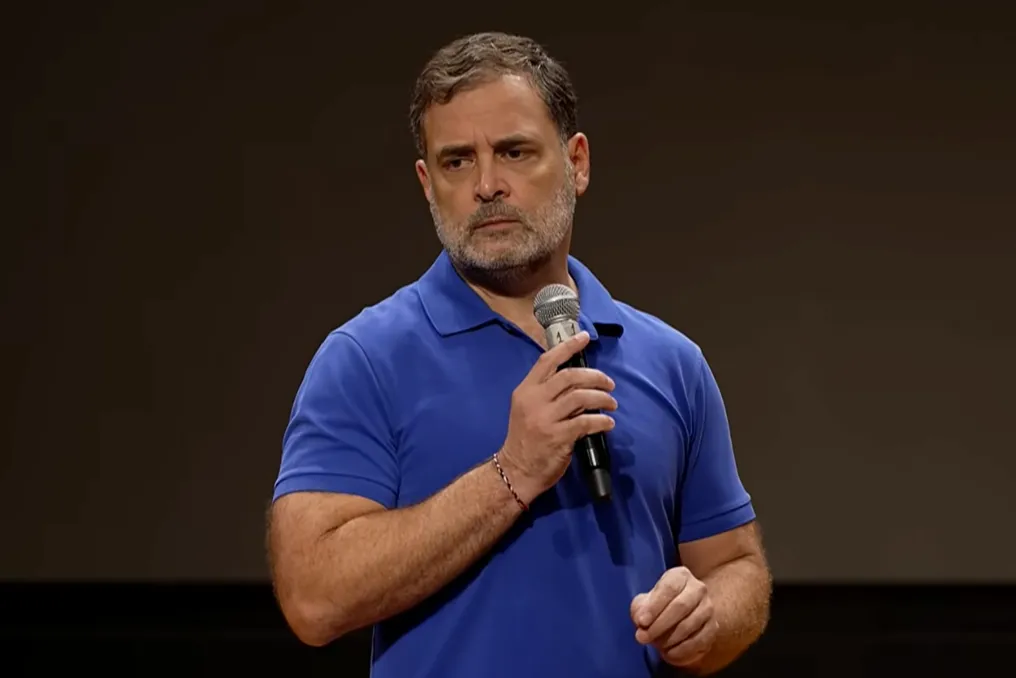
Rahul revives 'vote theft' allegations over exclusion of 20.7 million voters in Maharashtra

The opposition leader in Lok Sabha once again raised 'vote theft' allegations against the Bharatiya Janata Party (BJP) and the Election Commission on Tuesday, pointing to new discrepancies in Maharashtra's voter lists following a special intensive review of the electoral rolls.

In his post on social media platform X, Rahul labeled the Election Commission as a 'vote theft commission' and stated that its sole objective is the 'victory of the BJP and the end of Indian democracy.' The Congress leader emphasized that the tactics of the 'BJP and the Vote Theft Commission' are constantly changing, but their goal remains unchanged: the victory of the BJP at any cost and the destruction of Indian democracy.

He also reported that 3.9 million new voters were added between the Lok Sabha and Vidhan Sabha elections in Maharashtra, and 91 percent of names were restored after an appeal in West Bengal. Rahul Gandhi stated: 'Maharashtra 2024—suddenly 3.9 million new voters were added between the Lok Sabha and Vidhan Sabha elections. I said this then, and I say it today: this was vote theft.'

Additionally, he noted that 91 percent of names excluded during the SIR process had to be restored after appeals were filed. 'This means that nine out of ten names were erroneously deleted and only added back after the elections. I said this then, and I say it today: this was vote theft,' he added.

Rahul alleged that 20.7 crore voters were removed from the draft electoral roll of Maharashtra, which accounts for approximately one-fifth of all voters. He questioned the correctness of the lists by comparing figures: 'In Maharashtra, 2.07 crore voters have been removed from the draft list—that is every fifth voter. Lok Sabha 2024: 9.29 crore; Vidhan Sabha 2024: 9.7 crore; SIR 2026: 7.78 crore. Which list was correct?'

He concluded that since the government is built on vote theft, it does not consider people's interests, so 'this BJP listens to no one and does not obey their commands.'

According to data published by the Chief Electoral Officer of Maharashtra, out of 97,854,049 voters, 77,165,562 submitted their forms during the SIR enumeration phase on August 17, 2026. Of the total registered voters, 3.482 lakh voters (3.56 percent) were identified as deceased, and 1.54 crore voters (15.78 percent) were classified as permanently relocated, absent, or categorized otherwise. Furthermore, 1.767 lakh voters (1.81 percent) were registered at multiple addresses on the electoral roll.

The electoral body noted the active participation of recognized political parties in this process, with 335,910 Booth Level Agents (BLAs) appointed in the state.

Officials reported that the remaining SIR schedule will be published after the release of the draft electoral roll on August 31, with October 1, 2026, set as the qualification date. Rationalization and redistribution of polling stations took place on August 24. The period for submitting complaints and objections will remain open from August 31 to September 30, and the consideration of complaints and objections will run from August 31 to October 29. The process will conclude with the final publication of the electoral roll on November 4.

Jhaishankar discusses India's strategy, proposing a global view through 3C and 4D concepts
Read more
timesofindia.indiatimes.com

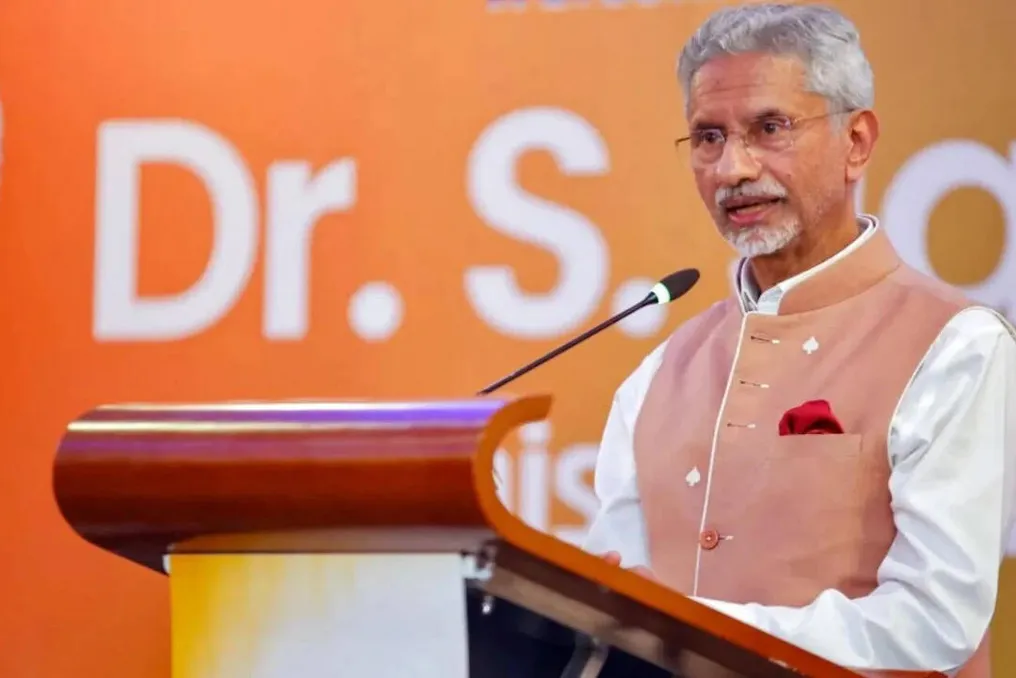
Jhaishankar discusses India's strategy, proposing a global view through 3C and 4D concepts

External Affairs Minister S. Jhaishankar presented a balanced assessment of the rapidly changing global landscape on Saturday, warning that growing geopolitical and economic tensions are creating new challenges for businesses and states. He emphasized the need to maintain India's engagement in major world economies while simultaneously strengthening its own industrial and economic capabilities.

Speaking at the Economic Times World Leaders Forum 2026, Jhaishankar stated that the current global situation requires countries to reduce vulnerabilities, expand economic options, and be prepared for disruptions, rather than relying on assumptions of stability.

He structured his assessment around three defining characteristics of the modern world order: competition, conflict, and the increased use of economic and strategic influence. To cope with this pressure, he proposed a four-part approach aimed at minimizing risks, diversifying partnerships and sources, eliminating market distortions, and maintaining a buffer.

Regarding China, Jhaishankar noted that India must continue to do business with Beijing while building up internal strength to compete with it. He believes that greater self-reliance, industrialization, and manufacturing capacity will allow India to interact with China more confidently without abandoning it.

"We must do business with the whole world. And that includes China. But it is important that we do so confidently," he said. Jhaishankar added that relations between India and China went through a difficult period from 2020 to 2024 due to the border situation, but both countries are interested in maintaining stable ties. He also pointed out the need to catch up on decades of shortcomings in India's industrial and manufacturing base.

Three Characteristics of the World According to Jhaishankar

Describing the modern world, Jhaishankar admitted that his assessment is not comforting. He noted increasing competitiveness, where states and politicians pursue their interests to such an extent that competition can escalate into conflict.

"I think what we have seen, especially over the last year or so, but I would call it a growing trend. It looks increasingly competitive," he said, adding that countries and politicians push their interests "to the point where conflicts arise." He cited the conflict between Russia and Ukraine, as well as the conflict in the Middle East, noting that one has been going on for five years, while the other lacks a clear resolution.

In Jhaishankar's view, competition has gone beyond traditional geopolitical struggle, as economic and strategic tools are increasingly "weaponized." He explained that the world is characterized by "choke points," which arise when a country or group of countries establishes dominance in a certain area and is ready to use that influence to exert pressure. Such influence can "cause pain" to others, while the countries applying it may consider themselves sufficiently protected from the consequences.

The 4D Response

Next, Jhaishankar outlined his response to these challenges. He presented derisking as his first and "main mantra," noting that this principle applies not only to business but also to politics and strategy.

The second element was diversification. He stressed that the more partners and sources there are, the better risk reduction is achieved, arguing that states and companies should not be overly dependent on a small number of partners or sources.

The third point concerned eliminating distortions. Jhaishankar pointed to disruptions in energy, fertilizer, and shipping markets related to conflicts and the emergence of choke points. For his final point, he called on businesses and politicians to move beyond the traditional principle of "Trust but verify."

"Today I say: 'Don't trust and diversify,'" he stated, insisting that planning must account for the possibility that "everything can go wrong." He also cautioned against excessive reliance on just-in-time supply chains and the assumption that the lowest cost should always dictate economic decisions, emphasizing the importance of creating a "buffer stock."
Popular