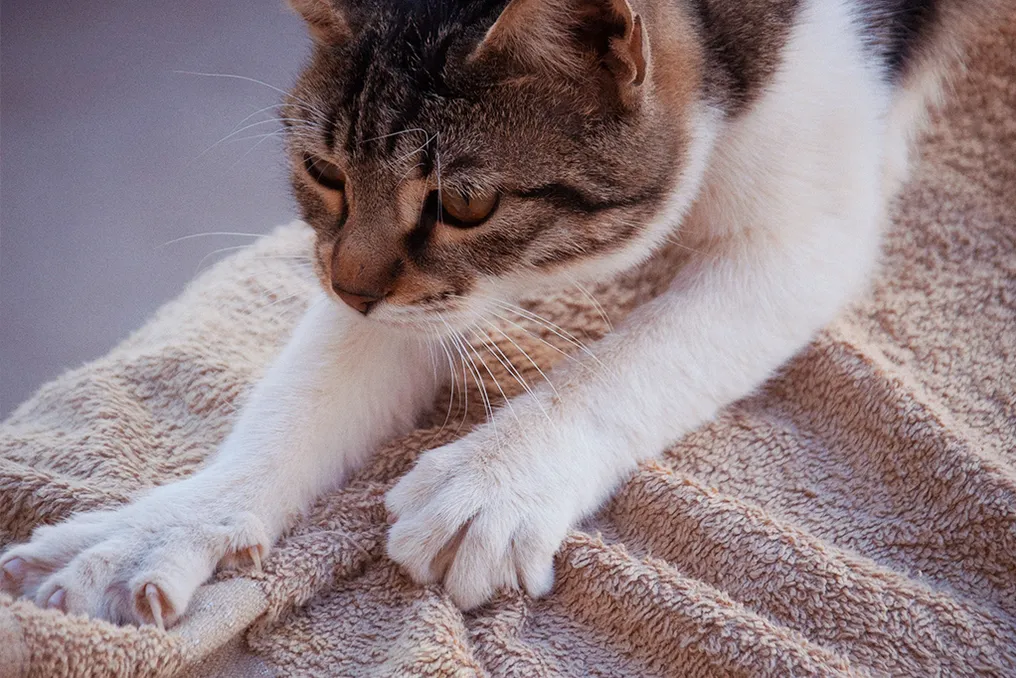
The habit of cats kneading blankets, pillows, and even human beings is a very frequent behavior. This act is known as the famous 'making bread' and has its roots in infantile instinct, replicating a movement that serves to stimulate the release of breast milk, assisting in sucking during breastfeeding.
During the first three weeks of life, the mother cat invites her kittens to nurse. After this initial period, the kittens start looking for the mother on their own, which can lead to a desire to nurse even when the mother is not yet fully ready. For this reason, the act of kneading can be interpreted as a way to boost milk circulation and facilitate its release.
For the cat, nursing is a pleasant experience, and even after reaching maturity, it frequently associates 'making bread' with the feeling of security and comfort from the juvenile phase. Consequently, an adult, weaned cat may repeat this gesture on pillows or even on owners, provided it feels calm and safe.
Kristyn Vitale, an expert in applied animal behavior from Unity Environmental University, commented in an interview with Scientific American that it is likely that some of these juvenile behaviors, previously directed towards the mother, will start being directed towards the owner. If the cat performs this gesture on you or on household items, it indicates a sign of trust and that it feels well cared for. However, she warned that there is always the possibility of the cat scratching or drooling on clothes, situations where little can be done.
However, this is not the only justification for the behavior. Cats have scent glands located in the pads of their paws; by kneading something, they deposit their scent in that area. Thus, by kneading various objects and areas, they may be marking their territory. Furthermore, other experts suggest that cats knead to stretch muscles and relieve any tension present in their limbs.