The method of preparing the traditional Iranian flatbread Sangak, which is baked on hot stones, has been added to Iran's national list of intangible cultural heritage following consideration by the country's National Council for the Registration of Intangible Heritage, an official representative reported.
Alireza Izadi, the director general for national and world heritage registration at the Iranian Ministry of Cultural Heritage, Tourism and Handicrafts, noted that this registration recognizes Sangak as one of Iran's traditional breads and an integral part of the national food culture.
According to Izadi, the registration serves as a step toward protecting a part of historical memory, everyday culture, local knowledge, and the culinary identity of Iranians.
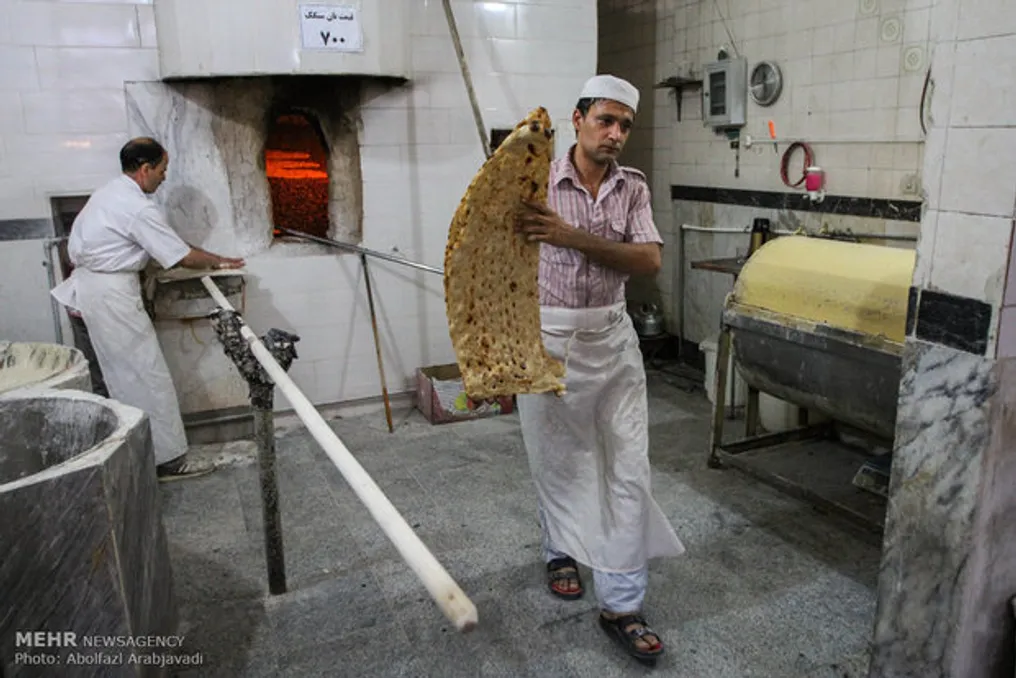
The name Sangak derives from the Persian word meaning 'stone,' referring to the small river stones on which the bread is prepared. This bread is usually made from whole-grain, highly hydrated sourdough, shaped into a rough triangle, and then stretched over heated stones in a large oven. Traditional additions include sesame or poppy seeds.
Izadi indicated that the earliest known written mention of Sangak is found in the book Burhan-e Kate (also known as Burhan-i Kati), a Persian dictionary compiled by Muhammad Hussein ibn Khalaf Tabrizi in 1062 AH. In this entry, Sangak is described as a type of bread baked on hot stones.
He added that oral traditions and historical evidence link the origin of this bread to the Sasanian era and earlier periods, while emphasizing that such information requires further historical evaluation.
Archaeological findings also confirm the continuity of the baking tradition. According to Izadi, remains of a Sangak bakery, including an intact oven and special baking stones, were discovered in a ruined fortress in Varamin, south of Tehran.
A popular version states that the design of the Sangak oven was invented by Sheikh Baha'i during the Safavid rule at the request of Shah Abbas to devise a way to supply soldiers with bread during military campaigns. Izadi reported that this story was recorded in a 1947 calendar published by the Tehran bakers' committee, but its historical accuracy remains uncertain.
He stressed that the national registration aims not only to preserve the appearance of Sangak but also the knowledge and skills associated with dough preparation, bread baking, the use of traditional tools, and adherence to related customs.
Izadi stated that the ministry will make efforts to further document and study Sangak with the goal of including it in the UNESCO Intangible Cultural Heritage list. He added that such work will require the cooperation of researchers, historians, traditional bakers, heritage specialists, and other relevant institutions.