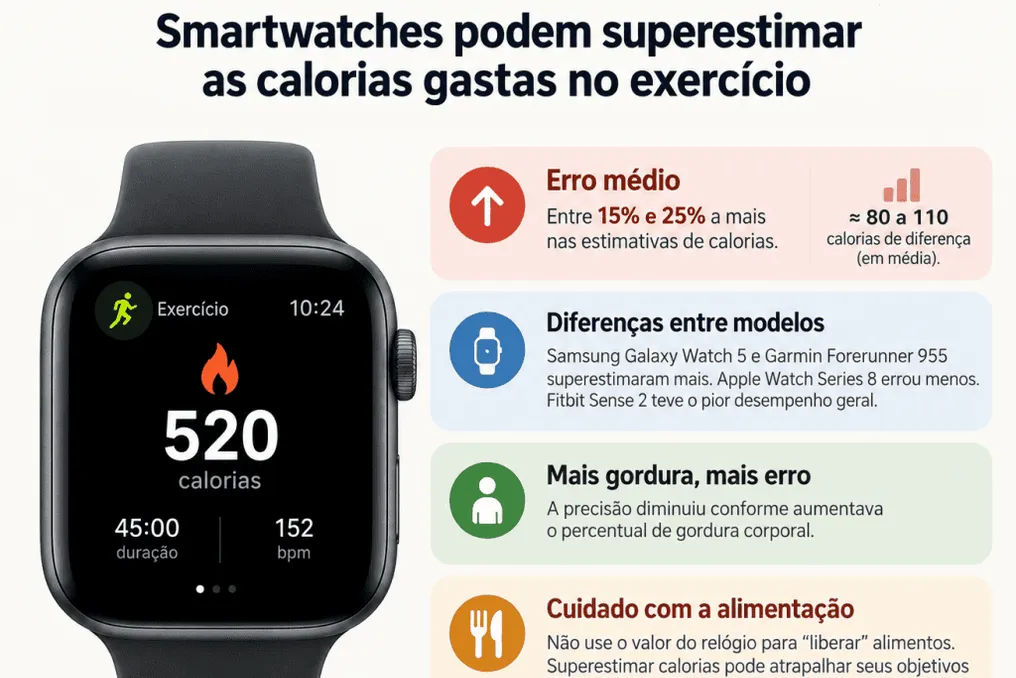
A recent study published in the journal PLOS One indicates that smartwatches can make considerable errors when calculating the number of calories burned during physical exercise.
Scientists from the University of Florida International, located in the United States, examined four commercial watch models and concluded that, generally, these devices tended to overestimate participants' energy expenditure. This discrepancy was more pronounced in individuals with a higher proportion of body fat.
The study involved 58 volunteers, whose characteristics included variations in height, skin color, and body composition. Each volunteer performed an intense cycling session on a recumbent ergometer, equipment designed to simulate bicycle exercise in a controlled environment. The data recorded by the watches were compared with measurements obtained from a standard laboratory analyzer.
On average, the devices showed deviations of 80 to 110 calories compared to the laboratory method, corresponding to an estimated error between 15% and 25% in the estimates. Among the tested models, the Samsung Galaxy Watch 5 and the Garmin Forerunner 955 were the ones that inflated energy expenditure the most. The Apple Watch Series 8 registered a notably smaller difference during the tests.
The Fitbit Sense 2 presented a distinct profile; although it did not show a significant average bias in the considered valid measurements, approximately 13% of the estimates were judged as implausible. Considering these results, this model achieved the worst overall performance among the four devices analyzed by the researchers.
A positive finding of the study was the absence of notable differences related to the participants' skin tone. However, body composition exerted a relevant influence on the accuracy of the estimates, as the higher the percentage of body fat, the less reliable the watch results were.
In a statement, the authors mentioned that it is not yet clear whether the problem lies with the sensors used or the algorithms responsible for converting data into energy expenditure estimates.
How wearable devices work
Smartwatches and fitness trackers calculate various indicators during physical activities using optical sensors, movement data, and other bodily information. One of these methods is photoplethysmography, which uses light to identify changes in blood volume under the skin. This data is processed by algorithms to estimate parameters such as heart rate and energy expenditure, but this process involves indirect calculations and is consequently subject to errors.
This warning is particularly relevant for those looking to adjust their diet based on the expenditure displayed on their wrist. Speaking to Olhar Digital, Manuela Dolinsky, president of the Federal Council of Nutrition (CFN), warned that the calorie count from the watch should not be used to authorize immediate food consumption after exercise, reminding that the estimated energy spent is one of the least accurate pieces of information from these technologies.
In the nutritional field, blindly trusting these numbers can compromise health goals. For Manuela, overestimating energy expenditure can result in an inadequate increase in food intake, diminishing or eliminating the planned caloric deficit. Conversely, underestimation can lead to excessive restrictions, low energy availability, fatigue, and poor physical recovery.