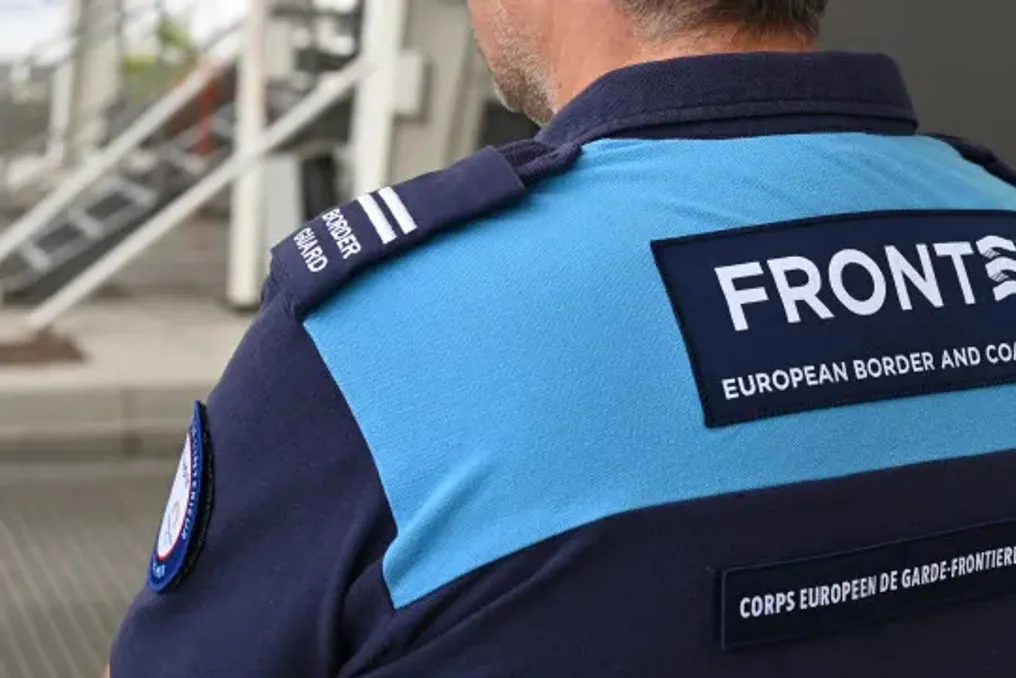
The European Border and Coast Guard Agency (Frontex) has announced, for the first time, the deployment of a patrol vessel to the English Channel. This measure aims to provide support to French search and rescue activities, specifically those related to overcrowded small vessels at sea.
The Spanish ship, named 'Duque de Ahumada' and belonging to the Guardia Civil, began its operations near the French coast this week. It will operate in collaboration with a Frontex surveillance aircraft, which has been monitoring the English Channel since 2021.
Both the ship and the aircraft will be incorporated into the search and rescue force coordinated by the Maritime Rescue Coordination Centre in Gris-Nez, under the purview of the maritime prefect of the Channel and the North Sea. Frontex informed the European press that the ship will assist French authorities in gaining a more complete view of maritime events, being capable of detecting, verifying, and tracking small vessels, sending precise, real-time data to those responsible.
Hans Leijtens, Executive Director of Frontex, emphasized that the purpose of this operation is twofold: 'to see more so that national authorities can do more.' He added that a clearer perception of the situation enables faster decision-making, more efficient coordination, and better safeguarding of human lives.
Additionally, European Commissioner for Home Affairs, Magnus Brunner, stressed that human smugglers put lives at risk and that it is imperative to act decisively on all routes to curb this practice. Magnus Brunner also mentioned that the joint action plan between the UK and France for the English Channel, supported by Frontex, has already resulted in a 44% reduction in border crossings compared to 2025.
The 'Duque de Ahumada' will be succeeded by the 'Río Segura' at the end of September, and there are plans for the participation of other Member State vessels in the following months, the details of which have not yet been defined.
Frontex warns that all crossings in the English Channel are considered dangerous due to vessel overcrowding and the possibility of abrupt changes in maritime conditions. Although the European agency offers support to national authorities in coastal and aquatic surveillance between France, Belgium, and the United Kingdom, the responsibility for law enforcement and search and rescue operations remains with local authorities in their respective waters.
The agency also clarified that its intervention in this operation is strictly linked to French search and rescue actions, and it does not participate in maritime interception operations. The English Channel is a crucial route used by migrants seeking to reach the United Kingdom from northern France, usually using small inflatable boats or other precarious structures.
This announcement comes just over a month after the migration crisis recorded in Ceuta on July 30 and 31. On that occasion, approximately 72,000 migrants crossed the border between Morocco and the enclave in an unprecedented mass entry, mostly by sea, with many attempting to reach Spanish territory by swimming, resulting in dozens of deaths. This event forced Spain to intensify its police and border presence in the area and request greater European assistance to deal with the migratory pressure.