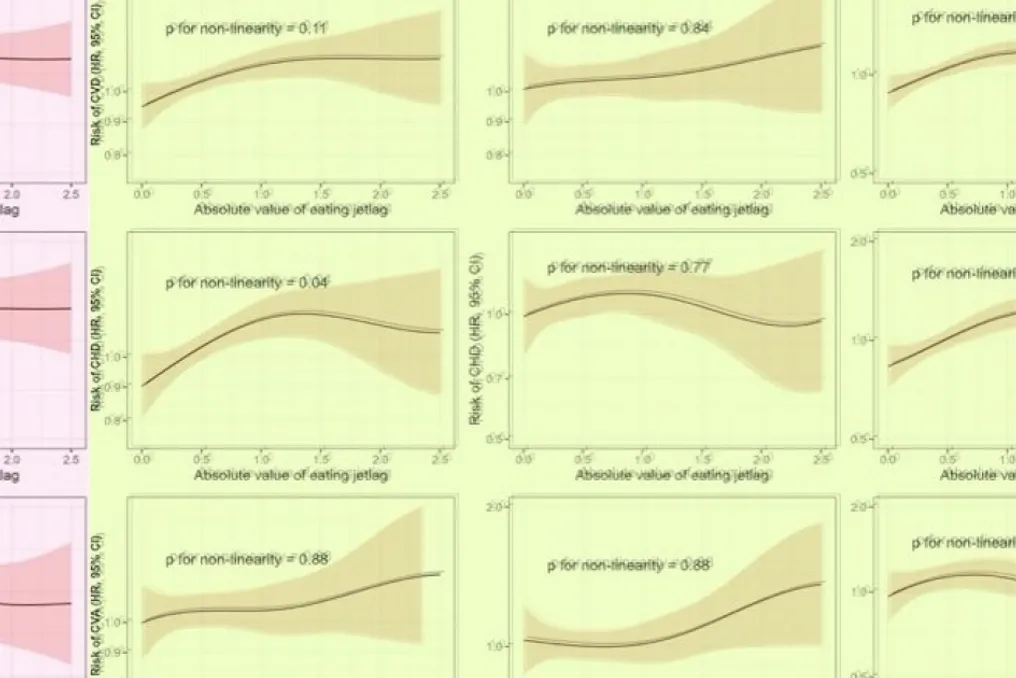
It has been established that 'dietary jet lag,' which manifests as shifting eating times by more than one hour compared to the usual weekday schedule, is associated with an increased risk of developing cardiovascular pathologies and ischemic heart disease, particularly among men.
Researchers found that this correlation does not depend on sleep duration or social jet lag. The analysis included data collected from approximately 105 thousand participants.
The results of the study were officially published in the scientific journal Communications Medicine.