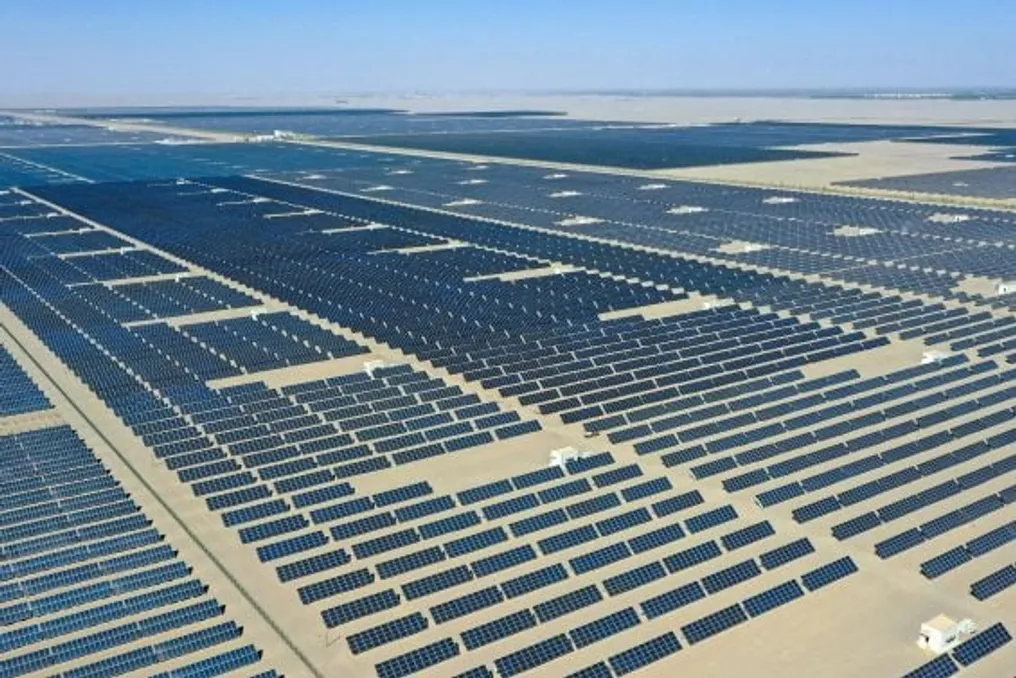
China's installed solar energy capacity has surpassed that of coal-fired power plants for the first time in history. According to the National Energy Administration (NEA), China's photovoltaic park reached 1,286 GW at the end of July, compared to 1,285 GW from coal-fired thermal power plants. With this achievement, solar energy now accounts for 31.5% of the country's total generation capacity, becoming the primary source in terms of nominal power in the Chinese electricity mix.
Of this total photovoltaic capacity, 704 GW are located in centralized power plants and 582 GW in distributed generation, which are smaller systems installed near consumption points. It is relevant to note that China's solar capacity is approximately five times greater than Brazil's total generating park, which amounts to about 260 GW, including distributed generation, according to Absolar data.
It is important to clarify that this milestone refers to installed capacity, not actual electricity production. Capacity indicates the maximum potential generation under ideal conditions, while actual production depends on the operating time of each plant. Solar generation is restricted by luminosity and climate, whereas coal-fired thermal power plants operate for longer periods with greater predictability.
In the first half of the year, coal was responsible for generating approximately 2.5 trillion kWh, corresponding to 49.7% of Chinese electricity, marking the first time this source fell below 50% in a semester. Renewable sources contributed 41.2% of generation, with the sum of solar and wind reaching 24.6%, or over 1.2 trillion kWh. Between January and July, solar generation registered an increase of 15.5%, totaling 802.4 billion kWh, which is one-eighth of the kilowatt-hours produced in the country.
When comparing with Brazil, significant differences in starting points are observed. Brazil began 2026 with 215.9 GW of installed capacity in centralized plants, of which 84.63% are renewable sources, according to Aneel's SIGA. Mineral coal represents only 1.4% of the Brazilian electricity mix, a value much lower than nearly a third of China's capacity. In the Brazilian scenario, hydropower leads with 42.4%, and solar holds the second position with 24.5% and 63.7 GW installed, according to Absolar, showing a percentage participation close to China's, but on a much smaller scale.
In the first seven months of 2026 alone, China added 85.65 GW of solar capacity, a volume greater than the total photovoltaic park installed in Brazil to date. China's expansion remains robust, even after changes in sector remuneration rules, which subjected new projects to market conditions. In the first half, 72.1 GW were added, representing a 66% reduction compared to the same period in 2025, according to Chinese media reports. This progress occurs amid growing demand: electricity consumption increased by 5.3% in the semester, reaching almost 5.1 trillion kWh, driven by the high-tech industry and electric vehicle charging, given that China still relies on coal for almost half of its electrical grid.