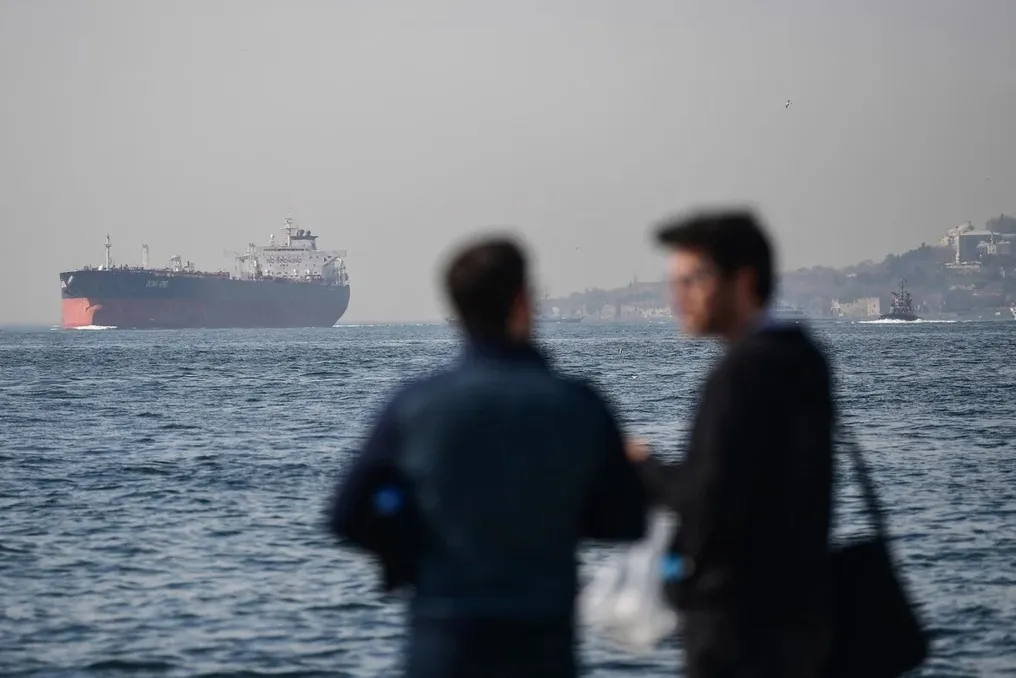
According to a new study conducted by Oil Change International (OCI) in collaboration with the Centre for Research on Multinational Corporations (SOMO), two lesser-known oil traders—Vitol and Heritage Petroleum FZCO—emerged as leading suppliers of crude oil to Israel during the genocide in Gaza.
These companies collectively exported approximately 22 million barrels to Israel, accounting for 11 percent of the country's total crude oil imports between October 2023 and June 2026. Despite Turkey's embargo against Israel, most of the oil shipped by these two companies passes through the Turkish port of Keyhan.
Researchers also discovered two subsidiary companies of Heritage in the Turkish trade registry. While major oil giants such as BP, Chevron, ExxonMobil, and Shell faced criticism for participating in oil supplies to Israel during the Gaza genocide, the role of this opaque network of oil traders received far less attention.
The OCI and SOMO study is based on data from the shipping platform Kpler, which contains trade and shipping information of known 'charterers.' Vitol, based in Switzerland, and Heritage, based in Dubai, acted as both charterers and traders, meaning they bought the oil they were transporting themselves.
Of 250 shipments from 19 countries totaling over 200 million barrels tracked by researchers, Vitol and Heritage became the two largest crude oil charterers for Israel. A representative of Vitol told Middle East Eye that the company 'operates in full compliance with all applicable laws and regulations.'
When asked about the study's findings, Heritage Petroleum did not provide comments at the time of publication. A source from the Turkish Ministry of Foreign Affairs told MEE that companies exporting oil via the Baku-Tbilisi-Ceyhan Crude (BTC) pipeline, which transports oil mined in the Caspian Sea region through Azerbaijan to the Turkish port of Keyhan, 'strictly comply with Turkey's decision to cease trade relations with Israel.'
This source emphasized: 'No vessel loaded in Keyhan is authorized or destined for Israel.' He added that 'once tankers leave the Keyhan terminal, ownership of the cargo can be transferred to third-party buyers, creating the possibility of subsequent changes in the final destination during transit.'
The source also noted that the Turkish Petroleum Corporation (TPAO) holds a minority stake in the BTC project, and BOTAŞ International AŞ, which is fully responsible for operating the Turkish section of the pipeline, 'has no commercial involvement or discretionary power regarding the purchase or sale of the transported crude oil.' He specified: 'Within this structure, TPAO owns 6.53 percent of the BTC pipeline and 5.73 percent of the Azeri-Chirag-Guneshli (ACG) production project. Any sale of crude oil owned by TPAO to Israel is completely excluded.'
According to the study, Vitol's shipments to Israel sharply increased in 2023, while Heritage Petroleum, established in 2023, only began shipping crude oil to the country in November 2024, more than a year after the start of the genocide.
Researchers used Kpler and London Stock Exchange Group data to track the loading of vessels by these companies, and satellite imagery confirmed their docking at the Israeli port of Ashkelon. The report specifically highlighted that the role of these companies might be broader, as about half of the shipments analyzed for the report do not list a chartering company.
Allegations of Unethical Conduct
The Swiss firm Vitol, based in the Netherlands, is a leading oil trader with offices in London, Geneva, Houston, Singapore, Rotterdam, and Bahrain. Between October 2023 and June 2026, it supplied nearly 14 million barrels of crude oil to Israel. The report highlighted that this oil trader has a history of controversy and has faced accusations of unethical conduct.
In 2007, the company pleaded guilty to large-scale theft, paying $13 million in bribes to Iraqi officials under Saddam Hussein to secure oil supply contracts. In 2026, the company facilitated the first US-approved sale of Venezuelan crude oil following the kidnapping of the country's president, Nicolás Maduro.
In response to OCI and SOMO's inquiry, Vitol denied profiting from wars and conflicts in Venezuela, Ukraine, Iran, or Iraq, and did not comment on its classification as a charterer of crude oil supplies to Israel.
Less is known about Heritage Petroleum: it was founded in December 2023. It made its first shipment to Israel in November 2024 and quickly became the second-largest supplier of crude oil to Israel. Andy Rowell, editor at OCI, told MEE: 'Heritage suddenly appeared as a leading fuel charterer for Israel, and its operations are very opaque.'
He added: 'We still do not know who is on the company's board of directors or who holds significant control.' Despite Turkey imposing a trade embargo against Israel due to the Gaza genocide on May 2, 2024, all of Heritage's chartered shipments, totaling 8.3 million barrels, were sent from Turkish ports.
Turkish Subsidiaries
Researchers also identified two Heritage subsidiaries listed in the Turkish trade registry: 'service shipping companies' Shiptech Maritime Ltd.73 and Limosa Trading Logistics Inc.74. Shiptech's website contains sparse information. According to SOMO's Head of Strategic Litigation, Lydia de Liu, Limosa's website went offline after she contacted them for comment. De Liu told MEE: 'We called, but no one answered.'
However, she managed to get a response from Shiptech. 'They stated very clearly in their written reply that they were responding on their own behalf and on behalf of Heritage Petroleum, and claimed they were not violating the Turkish trade ban with Israel,' said de Liu. When De Liu asked further questions, and LSEG and State Port Control inspection data confirmed the shipping details, Shiptech declined to comment. She managed to speak with Shiptech's operations manager in Turkey, who told her they would not answer a second request and stated that Shiptech and Heritage 'are the same.'
MEE contacted Shiptech and Limosa for comments but received no response by the time of publication. The report emphasized that the data obtained casts doubt on the effectiveness of Turkey's enforcement of its trade embargo with Israel.
'A Real Test'
The report states that although crude and refined oil have legitimate civilian uses, the link between oil imports and the supply of the Israeli armed forces is evident. Rowell told MEE: 'What we know is that Israel is heavily dependent on imported crude oil. For example, in 2024, the country imported 97 percent of its crude oil. The imported oil is refined in Ashdod and Haifa, and both refineries have stated they supply the military. Bazan Group, which owns the refinery in Haifa, has clearly stated that it supplies the Israeli military.'
The role of countries in facilitating the continued flow of fuel is also clear. The report calls on oil-producing countries, including Azerbaijan, Kazakhstan, and Nigeria, to impose an embargo, as well as on Turkey to strengthen control over companies facilitating transit docking and services. It noted that countries where the oil traders are based, such as the UAE, where Heritage is headquartered, and the UK, where Vitol has one of its regional offices, 'have many levers to reduce and prevent' these shipments.
Rowell noted that these revelations could be particularly significant for the UK in light of promises by the new Foreign Secretary, Ed Miliband, to restore relations with Israel. He concluded: 'This will be a real test—Vitol has huge operations in London; will the government take action against them?'