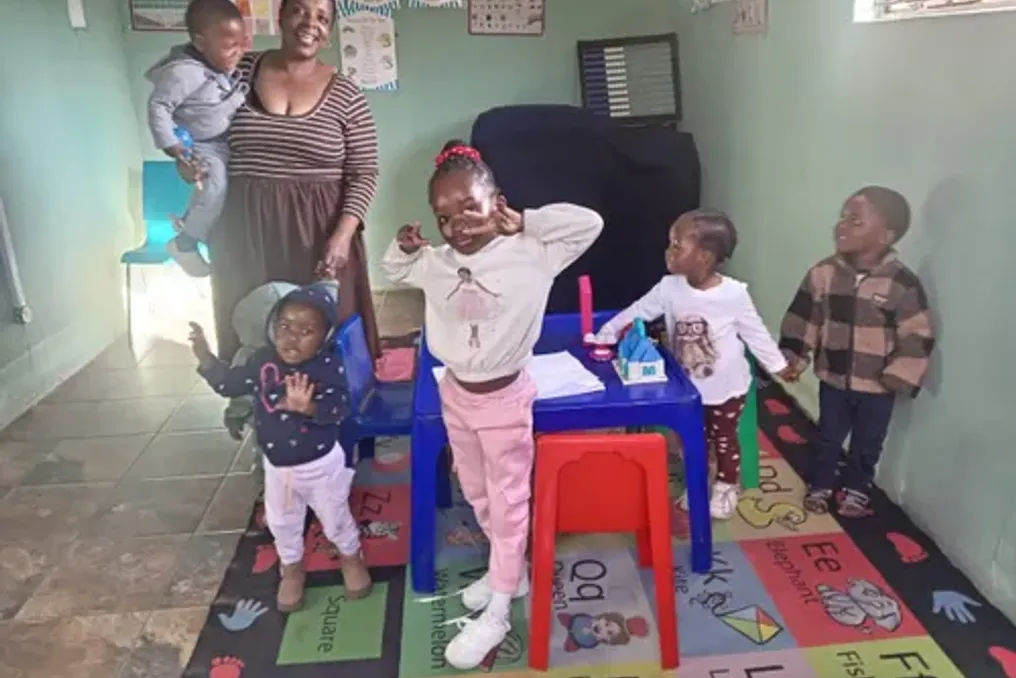
Nomvula Catherine Ngoete, founder and director of Child First Day Care Centre in Ivory Park, Midrand, works daily with young children at the initial stages of their educational journey. At 57 years old, she is guided by the belief that young children need care, support, and significant opportunities for learning long before entering formal school.
Ngoete noted her love for working with children and her desire to help them build a strong foundation for the future, emphasizing that observing a child master something new, gain confidence, and grow is one of the most rewarding experiences.
However, her passion was not enough to solve practical challenges as an early childhood education specialist and centre director. She sought to improve approaches to curriculum planning and teaching to provide children with a more stable and stimulating learning experience.
This search led Ngoete to Rhiza Babuyile’s ECD Practitioner Training Programme, an initiative aimed at supporting practitioners and centre owners through practical training and official qualification pathways.
Her experience aligns with the recent completion of the six-month Accelerator Programme by 40 early childhood education specialists from Tembisa and Diepsloot, who received certificates from this non-profit organization. For these graduates, the programme is the first stage in Rhiza Babuyile's three-tiered training system.
The programme is designed as a practical entry point for individuals working with young children, novice specialists, and centre owners looking to develop their skills. For professionals like Ngoete, the training helps merge years of community experience with a more formalized approach to early learning, curriculum implementation, and centre management.
Changing the Early Childhood Education Landscape
Hilda Nkuna, head of Rhiza’s ECD Practitioner Training Programme, reported that participants come from diverse segments of society. Nkuna mentioned that many are centre owners who have worked for years without access to formal qualifications or professional development opportunities.
Other participants are practicing early childhood education specialists seeking to strengthen their knowledge and skills, often with support from their employers. Unemployed women passionate about working with children are also welcomed, as this training serves as a springboard to economic activity for them.
According to Rhiza Babuyile, approximately 60% of participants already work in the early childhood education sector or own a centre before starting the training. For the remaining 40% with no prior work experience, the programme opens a path into the local economy. After completing the training, 30% to 35% find employment in the early childhood education field, and over 20% open their own centres.
To accommodate varying levels of experience, the organisation's training is structured into three levels. The six-month Accelerator Programme serves as the foundation for specialists to transition to the NQF Level 4 Professional Certificate, which combines theory with practical workplace experience. The final level is a Higher Certificate or Level 5 Diploma, focusing on leadership, compliance, and the business acumen needed to manage a sustainable centre.
Turning Experience into Confidence
For Nomvula Ngoete, participating in the programme allowed her to learn about child development, play-based learning, and methods for creating a more conducive classroom environment. She also found value in connecting with other specialists who understand the challenges of working in the early childhood education sector.
Ngoete stated that the training was encouraging: it provided her with knowledge, but also with confidence. She added that the facilitators offered immense support and encouragement at every stage, making her feel seen, valued, and capable.
After the training, she began applying the acquired knowledge at Child First Day Care Centre, using storytelling, sensory exploration, and interactive games. Instead of presenting learning as a rigid activity, these methodologies encouraged children to explore, communicate, and participate through play.
Ngoete observed that the children became more engaged and interested in participating. They started communicating more confidently, interacting more positively with each other, and showing greater interest in the world around them. While this is her personal observation of changes in the classroom, it reflects a broader trend in early childhood education: assisting specialists in creating environments where young children can learn through play, relationships, and daily activities.
Ngoete also noted that this experience changed her view of the role of a day care centre in its community. She said that the training helped her understand that quality education is a partnership between educators, parents, and the community, and that children benefit most when they work together.
For a director responsible for both the daily needs of the children and the functioning of the centre, this partnership extends beyond lesson planning. It includes communicating with parents, collaborating with colleagues, and a shared commitment to child development. Ngoete concluded that this experience changed her self-perception; she feels capable, confident, and motivated to continue learning, knowing that her current work will have a long-term impact on the lives of the learners.