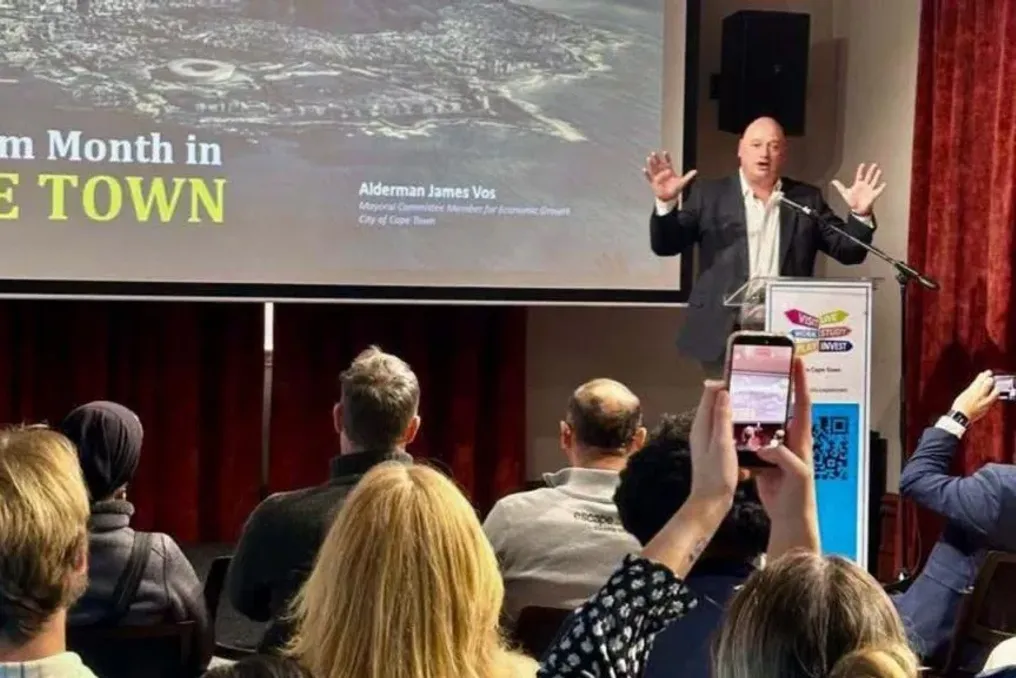
The city of Cape Town is moving to the next stage of tourism growth, focusing more on digital marketing, international flights, and converting online interest into real bookings, according to a report from Cape Etc. The city is leveraging technology and industry partnerships to better understand the sources of potential tourists and the factors driving their travel, as part of the start of Tourism Month.
A recent session in the Learning Lounge, organized by the City's Tourism and Marketing Department in collaboration with Meta, brought together tourism operators and industry experts at the Invest Cape Town Centre in the City Hall. The discussion centered on how artificial intelligence and Meta's digital platforms are transforming destination promotion among travelers and, more importantly, how this attention can be converted into economic activity.
For the City, judgments about tourism campaigns based solely on view counts are no longer sufficient. According to City Councillor Vos, the true criterion is whether the marketing stimulates people to take the next step. He emphasized: 'My philosophy is very simple: marketing must be backed by conversion.'
The City's 'This Is Cape Town' campaign serves as an example of the scale that digital platforms can provide. This campaign reached 55 cities across six continents and generated 250 million impressions on Meta platforms. India was the largest source of these impressions, accounting for nearly 109 million, followed by Africa with almost 42 million and South America with around 25 million. The city uses this data to identify Cape Town's strongest points of interest and shape future campaigns.
New marketing initiatives will target families, Cape Town markets, and winter tourism, the latter aiming to mitigate traditional seasonal fluctuations in visitor numbers. This is particularly important for a destination like Cape Town, where tourism is closely linked to hotels, restaurants, attractions, transport, and small local businesses.
While digital marketing can generate interest, travelers still need a way to reach the destination. Currently, Cape Town has direct international links to 31 destinations, with increased capacity on several major routes, including Dubai, Doha, Istanbul, London, and São Paulo. Vos described the emergence of additional flights as one of the clearest signs of Cape Town's progress as an international destination. The city also intends to continue developing markets such as India and China while strengthening ties with Africa, Europe, North America, and South America.
The focus on connectivity reflects a simple reality: a successful tourism campaign can attract millions of views, but potential guests still need accessible routes to the city. Furthermore, the City is considering a broader range of factors determining Cape Town's competitiveness. A Tourism Strategy is currently being finalized, which will require the involvement of several municipal departments, including transport, safety, coastal management, and utilities. This is because the visitor experience does not begin at the hotel or tourist attraction.
Reliable transport, clean public spaces, safety, functioning infrastructure, as well as well-managed beaches and coastal areas contribute to how visitors perceive Cape Town, as well as how its residents live. Vos noted: 'Tourism does not exist in isolation. What makes Cape Town a wonderful place to live is often the same things that make it a wonderful place to visit.'
Last year, Cape Town welcomed approximately 2.8 million overnight visitors, generating roughly R24.5 billion for the local economy and supporting about 106,000 jobs. Now, the City aims to significantly increase these figures. The ambition is to attract over five million overnight visitors, increase tourism's contribution to the local economy to over R30 billion, and raise tourism employment to 200,000 people. Although these are significant goals, the City believes Cape Town possesses the necessary infrastructure, attractions, business, and industry expertise to achieve them.
A more complex challenge will be ensuring that the growth is felt not only in visitor numbers. For local tourism businesses, an increase in guests means greater spending on accommodation, food, entertainment, transport, retail, and experiences. The City's task is to create conditions where these expenditures translate into jobs and broader economic activity. Vos stated that the next phase will depend on closer cooperation between the government and the private sector. The City plans to use its marketing data to create demand while ensuring that Cape Town itself is ready to receive these visitors. Thus, the conversation about tourism is increasingly shifting away from the simple question of how many people have seen Cape Town online.