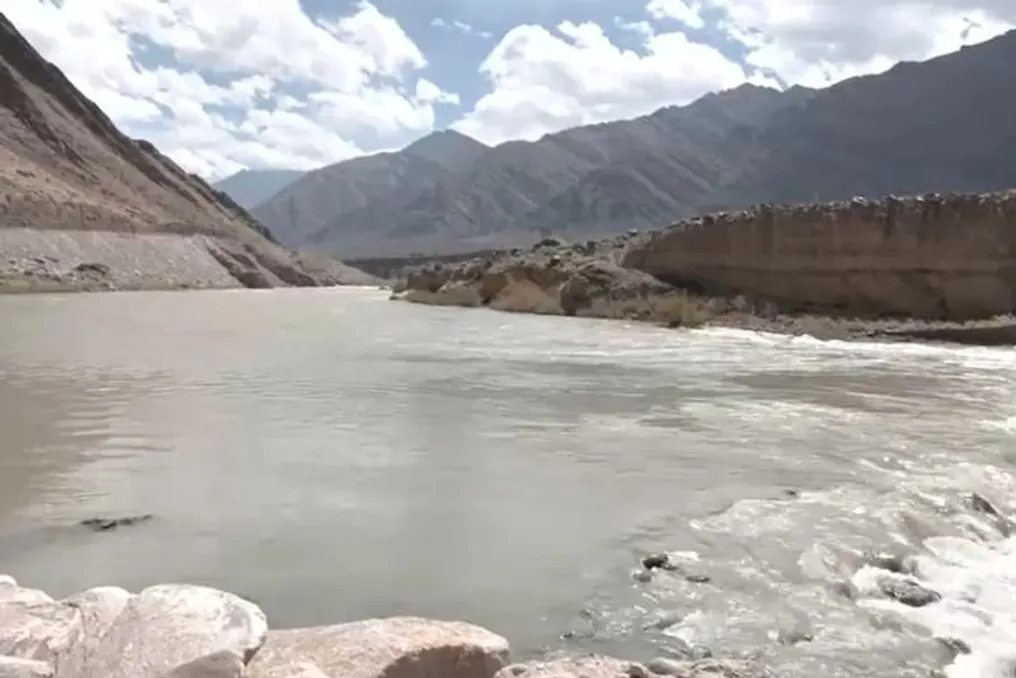
In Ladakh, India has completed the construction of the first rock-check dam on the Indus River located in Ladakh. This dam was built in the Leh sub-district using large natural stones, without the use of cement in the construction.
Thanks to this structure, the water level in the Indus River has risen by approximately 10 feet, and about 40 million liters of water have been accumulated. This water is directed to the fields of nearby arid villages through the Igu Phe irrigation canal, helping farmers who have long faced difficulties with irrigation.
The Indus River flows through deep valleys. During the spring sowing season, the river's water level often dropped so low that delivering water to the fields using pumps became a difficult task, negatively affecting agriculture and increasing financial pressure on farmers.
This check dam, created in the sub-district, will contribute to ensuring water for local farmers to carry out agriculture. Thanks to this structure, built from natural stones, the river's water level was raised by retaining it. The accumulation of about 40 million liters of water will simplify the irrigation of neighboring fields.
The Ladakh administration is currently working on creating similar check dams on the Indus River. Some projects have already begun, while others are in the planning stage.
This project is not limited only to increasing irrigation capabilities for local farmers. According to available information, after the suspension of the Indus Water Treaty, India has begun creating infrastructure to utilize the water of the Indus River in areas adjacent to the border. This sends a signal that India is using the river's water for the needs of its border regions and residents before it reaches Pakistan. The construction of additional check dams in Ladakh could lead to increased local use of the Indus River's water in the future.