Launch planned for 260 Vande Bharat sleeper trains with improved features
Read more
Aaj Tak
www.aajtak.in

Launch planned for 260 Vande Bharat sleeper trains with improved features

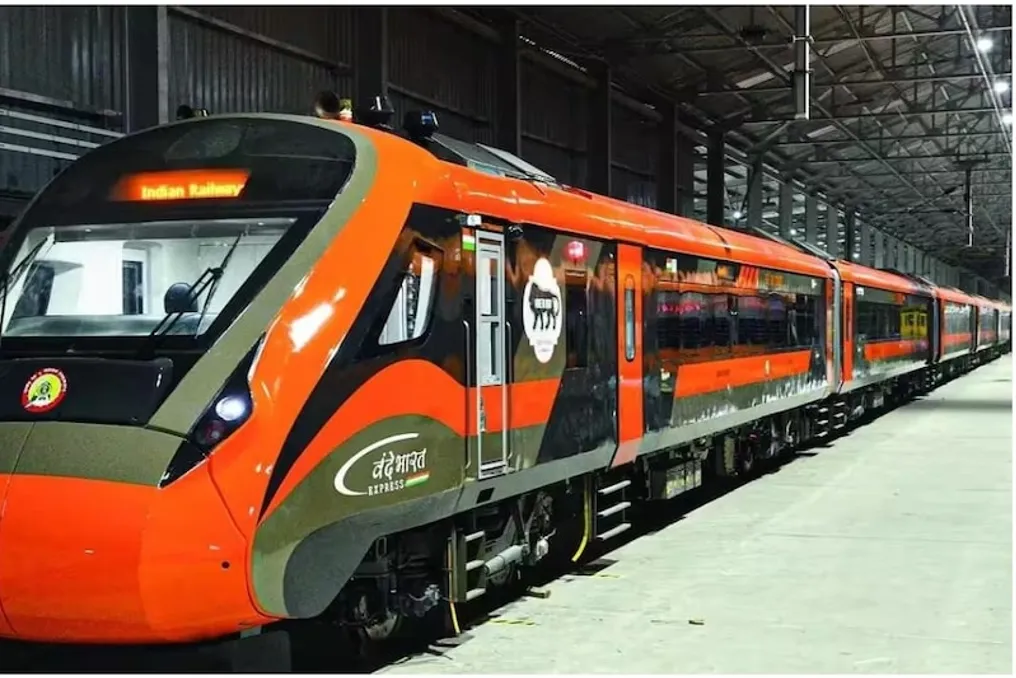
The Vande Bharat train series, which began its journey in 2019 as a premium daytime service with 'chair-car' class coaches, is now expanding its scope to night routes. It is expected that the introduction of Vande Bharat sleeper trains will enable semi-high-speed rail journeys over longer distances.

The first Vande Bharat Sleeper trains started operating on the Guwahati-Howrah route earlier this year. The second set is undergoing trials; although a potential route between Bangalore and Mumbai was discussed, there is no official confirmation from the railway yet, so the next passenger route has not been determined.

Indian Railways is preparing for a massive expansion of its Vande Bharat sleeper fleet. According to the current plan, a total of 260 Vande Bharat sleeper coaches are to be prepared. This will increase the network of fast and modern trains for long-distance night travel, providing faster service on routes requiring overnight journeys.

Under the existing plan, the 260 Vande Bharat sleeper coaches will be manufactured by various companies and production units. These include: Bharat Earth Movers Limited (BEML) – 10 units, Chennai Integral Coach Factory (ICF) – 50 units, Kinet Railway Solutions (KRS) – 120 units, and Titagarh-BHEL – 80 units.

BEML has been tasked with preparing the first 10 sets, each consisting of 16 coaches. ICF, in turn, will produce 50 sets of 24 coaches, including a restaurant car. Officials stated that the drawings for this have already been developed.

Kinet Railway Solutions, a joint venture between Rail Vikas Nigam Limited (RVNL) and the Russian company Transmashholding (TMH), is responsible for manufacturing 120 sets. All these sets will be assembled in Latur, and each train will have 16 coaches. RVNL reported that production has already begun. At the 23rd Annual General Meeting, Chairman Salim Ahmed noted that the prototype readiness deadline has been changed: the initial deadline of June 2026 has been extended to March 31, 2027.

The Vande Bharat Sleeper is designed as a semi-high-speed night train. Its design speed is 180 km/h, but the actual operational speed can reach 160 km/h depending on the route and railway infrastructure. Unlike traditional locomotive-hauled trains, the Vande Bharat Sleeper uses a distributed power system. With this technology, traction is provided not by a separate engine, but by an acceleration system installed in each coach. This allows the train to reach high speeds and brake quickly. This technology helps the train increase its average speed and reduce travel time.

The Vande Bharat Sleeper is designed as a semi-high-speed night train and incorporates technical features inspired by modern European railway systems. It can be argued that passengers will receive benefits in these trains surpassing those of Rajdhani trains, with a level of luxury comparable to air travel. The existing 16-coach prototype includes 11 AC 3-Tier coaches, 4 AC 2-Tier coaches, and 1 AC First Class coach. A new design with berths and access to upper bunks has been developed for passenger convenience. To make the night journey comfortable, the train is equipped with nighttime lighting, an integrated announcement system, display panels, CCTV cameras, a modular restaurant car, reading lamps, charging points, and lounge tables.

Great attention has also been paid to the safety of the Vande Bharat Sleeper. The train features sealed passages and automatic connecting doors, as well as automatic station doors. For passenger convenience, toilets with a bio-vacuum system and separate showers for people with disabilities are provided. The AC First Class coach also offers shower facilities and hot water. From a safety perspective, the train integrates features such as Kavach, regenerative braking, a centralized coach monitoring system, and an emergency communication system. The expansion of Vande Bharat Sleeper could be a significant change for long-distance passengers. Nevertheless, before launching new services, testing of prototypes, certification, and preparation of relevant routes must be completed.
Similar stories

Indian Railways plans to lay four-lane tracks on seven busy routes
Read more
www.aajtak.in

Indian Railways plans to lay four-lane tracks on seven busy routes

Indian Railways is preparing to convert seven of the busiest railway routes into four-lane lines, similar to highways. As part of this project, it is planned to lay such tracks with a length of about 11,000 kilometers along some of the country's most active railway corridors. The creation of four-lane lines will allow for an increase in the number of trains on these routes and facilitate the transport of passengers and goods.

These busy railway lines currently account for approximately 41 percent of all rail traffic in the country, while making up only 16 percent of the total railway network. These corridors connect major cities such as Delhi, Mumbai, Chennai, and Howrah, making them critically important for both passenger and freight transport.

Railway Minister Ashwini Vaishnaw stated that infrastructure development is underway to lay four railway lines on these routes. The goal of this expansion is to create additional capacity and support future growth in passenger and freight traffic. The Ministry of Railways also highlighted the economic and environmental benefits of rail transport, including reduced transportation costs and the transition to clean transport.

Among the busiest routes are the Delhi-Howrah and Delhi-Mumbai corridors. On both routes, express trains can travel at speeds of up to 160 km/h. More than 120 passenger trains and about 100 freight trains run daily on the Delhi-Howrah route; this corridor is approximately 1,400 kilometers long. The Delhi-Mumbai route serves over 90 passenger trains and about 80-85 freight trains daily, and its length reaches approximately 1,500 kilometers.

Following these are the Howrah-Chennai route, which is about 1,653 km long, and the Delhi-Chennai route, which is approximately 2,174 km long. The Chennai-Mumbai route is about 1,289 km long. In total, about 25,000 trains run across the entire network daily. During the 2025-26 period, Indian Railways provided transport services to more than 741 million passengers.

Indian Railways plans four-lane expansion of 11,000 km of the busiest routes
Read more
www.aajtak.in

Indian Railways plans four-lane expansion of 11,000 km of the busiest routes

Indian Railways is preparing to modernize approximately 11,000 kilometers of its high-traffic railway network by converting it into a four-lane system. The goal of this initiative is to increase capacity on the country's busiest rail lines, reduce congestion, and decrease the accumulation of passenger trains and freight wagons. This plan has been developed considering the projected growth in both passenger and freight transport volumes in the future.

Railways Minister Ashwini Vaishnaw stated on Wednesday that there are seven high-traffic railway routes in the country that handle a significant portion of the rail traffic. The total length of these routes is approximately 11,000 kilometers, yet they account for about 41 percent of the country's total rail traffic, while their share in the entire rail sector is only about 16 percent. Vaishnaw also noted that developing rail transport benefits both the environment and the economy.

According to railway data, creating additional lines on these busy corridors will significantly simplify train operations and reduce pressure on existing tracks. These seven key high-traffic routes connect major cities and primary industrial zones across the country, where intensive movement of both passenger and freight trains is observed. Adding extra tracks will help increase capacity for both types of trains.

The direct advantage of transforming a high-traffic network into a four-lane one is the creation of additional capacity for moving a greater number of trains along the same route. This will allow for more efficient management of freight trains alongside passenger services. The presence of extra tracks minimizes the need for trains to wait extensively behind each other. Furthermore, such infrastructure provides the possibility of rerouting traffic onto other lines in case of technical failure or maintenance work.

The modernization of high-traffic routes includes not only increasing capacity but also upgrading train signaling and safety systems. In this regard, the domestic automatic train protection system Kavach 4.0 is being expanded. Railways Minister Ashwini Vaishnaw mentioned in a written reply presented in the Lok Sabha on July 22, 2026, that the Kavach 4.0 system has been commissioned over a total area of 2,490 route kilometers on the Delhi-Mumbai and Delhi-Howrah corridors.

The new version of Kavach 4.0 includes functions for more accurate train location tracking, providing improved signaling information at major railway stations, and inter-station interfaces via fiber optic cables. The system can also be directly integrated with the existing electronic interlocking system. On the Delhi-Mumbai route, 1,344 route kilometers of Kavach 4.0 were commissioned by July 13, 2026. This figure includes 1,248 route kilometers of the Tilak Bridge-Junction-Cabin-Palwal-Mathura-Nagda-Vadodara-Virar sector, excluding the Mangalamkhudi-Panchpillya section. Additionally, 96 route kilometers of the Vadodara-Ahmedabad sector were commissioned.

The Delhi-Howrah corridor received 1,146 route kilometers commissioned with Kavach 4.0. Among these, 563 route kilometers of the Chipayana-Tundla-Kanpur-Subedarganj sector, passing through Uttar Pradesh, were included. Additionally, 260 route kilometers of the Chhota Ambana-Barddhaman-Howrah sector, 159 route kilometers of Gaya-Sarmathan-Nimiya Ghat, 71 route kilometers of Kanpur-Lucknow, 50 route kilometers of DDY (FOC)-Bhabhua Road, and 43 route kilometers of Sasaram-Fesar were commissioned.

Mumbai-Ahmedabad High-Speed Train Section in Maharashtra Reaches Construction Pace Thanks to Bridges, Tunnels, and Pylons
Read more
www.aajtak.in

Mumbai-Ahmedabad High-Speed Train Section in Maharashtra Reaches Construction Pace Thanks to Bridges, Tunnels, and Pylons

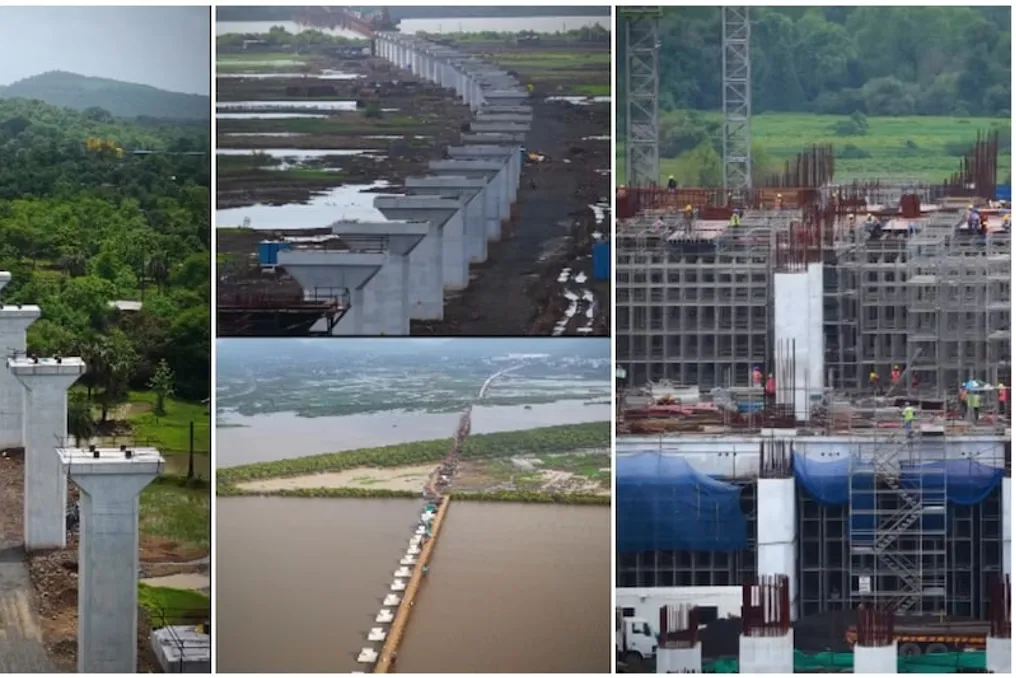
The Mumbai-Ahmedabad high-speed train project is actively developing. Construction work is progressing on a section spanning approximately 135.45 kilometers from Thane to the border of Maharashtra and Gujarat. This section includes 124.027 kilometers of viaducts and bridges and is a crucial part of the country's first high-speed rail corridor, stretching from Shilphata to Jaroli village.

Union Minister of Railways Ashwini Vaishnaw shared fresh information about the progress on this section via his Instagram social media account. He provided a report on the advancement of engineering and civil works in various parts of Thane and Palghar. Last week, a significant breakthrough was achieved in tunnel construction at the Shilphata station in Thane.

Three elevated high-speed train stations are planned for construction within this section in Thane, Virar, and Boisar. The station in Thane is being built at an altitude of about 12 meters above ground level, necessitated by the need to preserve mangrove forests in an ecologically sensitive zone.

Pylon erection work has advanced over an area exceeding 100 kilometers. Approximately 74 kilometers of pylons are ready for the installation of viaduct girders. In Maharashtra, there are currently 9 concrete pouring construction sites, 7 full-span tower cranes, and 8 SBS cranes being utilized to accelerate the construction of viaducts and bridges.

There are a total of seven mountain tunnels on this section. A breakthrough has been achieved in three of these tunnels. In areas where earthworks are complete, work is underway on drainage, waterproofing, and tunnel lining.

Bridges are being constructed across several major rivers on this stretch of the Mumbai-Ahmedabad high-speed train corridor. Plans include the construction of a 460-meter bridge over the Ulhas River, a 232-meter bridge over the Vaihtarna River, and a 510-meter bridge over the Jagani River. In total, there will be 36 bridges and crossings across the entire section, including 12 steel bridges built over main railway lines, the Ulhas River, the Mumbai-Nashik highway, and other vital structures.

The recent tunnel breakthrough at Shilphata in Thane is also a major achievement for the project. This work was executed using the New Austrian Tunneling Method (NATM). With this technology, the surrounding rock and soil are used as natural support during excavation, and the excavated portion is reinforced by spraying concrete. The Shilphata tunnel is part of Package C2 of this high-speed rail corridor, and its construction is being carried out by Afcons Infrastructure Ltd. This breakthrough is expected to further accelerate construction activities on the Thane-Palghar section of the Mumbai-Ahmedabad corridor.

On this section, from Thane to the border of Maharashtra and Gujarat, construction is no longer limited solely to pylons or viaducts. Work is simultaneously underway on stations, tunnels, bridges, girders, and launching systems, indicating that this segment of the country's first high-speed rail corridor is rapidly taking physical shape. Future phases are expected to see even greater acceleration in tunneling, girder launching, station construction, and bridge works.

Popular