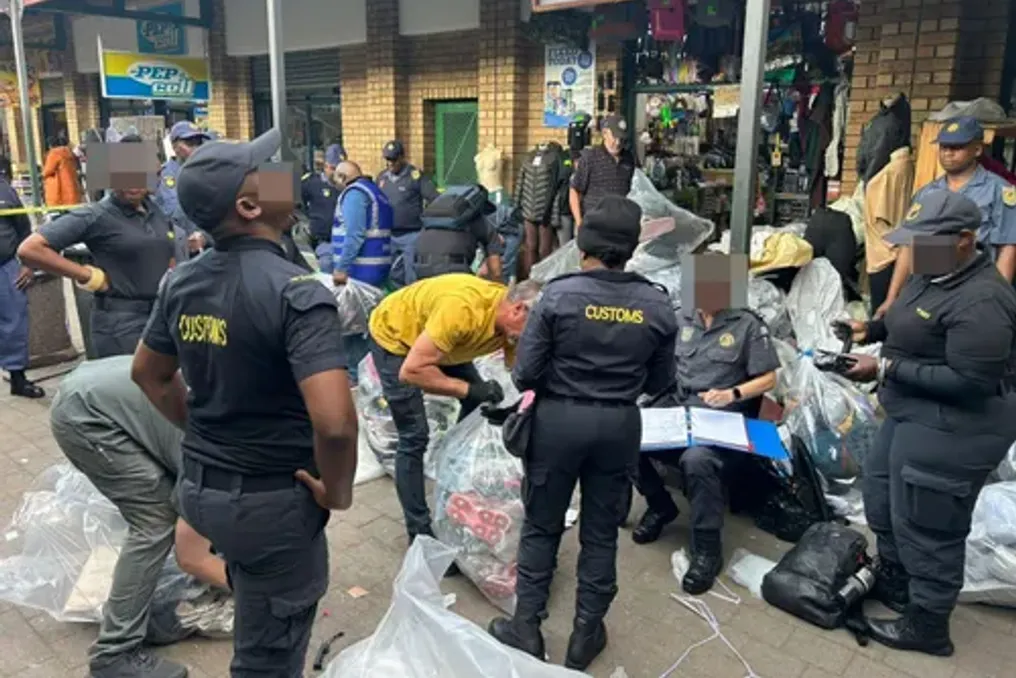
According to a new study conducted by the consulting firm ECMX on behalf of the Consumer Goods Council of South Africa (CGCSA), South Africa's illegal economy is estimated at 280 billion rand annually. This activity leads to the loss of over 87,000 formal jobs and reduces state tax revenue by at least 68 billion rand per year.
The ECMX report showed that illegal trade damages the economy by 126 billion rand in GDP and displaces more than 87,000 formal jobs. The study covered 12 sectors, including tobacco, alcohol, clothing and textiles, food, fuel, mining, pharmaceuticals, gambling, cosmetics, chemicals, non-alcoholic beverages, as well as toys and games.
ECMX expert Ilze Fieldgate noted that the impact of illegal trade goes beyond simply reducing economic activity. She emphasized that in several industries, illegal trade is closely linked to organized crime networks involved in counterfeiting, customs evasion, smuggling, money laundering, and corruption.
Fieldgate added that these networks often operate across multiple industries, adapting their methods in response to increased control measures and exploiting weaknesses in border management, regulatory systems, and supply chains, making illegal trade a problem not only for the economy but also for governance and national security.
Damage to legitimate business amounts to 193 billion rand
The study also revealed that the formal economy feels the effects of this problem: South Africa's GDP is estimated to be 126 billion rand lower due to illegal trade. Furthermore, legitimate businesses are forced to lose 193 billion rand in formal production volume as demand shifts away from legal producers, wholesalers, retailers, and other companies.
CGCSA CEO Zinhle Taikwe stated that combating illegal trade must be viewed as an economic priority, not solely as a law enforcement issue. In her view, the choice is between allowing limited economic resources to flow into the shadow economy or directing them towards productive investments, sustainable employment, strengthening public finances, and comprehensive economic development.
Increased government efforts
These findings come amid intensified government efforts to counter the illegal economy. President Cyril Ramaphosa announced earlier this year during his address on the state of the nation the launch of a national program to curb the illegal economy. He stated that this program will unite key state bodies and other stakeholders, including the private sector.
Ramaphosa said that data analysis and artificial intelligence will be used to target high-risk sectors such as tobacco, fuel, alcohol, and other counterfeit goods. He also noted that the program will focus on improving interdepartmental coordination, accelerating investigations, and enforcing existing laws more strictly to ensure accountability for violators. The President stressed that organized crime is the most urgent threat to democracy, society, and economic development.