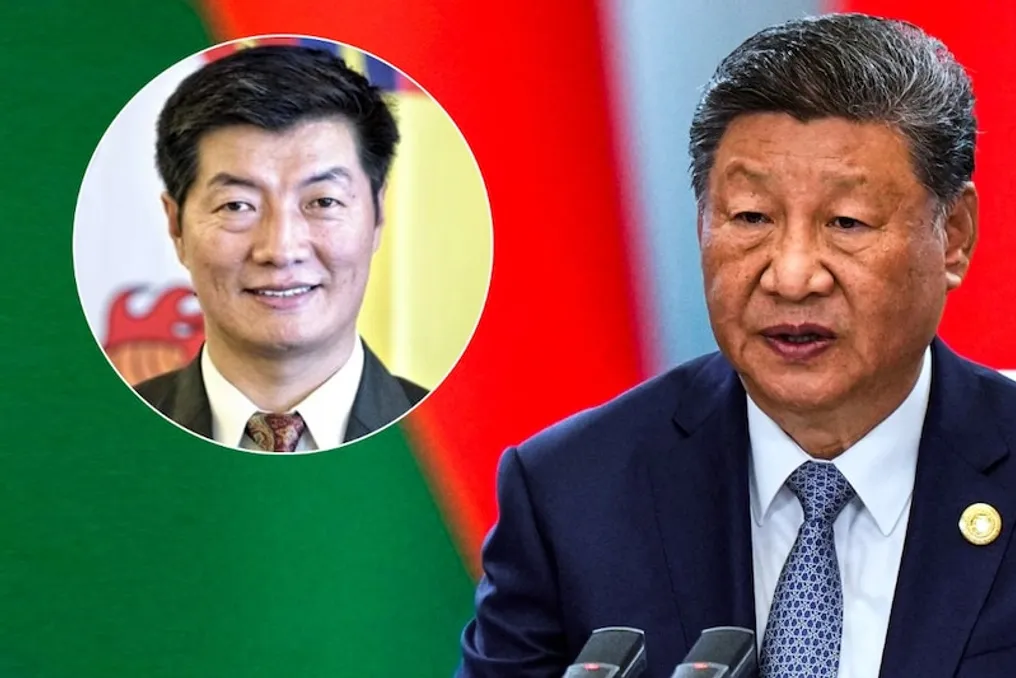
Lobsang Sangay, the former Prime Minister of the Tibetan government-in-exile, shared exclusive information regarding Xi Jinping's health condition and potential political risks in China. He conducted an extensive interview with the news agency ANI in Delhi.
Lobsang Sangay stated that he learned from a high-ranking former Chinese official, whom he met for over an hour, that Xi Jinping has suffered not three, but at least two heart attacks (myocardial infarctions).
He also mentioned periods when Xi Jinping suddenly disappeared for three to five weeks before reappearing in public.
During a podcast discussing the president's recent visits, Lobsang Sangay answered detailed questions about his appearance. He noted that despite the obvious pressure exerted on him, which is evident in his appearance and gait, this pressure has led to heart problems.
According to Sangay, due to 'mental fog' affecting the leader, he makes unexpected decisions, which explains the dismissals among senior army generals. Sangay emphasized that he personally appointed these officers. He also spoke about instances of generals disappearing and defense ministers going missing.
Revealing information from within China's inner circle, he claimed that his bodyguard and head of the military department possess more power than many Chinese ministers, and that Xi Jinping lives in some kind of 'cloud.'
When asked about Xi Jinping's succession plans, Lobsang Sangay expressed doubt about the existence of a clear plan. He described the situation as the 'emperor's dilemma': if the monarch appoints a successor, there is a high probability that the prince will kill him and take his place, according to Chinese history. However, if no successor is appointed, the rule can be prolonged, but this will lead to national paralysis and internal conflicts among power contenders, which, in his opinion, is happening now.
It is important to note that the 'Prime Minister' of Tibet is effectively the Secretary of the Central Tibetan Administration (the government-in-exile), and currently, this position is held by Penpa Sering, who resides in Dharamsala, India.
Historically, the People's Liberation Army of China invaded Tibet in 1950. Following pressure, a 17-point agreement was signed in 1951, after which Tibet became part of China. After the uprising in Lhasa in 1959, fearing repression by the Chinese army, the Dalai Lama and thousands of Tibetans fled to India, from where the government-in-exile continues its activities. China considers Tibet its autonomous territory and does not recognize the government-in-exile.