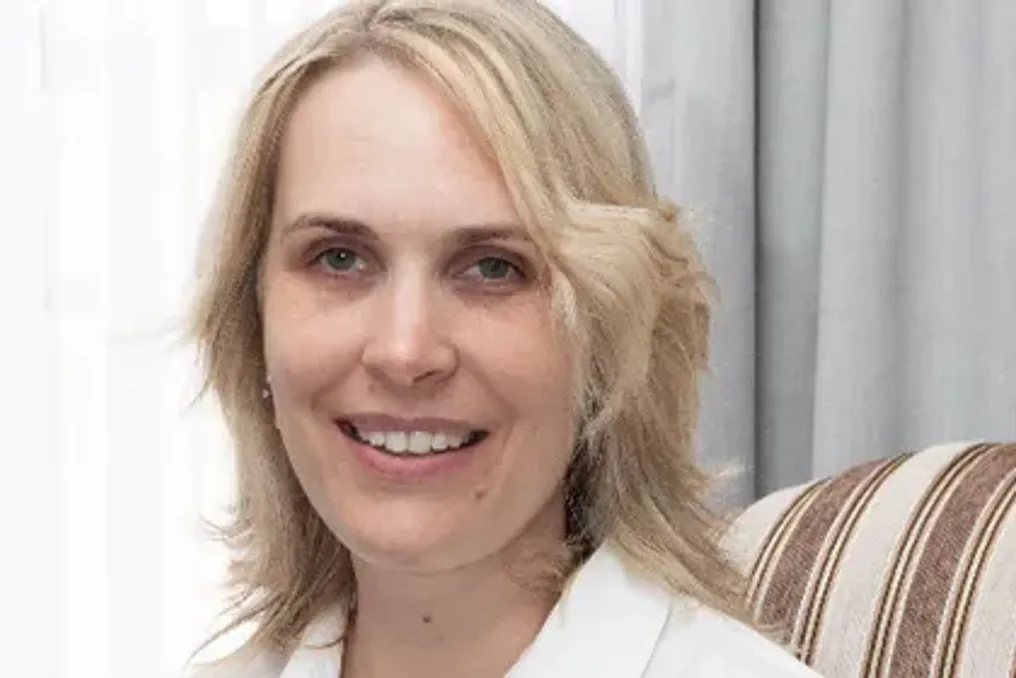
Dr. Michelle Botha, Senior Lecturer in the Department of Disability Studies and Rehabilitation at Stellenbosch University, notes that people with disabilities constantly encounter evidence pointing to potential issues that could become reality.
Statements such as 'Evidence shows that young people with visual impairments are more prone to emotional maladjustment than their sighted peers' or 'Evidence suggests that people with visual impairments are less likely to find employment' have become so commonplace that they are easily ignored. However, constant exposure to information about exclusion, neglect, and mistreatment of people with disabilities, when disability is a real life experience, has a serious impact.
When research becomes an additional burden
Several years ago, while teaching in one of the postgraduate programs in the Department of Disability Studies and Rehabilitation at Stellenbosch University, a colleague asked me to speak with a student who was clearly struggling. Despite her obvious capabilities, she was missing deadlines and not performing at the expected level. When I asked her over the phone for the reasons, her voice began to tremble, and I heard her crying.
She explained that she is the mother of a child with severe intellectual disability—one of the reasons for her interest in the program. She explained that the academic papers she had to deal with in the course felt like a punch to the gut. Almost all the materials required detailed descriptions of her child's terrible life and, worse still, implied that she, as his primary caregiver, might bear some blame for it.
Many of these statements are true. People with disabilities, especially in low- and middle-income countries, face higher rates of inadequate education and unemployment, have fewer social connections, poorer health, and die earlier. Caregivers of people with disabilities often lack information, guidance, and community support, which sometimes leads to conflicting feelings toward their loved one and poor decisions.
Moving beyond problem-oriented disability research
What we absolutely do not need is toxic positivity in disability research that masks the systemic failures faced by people with disabilities. This only gives society a free pass while simultaneously demanding that people with disabilities demonstrate an impossible level of resilience to 'overcome adversity.' However, it is crucial to carefully examine how disability is unconsciously constructed as a problem, and how our thoughts and actions regarding disability are directed—either towards problems or towards solutions.
Historically, people with disabilities were viewed as social problems. These problematic individuals were previously subjected to eugenic cruelty and institutionalized. While it would be wonderful to consign these practices to the past, the global shift towards fascism, cuts in social welfare spending, suspicion of diversity-promoting interventions, and public statements denigrating people with disabilities made by certain Donald J. Trump make old practices seem too close.
The development of medicine in the 20th century and the rise of rehabilitation disciplines hinted at another path. Instead of eradicating the problem, it could be addressed by treating or normalizing the bodies of people with disabilities using prosthetics, devices, and methods that they could adopt to fit in, ideally causing minimal disruption or discomfort to society.
What requires solution-oriented inclusivity
Disability research emerged as an academic discipline in the late twentieth century parallel to the global rise of disability activism. These changes were based on a conceptual shift that posited that the 'problem' lies not in the bodies and minds of people with disabilities, but in the systems, structures, practices, and attitudes of societies unwilling to accept diversity.
Nevertheless, the framing remains problem-oriented. Although contemporary disability and rehabilitation research adopts a societal focus, our work too often follows a beaten path, describing problems but little about realistic, sustainable, and contextually appropriate ways to solve them. This leaves people like our student, who lives with a disability daily, to confront the tangled web of issues concerning her child alone. Even if her child is not constructed as a problem, there are few real solutions to untangle this web.
Solution-oriented research, advocacy, and intervention in disability must use a systemic approach, be guided by people with disabilities, and take their context into account. Inclusivity measures without this foundation risk requiring people with disabilities to transform themselves to fit into an unaccommodating society on its terms, rather than stimulating social change that recognizes disability diversity as an opportunity, not a threat. Focusing on the lived experiences of people with disabilities acknowledges that bodies and minds can experience difficulties, pain, loss of function, setbacks in various ways, and exhibit great resilience, but this does not affect our deeply human capacities to care, love, create, and communicate. Solution-oriented thinking must be contextually relevant—there is nothing worse than hearing about a miraculous intervention, device, or practice that is completely unsuitable for the socio-cultural and economic context in which a person lives.
On the occasion of Diversity Day, let us also remind ourselves that human differences, embodied by people with disabilities, may be better viewed not as problems, but as differences that can contribute to the development of more flexible, innovative, hospitable, and essentially more humane communities.