Young Man Dies in Refilve After Incident During Spring Day Celebration
Read more
IOL
iol.co.za

Young Man Dies in Refilve After Incident During Spring Day Celebration

The arrival of spring marked the beginning of the season, but between the first bucket of water and the last drop of blood, it was forgotten what exactly was being celebrated. The author notes the almost cruel symbolism of this situation.

Spring is traditionally associated with rebirth, the return of color to nature, and leaving behind the cold, darkness, and barrenness of winter. However, for some communities, the arrival of September became an excuse to douse strangers, disrupt traffic, damage public property, and turn a day of youth merriment into something darker.

Then came the tragedy: twenty-one-year-old Tshepang Nyati died in Refilve, Kullinan, presumably as a result of a conflict related to the celebration of Spring Day. The young man went out on the first day of spring and never returned home. Suddenly, a bucket of water did not seem harmless.

The author suggests pondering a more complex question: when did entertainment turn into a right? They admit that the desire of young people to celebrate the holiday and the tradition of splashing water on Spring Day are not inherently wrong, as communities have always found ways to create joy from little.

Nevertheless, tradition should not become a basis for disrespecting another person's dignity. If someone does not wish to be drenched, and they are pursued with water under the pretext of tradition, it ceases to be innocent fun. Similarly, if a driver tries to move through a busy road, and the street turns into a playground, it ceases to be harmless. If public buses are damaged and passengers are inconvenienced, the celebration takes victims.

When a dispute over water ends in the death of a young man, it signifies crossing a line that should never have existed. The waste of water in a country where access to clean and reliable water remains an everyday problem for many also causes deep concern. Despite constant reminders about the value of water, one day it is turned into ammunition.

Perhaps the true lesson hidden beneath the noise of Spring Day is this: the principle of Ubuntu cannot mean doing whatever brings me happiness and expecting everyone else to simply accept it. My freedom to celebrate must not include the freedom to humiliate others. My pleasure must not require the discomfort of others, and my tradition must not demand their participation.

However, there is another responsibility that lies with all of us. Where were the boundaries set? One cannot wait for the police after violence, for paramedics after injuries, or for a family burying a child before deciding that the situation is out of control. We must learn to intervene before tragedy grants us permission to care.

Spring will come again next year. Buckets will appear again, and the streets will be filled with youth again. And, hopefully, the memory of Tshepang will remind us that tradition is not sacred just because it is old. Not everything we inherit deserves to be preserved unchanged. It is worth preserving traditions that unite people, but it is worth questioning those that demand sacrifices.


Similar stories

Eight Quotes by Aldous Huxley on Society and Solitude
Read more
yourstory.com

Eight Quotes by Aldous Huxley on Society and Solitude

Aldous Huxley remains one of the most influential thinkers of the twentieth century. Although many readers know him from the novel 'Brave New World,' his legacy extends far beyond a single book. Through his essays, lectures, and philosophical reflections, Huxley explored the complexities of human nature, the dangers of conformity, and the importance of self-awareness.

He was deeply interested in how societies shape personalities and how individuals can maintain their freedom in a world full of distractions and social pressure. What makes Huxley's works so enduring is their relevance. Decades before the advent of social media, he warned about the consequences of mass entertainment, blind conformity, and the loss of independent thought. At the same time, he championed the value of solitude, self-analysis, and the search for truth.

Huxley believed that truly original thinking rarely arises in a crowd. While society often encourages constant interaction and approval, solitude provides the mental space necessary for creativity and self-knowledge. Great thinkers, artists, and innovators throughout history have often sought periods of isolation to develop ideas that subsequently transformed the world.

This statement does not call for complete withdrawal from society. It emphasizes the significance of spending time in solitude with one's own thoughts. Solitude allows one to step away from expectations, trends, and external opinions. In these quiet moments, we gain a clearer understanding of our beliefs, desires, and goals. Huxley reminds us that some of our most important discoveries happen not when surrounded by people, but when we listen to ourselves.

Another serious barrier to growth is habituation. When something becomes part of our daily life, we stop noticing it. We accept routines, social norms, and institutions without questioning them. Huxley observed that people often overlook the extraordinary aspects of life simply because they are accustomed to them.

This prompts us to cultivate curiosity about the world around us. Whether it is our relationships, opportunities, freedoms, or nature itself, taking things for granted can prevent us from appreciating their true value. By paying closer attention and questioning assumptions, we can foster gratitude and a deeper understanding of our experience.

Huxley also noted: 'Facts do not cease to exist because they are ignored.' Reality does not change just because we refuse to acknowledge it. He understood that people and societies often avoid uncomfortable truths because they are complex or unfavorable. However, ignoring facts does not eliminate their consequences. This view is particularly important in an era when people can easily surround themselves with information confirming their existing beliefs. Huxley's words serve as a reminder that intellectual honesty requires confronting reality, even if it is unpleasant.

Huxley proposed a different view of experience, asserting: 'Experience is not what happens to you; it is what you do with what happens to you.' Many define experience through external events, but Huxley saw something else in it. He believed that the value of experience lies not in the event itself, but in the meaning we create from it. Two people can face the same problem and learn completely different lessons depending on how they interpret and react to it.

This statement places responsibility upon us. Although we cannot control everything that happens in life, we can control our reactions. Difficult circumstances can become opportunities for learning, resilience, and transformation. Huxley urges readers to see themselves not as passive recipients of life's events, but as active participants who shape their own growth through reflection and choice.

Furthermore, he insisted: 'There is only one corner of the universe you can guarantee to improve, and that is your own.' People often expend much energy trying to change others, influence society, or control circumstances beyond their reach. Huxley believed that the most reliable place to start is within ourselves. Personal growth may seem insignificant compared to solving global problems, but it is the foundation upon which meaningful change is built. This underscores accountability and self-improvement.

Huxley also warned about the influence of propaganda, stating: 'The aim of the propagandist is to make one group of people forget that other groups of people are also human.' Throughout history, division has often been fueled by the dehumanization of others. Huxley understood that propaganda works most effectively when it prompts people to view opponents not as fellow human beings, but as stereotypes, threats, or enemies. This highlights the importance of empathy and critical thinking. When we lose sight of another person's humanity, it becomes easier to justify prejudice, discrimination, and conflict. Huxley cautions readers against narratives that reduce complex people to labels.

In conclusion, Huxley argued that 'consistency contradicts nature, contradicts life. The only completely consistent people are dead.' He challenges the idea that we must always remain the same people or adhere to the same beliefs. Life is constantly changing, and genuine growth often requires us to question what we once believed and allow our views to evolve. Huxley calls for independent thinking, self-reflection, and resistance to conformity, which is especially valuable in an age of constant distraction.

Free Museum Week is taking place in Uzbekistan until September 8
Read more
uzdaily.uz

Free Museum Week is taking place in Uzbekistan until September 8

The State Agency for Cultural Heritage has announced that Uzbekistan is holding its annual Museum Week from September 2 to September 8. As part of this event, residents of the country can visit 114 state museums free of charge.

Free entry is available at all state museums managed by this agency, including museum reserves and private museums.

It is important to note that this promotion is exclusively for citizens of Uzbekistan and does not apply to foreign tourists. The agency emphasized that Museum Week provides an opportunity to learn about the country's history, art, and national heritage, as well as to learn more about unique exhibits and ancient monuments.

According to the agency, 'Museum Week is a wonderful opportunity to study the history, art, and national heritage of our country, and also to learn a lot of new things about unique exhibits and ancient monuments.'

Furthermore, state museums in Uzbekistan are open for free visits on the first Sunday of every month.

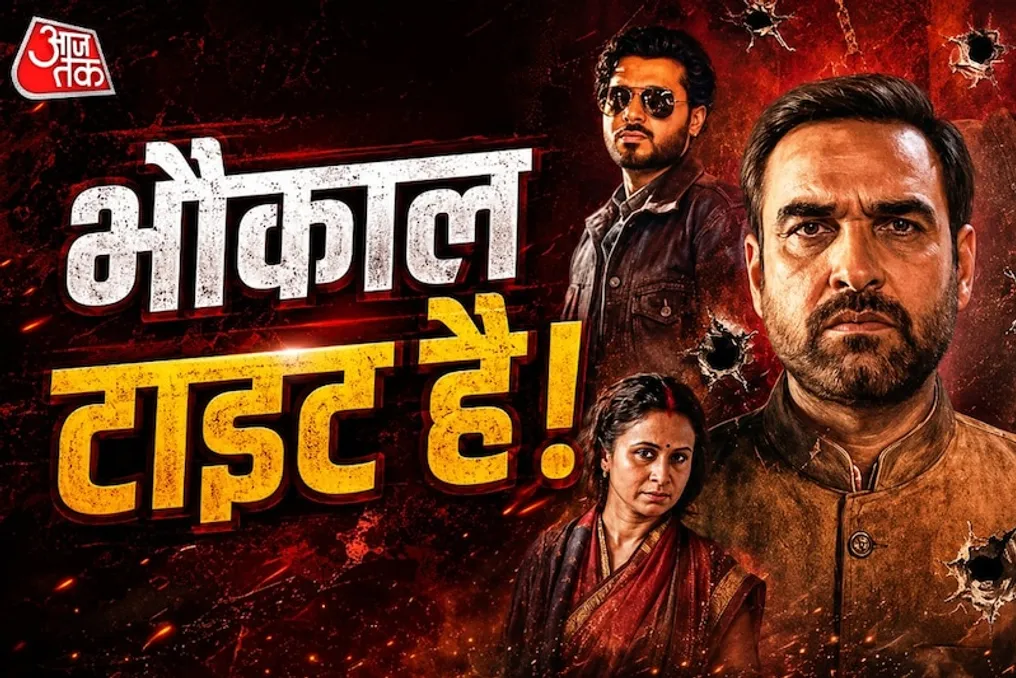
Review of 'Mirzapur: The Movie': Viewers Praise Ravi Kishan's Performance and the Scale of the Film
Read more
www.aajtak.in

Review of 'Mirzapur: The Movie': Viewers Praise Ravi Kishan's Performance and the Scale of the Film

The film 'Mirzapur: The Movie' has reached theaters after gaining recognition on streaming platforms. As soon as the movie was released in cinemas, the first viewer reviews began appearing on platform X. Many noted the high quality of the action, dialogues, soundtrack, and the overall scale of the production.

The film features actors such as Pankaj Tripathi, Ali Fazal, and Divyendu Sharma in the main roles. Jitendran Kumar, Ravi Kishan, and other recognizable faces from the 'Mirzapur' franchise are also part of the project. Particular attention was drawn to Divyendu Sharma's return as Munna Bhaiyya, and the appearance of Ravi Kishan as Babbu Yadav also interested the public.

One viewer highly rated the film as very engaging, specifically praising the mastery of Pankaj Tripathi and Ravi Kishan. He shared his opinion on X, stating that 'Mirzapur: The Movie' is comparable in entertainment value. The viewer emphasized that Ravi Kishan's appearance as Babbu Yadav instantly adds new dynamism to the story.

Ravi Kishan's performance is becoming one of the film's strong points among early viewers. Another viewer complimented the casting choice for this role, noting that it is ideal preparation for the second act, and highly appreciated the work he did.

Most reviews of the first half of the film are also positive; one user called it 'solid.' However, they admitted that the beginning of the film is somewhat slow, although the pace improves as the story develops. This viewer particularly noted the building tension before the interval and expressed hope that the second half would be 'explosive.'

Another X user rated the first part as acceptable. They praised the soundtrack, direction, and several powerful scenes. However, they complained that the narrative is overly explained in some parts. In their opinion, some moments look like a 'stretched web series' on the big screen.

This same viewer added that thanks to familiar characters and memorable dialogues, the first part remains interesting, but for those unfamiliar with the world of 'Mirzapur,' the film might seem too drawn out.

One fan wrote that 'the name is small, but the charisma is big,' and that it is time for 'charisma.' Some viewers noted not only the entertainment value but also the specific humor and language of the film. In one comment, the profanity used in the film was compared to other shows, but overall, 'Mirzapur: The Movie' was called a satisfactory theatrical experience after a series of disappointing cinema visits.

The soundtrack and action have also been subjects of discussion among early viewers. Furthermore, fans enthusiastically welcomed the return of popular franchise characters and their iconic lines.

'Mirzapur: The Movie' follows three successful web series seasons. This series made characters like Kaleen Bhaiyya, Guddu Pandit, and Munna Bhaiyya among the most recognizable faces of Indian online content. Now, the film presents this world on a large canvas while retaining elements of violence, power struggles, and 'charisma' that define the identity of 'Mirzapur.'

Despite the initial reviews on X being mostly positive, the final verdict will become clear in the coming days as more viewers see the film in theaters and share their impressions.

Popular