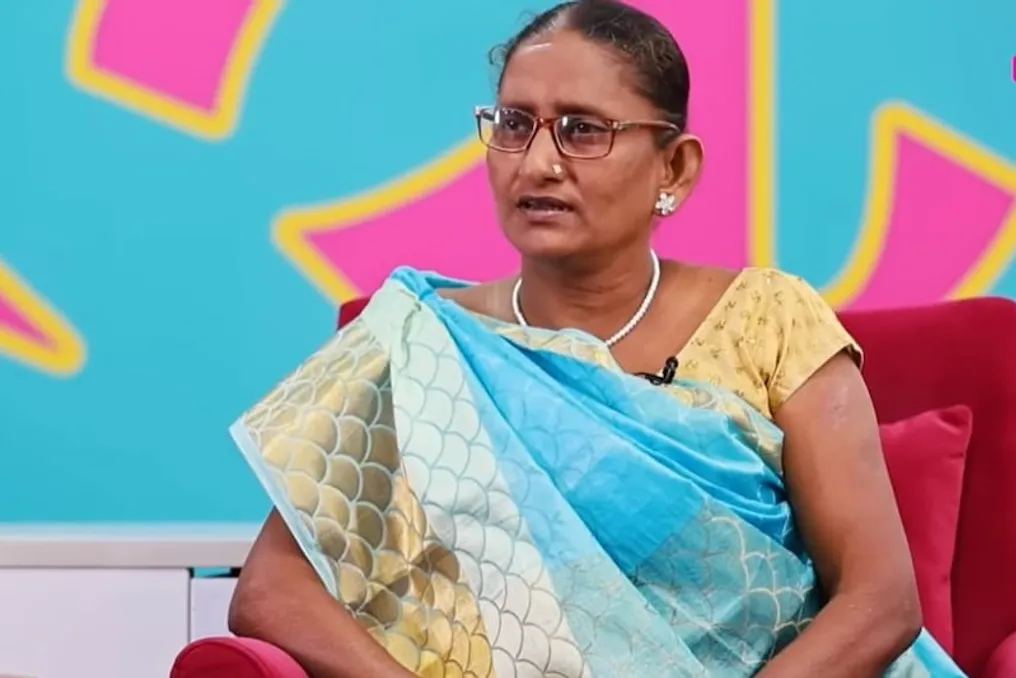
When people hear the word morgue, they often feel anxiety and fear. However, in the Samastipur area of Bihar state, there lives a woman named Mandhu Devi, who has dedicated most of her life to working in such an institution. Mandhu Devi, who is about fifty years old, has helped doctors conduct over 400 post-mortem examinations, including bodies of children, women, men, the elderly, and accident victims. She does this work not by choice, but out of necessity to support her family.
Furthermore, it is striking that for such sensitive and complex work, she is paid not per body, but only 380 rupees per working day, regardless of how many bodies need examination. On days when there are no bodies for autopsy, she receives no payment. Mandhu Devi claims to have performed 40 thousand such examinations. The woman explained that she uses a awl to open skulls, a hammer to open heads, and if necessary, to separate the forehead from the skull. The chest and abdominal cavities are opened with special instruments, after which the tissue is cut with scissors, and the body is sewn up with thread.
Mandhu Devi noted that there are many misconceptions among ordinary people regarding post-mortem examinations. She emphasized that the autopsies are conducted by doctors, and she acts as their assistant. When a person dies as a result of an accident or another incident, the body is brought to the morgue by the police. After all necessary procedures and registration documents are completed, doctors arrive to examine the body. Mandhu Devi assists them in the areas they indicate for incision. She explained that the procedures are carried out on different parts of the body according to the doctor's instructions, based on the nature of the injury. Her job requires a high degree of responsibility and caution.
Mandhu Devi also talked about the tools used during post-mortem examinations. She has at her disposal tools such as a knife, blade, scissors, thread and needle, awl, and hammer. Blades and other instruments are used to open the chest and abdomen. An awl and hammer are required to open the skull for head inspection. Scissors are used for tasks such as cutting clothes. Although these tools might frighten any ordinary person, for Mandhu Devi, it has become part of her daily routine.